
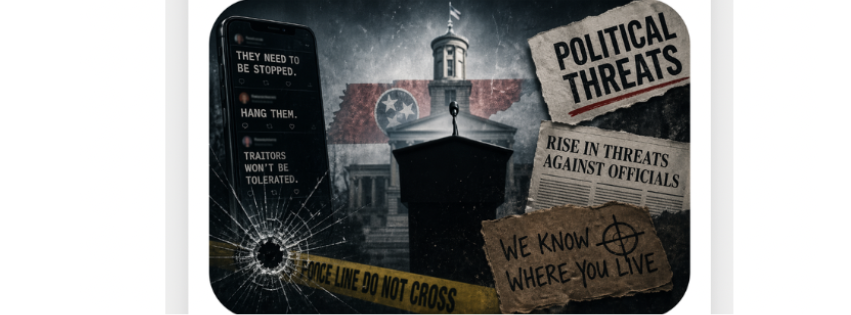
The threats are real. They are rising. And they are landing on both sides of the aisle.
The shadow of the 1960s looms large over today’s fractured political landscape, but the violence of the modern era carries a digital-age volatility that makes it uniquely dangerous. According to presidential historian and ABC News contributor Mark Updegrove, the United States is revisiting a level of upheaval not seen since a five-year span saw the assassinations of John F. Kennedy, Malcolm X, Martin Luther King Jr., and Robert Kennedy.
However, for many, these aren’t just historical parallels or headlines on a screen—they are lived experiences. I know this firsthand. 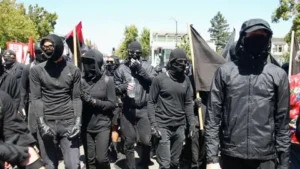 A few years ago, I received a chilling call from Nashville attorney Doug Jones. “Sparks, you know you’re kinda a target,” he warned, mentioning “chatter” that Antifa was flying from Chicago to Nashville to target me and the Sam Davis Home.
The reality of that threat hit home at the worst possible time. I was scheduled to fly out on the C-17 Globemaster ‘Elvis from Memphis’ to watch the Tennessee National Guard’s 278th Armored Cavalry Regiment perform maneuvers at the National Training Center in Fort Irwin, California. I remember the heavy conversation with my wife before I left—discussing life insurance policies and pleading with her not to spoil our sons if the worst happened. The fear became a reality at 3:00 a.m. on my first night in California, when my wife called to tell me protesters were outside our home with bullhorns and drums. While I was proud of my sister Cindy for courageously confronting them, I was deeply unsettled by the experience—and disappointed that the local police didn’t do more to address the fear instilled in my family and neighbors.

Heightened Political Threats
This personal brush with extremism underscores the broader crisis Updegrove describes. Following the recent fatal shooting of conservative leader Charlie Kirk at Utah Valley University—which Utah Gov. Spencer Cox labeled a “political assassination”—the focus has shifted to the engines driving this modern radicalization.

As FBI agents track the suspect and recover high-powered weaponry, Updegrove notes that while the 1960s were defined by discord, the current era is fueled by the algorithm.
“Social media gives us an opportunity to purvey extreme views from one side or the other with absolute impunity,” Updegrove said. “For social media purveyors, that enragement means engagement. It’s good for their business.”
Between the rise of mental health struggles and a digital landscape that rewards “enragement,” the threats we face today are not just real—they are escalating at a pace that our institutions are struggling to contain.
A deadly confrontation at Mar-a-Lago, Florida, is the latest in a string of high-profile security incidents raising concerns about political threats in America. Former Secret Service officials warn that low-tech, lone actors now pose one of the most difficult challenges to presidential protection.
Former Secret Service agent William “Bill” Gage told Fox News Digital that today’s most dangerous threats are often not sophisticated plots, but “super low-tech attacks by people with zero training,” using rudimentary methods. He noted that these individuals often blend into everyday settings. “If you were standing behind them in line at Starbucks, you wouldn’t have given them a second look,” Gage said.
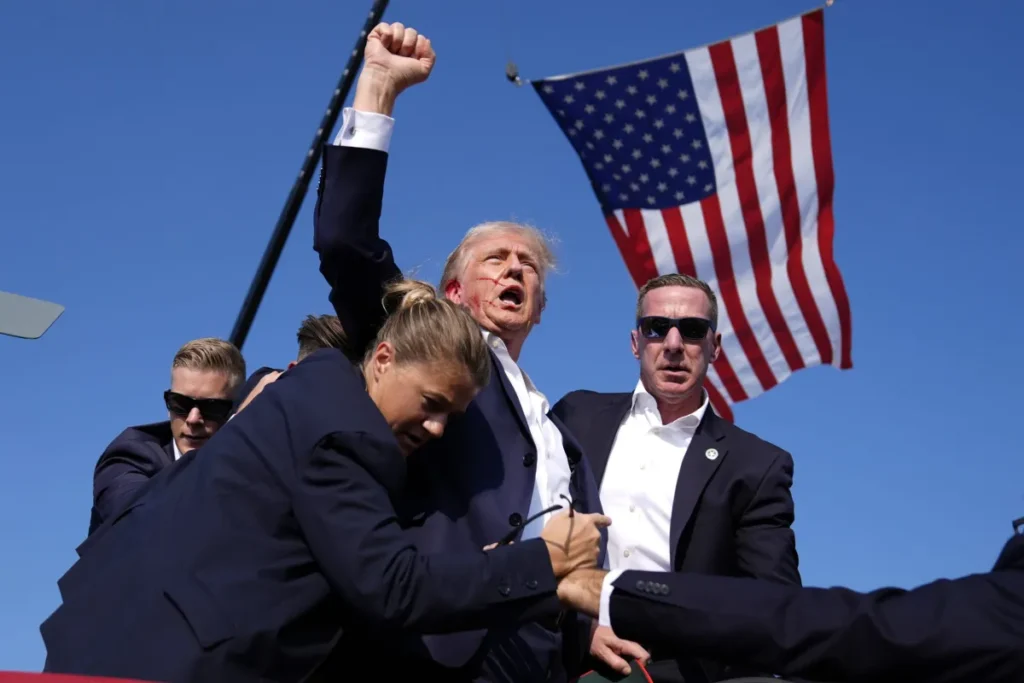
Gage added that it should be clear that President Donald Trump faces an unusually high level of threat exposure. “It should be quite clear to all of us by now that Trump is the most threatened president in the history of the U.S.,” he said, pointing to multiple security incidents in recent years. He also emphasized that unlike past administrations where threat levels often declined over time, “the longer he’s president, the more these attacks keep happening.”





Leave feedback about this