*The post Street preacher asks Supreme Court to overturn law limiting public protest appeared first on Straight Arrow News.
By Mike Sparks, Editor’s Note:
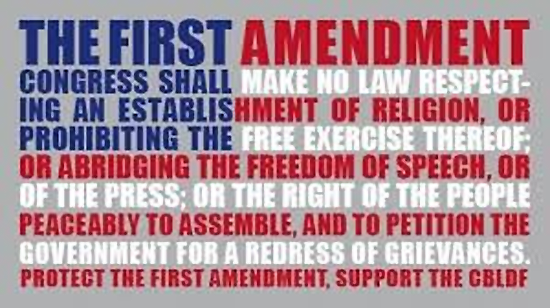
Look, the First Amendment debate happening at the Supreme Court isn’t some theoretical legal exercise—it’s real life, and it’s happening right here in Tennessee.
…I’ve lived it.
Case in point: A few years ago at 4 a.m., six protesters showed up at my house with bullhorns and drums, screaming and attempting to intimidate me and my family—waking up the entire neighborhood. These are the same intimidation tactics the KKK used while their faces were covered.
The irony? I wasn’t even home. I was at Fort Irwin, California with General Max Haston, watching the 278th perform maneuvers.  My phone rang while I was lying in bed on base, and my wife said, “There are six protesters out here yelling through a bullhorn, beating a drum, and seven cop cars in front of the house!”
What made this even stranger—a day or two earlier, I’d received a phone call from attorney Doug Jones warning me: “Mike, you may not realize that you’re a target, and so is the Sam Davis Home. There’s chatter that Antifa members are on a flight heading to Nashville.” I had told my wife about the phone call and explained to her how long life insurance I had and where my policies can be found just in case something happened to me. Oddly enough, a C 130 crashed while we were enroute to NTA, National Training Center.
ALERT: For those who don’t believe Antifa is real or that protesters are being paid, tell that to my neighbors and the seven Smyrna Police officers who witnessed it. Ask yourself: What twenty-somethings catch a flight from Chicago, show up at a stranger’s house at 4 a.m. to yell and beat a drum—for free? I heard they got paid $25 an hour, yesterday I saw an ad for $3500 to $4000 each month for protesting 20 hours each week.
I’ve also watched the Tennessee Democratic Party literally erase Rep. John DeBerry’s name from the ballot, silencing the voice of the majority of black voters in his district. Folks, I can’t make this stuff up.
Here’s the thing though—I actually welcome it. There’s an old saying: “You know you’re over the target when you’re catching flak.” I love that line because my late father flew on B-17 bombers during World War II. He endured real flak, was even shot down, crash landed twice and he’d tell me stories about how dangerous it was. When you’re catching flak—it means you’re over the target.
And what the Democratic Party operatives meant for evil? God turned it for good. After an event I held in Smyrna and invited Governor Bill Lee I brought up what happens to John and the governor saw John DeBerry’s wisdom and brought him on as an advisor. But you won’t hear about that story. Wouldn’t you think that the first black man to have a possible on the guitar floor of the capitol would be news worthy? Where’s WTVF’s Phil Williams? His silence is deafening. Again—I can’t make this stuff up.
The mainstream media isn’t much better. They’re compromised by six huge corporations controlling 90% of the media. There’s no doubt they have an agenda. I learned that term in an MTSU communications graduate class, it’s called “agenda-setting theory.” They set the agenda to tell you what to think about and I’ve seen it play out personally.
The bias in the media is actually what motivated me to go back to MTSU and complete a second degree in media—to confirm my theory. And I got my confirmation. During a separate primary election, my own TV news instructor pulled me aside and said, “Sparks, what the media is doing to you is totally unethical!” I responded, “Now you know why I’ve come back to school to learn journalism and communication.”
The Daily News Journal put me on the front cover the day of my election in an attempt to smear me. Funny enough, I jumped 20 percentage points and won with nearly 80% of the vote against another incumbent on the school board. The paper took issue with a Facebook post I’d made months earlier about Metro Nashville flying the gay pride flag on street lights on Deaderick Street. They sat on it for months, then—ironically—chose the day of my primary election to attack me.
I told the reporter what Dr. King once said: “Our lives begin to end when we become silent about the things that matter.” I also sent him Genesis 50:20. He had to look it up. It’s the story of Joseph, sold into slavery by his own brothers, but God used it to save the Jewish people: “What you meant for evil, God used for good.”
I like the reporter, and later he told me “Mike, I didn’t mean evil against you.” I reminded him that his editor and his paper did—and that God has used their newspaper to lift me up, because every time they’ve attacked me, it helped me. I also spoke about forgiveness. Forgiveness is important in the walk of a Christian. Yes, I will admit—it’s often difficult.
My pastor, Shelby Hazzard, preached today about being bold for our beliefs. He spoke on Romans 11:25—a reminder that God’s 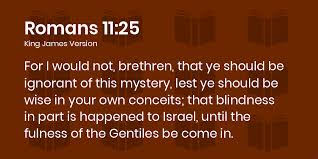 plan is bigger than our circumstances and that we can’t afford to stay silent when truth matters.
The attack on First Amendment rights for Christians and families is real, and people need to wake up. I’ve seen paid protesters disrupt the Tennessee General Assembly, literally screaming and cussing while a pastor gives the invocation. The persecution is ramping up. Last year, I was cussed out and called a “piece of S@@@“ by a female fake priest. Once, again-I can’t make this stuff up. Lol
This Supreme Court case matters because what happens in those courtrooms eventually shows up on your doorstep—sometimes at 4 in the morning with a bullhorn.
____________________________________________________________________
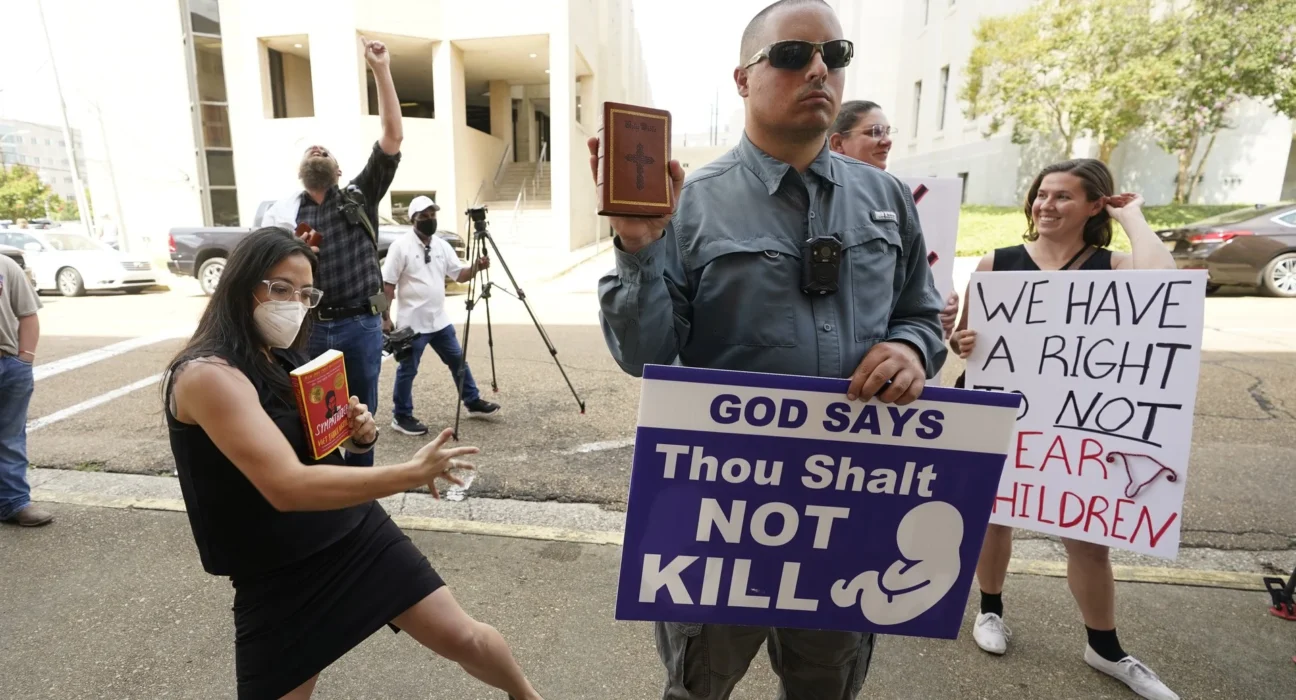
WASHINGTON – “Drunkards!” “Jezebel!” “Nasty!” The street preachercondemned people as he proselytized on the sidewalks outside public events. But after the town of Brandon, Mississippi, adopted an ordinance dictating where people are allowed to protest, Gabriel Olivier was arrested, fined and placed on one year of non-supervised probation.
This was just the beginning of Olivier’s legal fight. He later filed a First Amendment lawsuit in federal court, asserting that evangelizing in public spaces follows a tradition “old as the history of printing presses.”
Olivier’s legal showdown reached the nation’s highest court on Wednesday. With evangelical supporters gathering outside, the nine justices of the Supreme Court listened to an hour and a half of oral arguments. The main question before the court: Can the convicted preacher bring a federal lawsuit against the same law that got him arrested in the first place?
Key Takaways
-
Street preacher arrested for violating protest ordinance in Mississippi takes legal battle to Supreme Court over procedural matters rather than First Amendment rights.
-
Supreme Court justices question whether preacher’s lawsuit challenging ordinance’s constitutionality could lead to similar challenges from convicted individuals under Section 1983.
-
City of Brandon argues preacher had ample opportunities to challenge ordinance through state courts, while preacher’s lawyer asserts ruling in his favor would not undermine previous Supreme Court decision protecting individual convictions.
“[I]t would be quite radical to say that someone who is in custody – would it not – someone who is in custody for violating a statute can, while in custody, bring a [civil rights] action to challenge the constitutionality of the statute under which the person is serving a sentence?” Justice Samuel Alito asked.
While the Supreme Court routinely hears First Amendment cases – with its conservative majority most often ruling in favor of religious speech – Olivier’s case focused more on the procedural matters than First Amendment rights. The high court is considering whether the 5th U.S. Circuit Court of Appeals erred when it said Olivier couldn’t challenge the Brandon ordinance’s constitutionality when he hadn’t appealed his actual conviction.
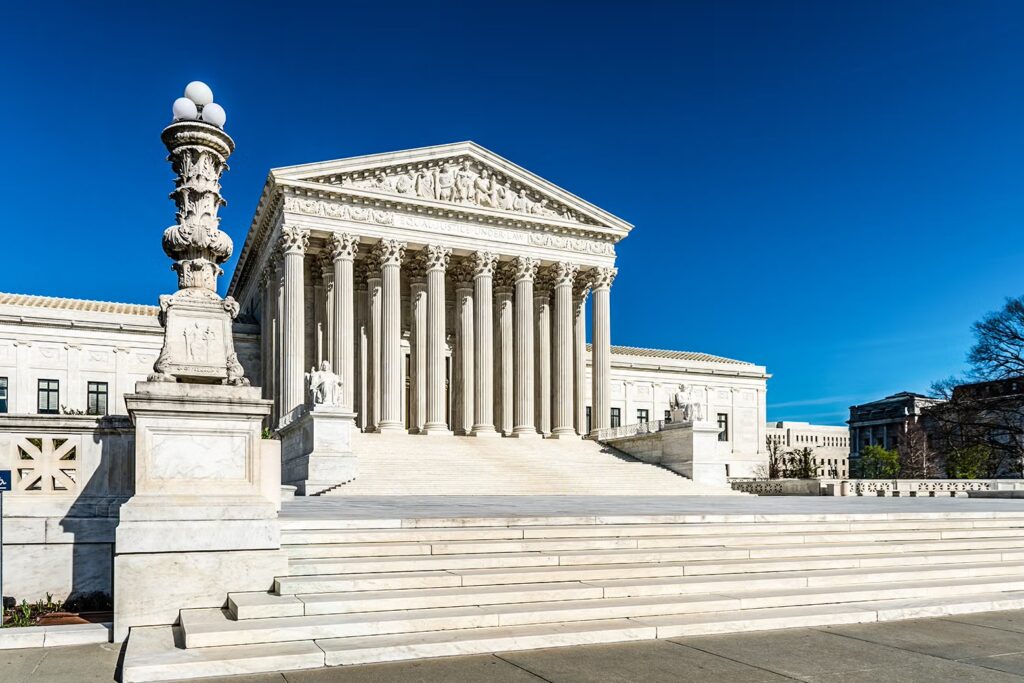
Conservative justices Alito, Amy Coney Barrett, Neil Gorsuch and Clarence Thomas questioned Olivier’s lawyer, Allyson Ho, about whether a ruling in the preacher’s favor would lead to similar challenges under Section 1983 – a federal law allowing individuals to sue states for violating their civil rights – from people convicted of crimes.
“Let’s say that a defendant who has a prior conviction for a non-violent offense is convicted for possession of a firearm,” Alito said. “And let’s suppose that that individual then brings a 1983 claim seeking to have the statute declared unconstitutional insofar as it applies to someone like him with a prior conviction for a non-violent felony. … Let’s suppose he wins on that and then he is – meanwhile, he’s charged once again with possession … of a firearm. … Doesn’t that invalidate that prosecution?”
“No, your honor, because I think the key is what is the relief that the individual is seeking,” Ho said. “So, if you’re seeking prospective relief that you cannot be prosecuted under a law going forward that – that is a set of facts in the future.”
Ho also said a ruling in Olivier’s favor would not undermine a 1994 Supreme Court ruling that prevents people convicted of crimes from using civil lawsuits to effectively reverse their convictions.
That ruling, Ho said, “protects individual convictions, not the criminal law in the abstract.”
Justice Elena Kagan, a member of the court’s liberal wing, seemed to disagree.
“[If] you win and you have the statute declared facially unconstitutional,” Kagan said, “what follows from that logically is that the past conviction was infirm, the past conviction was invalid, and whether or not you’re looking to change that conviction in any way, you have just demonstrated the invalidity of your conviction.”
Attorney Todd Butler, who represented the city of Brandon, argued that the preacher had myriad opportunities to challenge the ordinance through the state courts.
“Petitioner had the opportunity and presumably still has the opportunity to challenge the ordinance under the Mississippi Constitution, which offers greater First Amendment protection than the federal Constitution,” Butler said. “Although Petitioner claims in this case that the courthouse doors are closed, that argument ignores the countless doors Petitioner chose not to enter. What this case is about is Petitioner’s preferred door, one that offers his favored venue and an opportunity for attorneys’ fees.”
The post Street preacher asks Supreme Court to overturn law limiting public protest appeared first on Straight Arrow News.
*If any (legit) media outlet wants to debate me—I’m available. Please email and let me know where to show up at MikeSparksTn@gmail.com.

Leave feedback about this