

The Power of Forgiveness: What Harvard Research, Scripture and My Own Story Teach Us
Oscar Wilde once quipped, probably with a wink, that we should always forgive our enemies because nothing annoys them more. Wilde was thinking about how the other person would react. But the strongest case for forgiveness may be a more personal one: what it does for you.
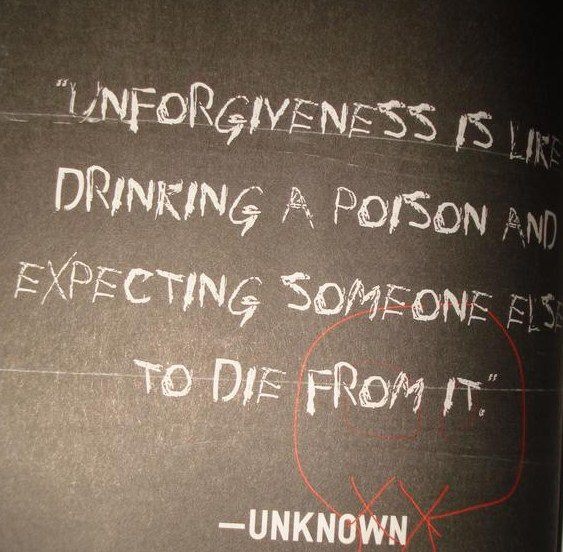
Whether it is an argument with a spouse, a misunderstanding in the family or a falling out with a friend, carrying anger and resentment costs more than peace of mind. Harvard experts say it can even take a toll on your health, when the offense is a serious one, like a colleague who sabotaged your work, spouse who was unfaithful or someone simply gossiping about you.
Can Forgiveness Impact Your Health?
To answer that question, we must first understand the effects unforgiveness can have on our health.
In their quest to understand the forgiveness-health connection, researchers have described forgiveness as both a mental and emotional experience involving the replacement of negative feelings with more positive feelings toward the offender.
Research published in 2016 and available through the National Library of Medicine explores the link between forgiveness and health. On the other hand, unforgiveness means holding onto anger, resentment, bitterness, and hostility toward someone who wronged us—or, to be blunt, someone who really ‘pissed us off.’
Imagine someone who has carried resentment toward a family member for 20 years. Every time that person’s name is mentioned, their anger returns. They replay the offense in their mind, lose sleep and experience unnecessary stress. Meanwhile, the person who offended them may be going about their life without giving the incident a second thought.
Who is really paying the price?
Chronic stress and unresolved anger may contribute to elevated blood pressure, anxiety, depression, sleep disturbances and cardiovascular problems.
It makes me wonder how much of the emotional, physical and spiritual brokenness we see in our society today is connected to our inability or unwillingness to forgive.
Perhaps modern science is discovering something Jesus taught us more than 2,000 years ago.

A Story of My Own
Many of you have heard the story about when I was 17 and stopped by Marty Luffman’s State Farm Insurance office in my beautiful red 1968 Camaro. I had installed a four-speed transmission and a 12-bolt positraction rear end. Boy, do I wish I still had that car!
Marty wasn’t in the office, but his secretary told me he would be back shortly.
When Marty, who was considered a “big man around town,” walked through the door, he rather rudely asked, “What’s he doing here?”
His secretary politely responded, “He’d like to get a quote on insurance.”
Marty immediately fired back, “I ain’t insuring him!”
I walked out of that office and made a vow to myself: One day, I’m going to get that guy back!
Fast-forward nearly two decades. Marty walked into our former car business, MidTnAutos.com—Tennessee’s first dot-com car business. Just sayin’!
After all those years, I was still carrying that grudge. I thought, Here’s my chance!

I was locked and loaded, figuratively speaking, and ready to fire off a few choice words: “Don’t let the door hit you in the @## on your way out!”
I was about to do what I imagined my late World War II veteran father might have done.
But then something happened. I paused and thought about my mother and what she would have wanted me to do.
She would have wanted me to forgive him.
And wouldn’t you know it? After carrying that grudge for nearly two decades, I finally had my chance to get even—and I blew it!
Or did I?
There’s no influence quite like that of our mothers.
Instead of getting revenge, I let go of my bitterness and helped Marty sell his Chevrolet dually truck.
Looking back, I gained something far more valuable than revenge. I gained peace and a great friend.
Keep Marty is in my prayers today. Hospice was called in to assist him. Many know that he was injured in a car accident and paralyzed from the waist down. He’s had a tough row to hoe.

What Forgiveness Is, and What It Is Not
The definition is surprisingly simple. Tyler VanderWeele, co-director of the Initiative on Health, Spirituality, and Religion at the Harvard T.H. Chan School of Public Health, describes forgiveness as replacing ill will toward the person who hurt you with goodwill.
What it does not mean takes more explaining.
Forgiveness does not condone the harm, and it does not ask you to forget. Craig Malkin, a lecturer in psychology at Harvard Medical School, explains that forgiveness is not about excusing or absolving someone of responsibility.
Saying the words is easy, but they do not necessarily change what you feel inside. You can still be sad or angry about what happened. Forgiveness is a process of accepting what happened without allowing it to continually control your life.
Forgiveness also does not always mean reconciliation. VanderWeele points out that you can want what is good for someone without restoring the relationship, and you can forgive an offender while still seeking justice.
When it is appropriate, though, forgiveness can lead to repaired relationships, and with them the happiness, satisfaction and social support that research links to better health.
The bigger the offense, the harder it can be to forgive. Survivors of abuse or violence should never be pressured to forgive the person who hurt them or return to an unsafe relationship.

What the Harvard Research Found
VanderWeele and his colleagues presented a study at a Harvard conference in April 2023. They assigned nearly 4,600 adults from five countries, all of whom had been wronged by someone, to two groups.
One group received a self-guided forgiveness workbook with written exercises, such as recalling hurt feelings, empathizing with the offender and retelling the story as a neutral observer.
Two weeks later, the group that used the workbook reported fewer symptoms of depression and anxiety than the group that had not yet received it.
Other research suggests forgiveness may also help ease stress, improve sleep and support cardiovascular health.
Forgiveness is not a substitute for medical treatment, but the research gives us another compelling reason to consider the emotional and physical consequences of holding on to bitterness.
Matthew West’s Song “Forgiveness”: An Incredible True Story
There have been numerous songs written about the power of forgiveness, but perhaps one of the most moving is Christian recording artist Matthew West’s song “Forgiveness.”
The song was inspired by the remarkable true story of Renee Napier, a mother who experienced a tragedy that no parent should ever have to endure.
In 2002, a 23-year-old drunk driver named Eric Smallridge caused a crash that claimed the lives of two young women, including Renee’s 20-year-old daughter, Meagan Napier.
Eric was convicted and sentenced to 22 years in prison.
Following the accident, Renee was left with unimaginable grief. Over time, however, she came to realize that holding on to hatred and bitterness was imprisoning her emotionally, just as Eric was imprisoned physically.
Guided by her Christian faith, Renee made the extraordinary decision to forgive the man responsible for her daughter’s death.
She reached out to Eric in prison, offered him her forgiveness and shared her faith. Her act of grace profoundly impacted his life.
But her forgiveness did not stop there.
Renee and her family advocated for Eric, asking a judge to reduce his 22-year prison sentence by half. Their request was granted.
Following his release, Renee and Eric formed an unlikely friendship and shared their story with others, educating young people about the dangers of drunk driving and demonstrating the extraordinary power of forgiveness.
When Matthew West invited people to submit their real-life stories as inspiration for his songwriting, Renee shared hers. Moved by this remarkable demonstration of Christian grace, West wrote the song “Forgiveness.”
Think about that for a moment.
A mother who lost her daughter at the hands of a drunk driver not only forgave him but advocated for his release from prison and worked alongside him to help prevent other families from experiencing the same tragedy.
That is forgiveness in action.
Renee could not change what happened to her daughter, but she could decide what she would do with her pain. Rather than allowing bitterness to define the remainder of her life, she turned her tragedy into a mission that could save the lives of others.
What Did Jesus Teach About Forgiveness?
The Bible repeatedly emphasizes the importance of forgiveness.
In Matthew 18:21–22, Peter asks Jesus how many times he should forgive someone who sins against him:
“Lord, how many times shall my brother sin against me and I still forgive him? Up to seven times?”
Jesus responds:
“I do not say to you, up to seven times, but up to seventy-seven times.”
Jesus was teaching us that forgiveness should not be limited by keeping a record of how many times someone has wronged us.
In Matthew 6:14–15, Jesus makes the connection between forgiving others and receiving forgiveness ourselves:
“For if you forgive other people for their offenses, your heavenly Father will also forgive you. But if you do not forgive other people, then your Father will not forgive your offenses.”
Those are powerful words that should cause each of us to examine our own hearts.
How often do we ask God to forgive us while refusing to extend that same grace to someone else?
Forgiving Yourself
Sometimes the person who needs forgiveness is you.
Self-forgiveness can feel odd, but a 2020 study VanderWeele co-authored found that it is linked to less psychological distress, including fewer symptoms of depression.
It is not a free pass. Genuine self-forgiveness involves accepting responsibility, expressing remorse, apologizing when appropriate and making amends.
It means acknowledging the wrong while still wanting good for yourself and being willing to change.
Guilt and shame can keep us trapped in a cycle of self-punishment. When we become consumed by our past mistakes, it can become more difficult to take corrective action and move forward.
As Christians, we must also remember that God’s grace is greater than our past mistakes.






Leave feedback about this