
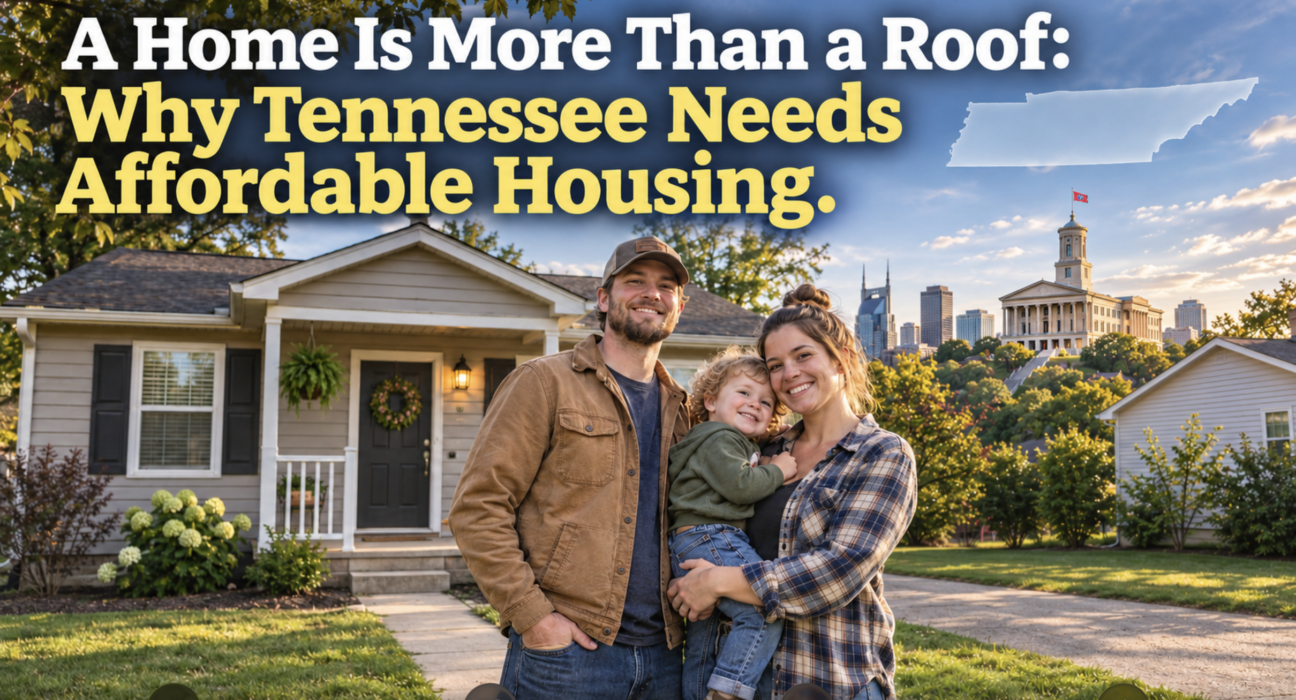
A Home Is More Than a Roof: Why Tennessee Needs Affordable and Workforce Housing
By Rep. Mike Sparks
A safe, affordable home gives a family room to build a life. It can mean a child has a stable place to study, parents can spend less of their paycheck on rent, and workers can live within reach of the jobs that keep a community moving.
Yet for many families, that foundation is getting harder to secure.
The 2026 State of the Nation’s Housing report from Harvard’s Joint Center for Housing Studies describes a market where high prices and borrowing costs are keeping buyers and renters on the sidelines. The median price of an existing home has climbed 54 percent nationwide since 2020 and is nearly five times the median household income. A typical monthly payment on a median-priced home reached about $3,100 in late 2025—nearly double the cost five years earlier.
The shortage is especially severe at the lower end of the market. Over the past decade, the number of rental homes priced below $1,000 a month fell by 7 million. And among renters earning less than $30,000 a year, 83 percent spend more than 30 percent of their income on housing. After paying for housing, the typical household in that income group has only about $210 a month left for everything else.
These numbers represent more than a housing-market problem. They affect whether people can save, raise children, stay healthy and remain part of the communities where they work.
Housing is part of the workforce
Employers need workers who can live close enough to get to their jobs. When housing costs push employees farther away, businesses face longer commutes, harder hiring and greater difficulty keeping staff. Workforce housing is therefore not just a concern for families. It is part of a community’s economic foundation.
The U.S. Chamber of Commerce has made that connection clear: businesses need housing to be part of their growth plans. When a company considers expanding, leaders have to ask where its employees will live. The same question applies in Middle Tennessee, where growth brings jobs but also puts pressure on housing, roads, schools and local services.
There is no single solution for every town. Communities can look at zoning and permitting, the availability of suitable land, infrastructure costs, building regulations and ways to encourage a wider range of housing. The Chamber’s housing summit also highlighted a growing shortage of skilled workers in the construction trades. Building more homes depends on having enough people trained to build them.
The goal should be practical: make it possible to build homes that working families can afford, while planning responsibly for infrastructure and neighborhood needs.
What home meant to our family
Felicia and I bought our first home when she was 19 and I was 22. I was able to take that step in part because my father was there to help me get started.
My first car was a 1969 Camaro. Dad bartered a motorcycle for it and had about $500 invested. I did the rest of the work myself, including a new paint job, tires and wheels, and newly upholstered seats. I later sold it for a $1000 profit.
My second car was a beautiful red 1968 Camaro with factory air conditioning, a deluxe interior and factory tic-toch-tachometer. Dad put up roughly $3,500 and gave me a direct instruction: “If you don’t make that car payment on time to me, you park that car over here!”
He was a strict, blunt man shaped by the Great Depression and military service in World War II. He meant what he said—I made the payments on time.
When I wanted to buy the house that is now our business on Nissan Drive in Smyrna, I sold the Camaro to my younger brother, Matt for $3500. Paying off the car and then selling it gave me something like a forced savings account. My father’s help came with responsibility, and it helped me take the next step.
I know not every young person has a parent who can offer that kind of help. I also believe we should be willing to talk honestly about the importance of fathers and other responsible adults in a young person’s life. That conversation can be uncomfortable, but avoiding it does not help families. Supportive relationships cannot solve the housing crisis on their own, just as housing policy cannot replace the role of a caring parent. Both matter to whether people have a stable chance to build a future.
The case for a closer look in Tennessee
As a state representative, I worked on both affordable housing and fatherhood and mentorship issues. I also requested that the Tennessee Advisory Commission on Intergovernmental Relations (TACIR) examine barriers that can raise housing costs, including property taxes, impact fees and other local costs. Read the full TACIR report below.






Leave feedback about this