

I first met Jim Henry right after my election in 2014 — the year former Governor Bill Haslam’s political machine spent roughly $200,000 against me. Along with nine other conservative lawmakers, I had called for the Commissioner of Education to step down after listening to roughly 64 Tennessee school superintendents who signed a no-confidence petition against Commissioner Kevin Huffman. The full story would be difficult to capture here, but I am willing to share it personally on my radio program, Conversations with Mike Sparks — heard every Sunday night from 5 to 6 p.m. on WGNS Radio, 100.5 FM, 101.9 FM, or WGNSradio.com.
A month later, the very man who had worked against me was gone — and Jim Henry was appointed Chief of Staff for Governor Bill Haslam to replace the same guy who orchestrated the efforts to eliminate me and
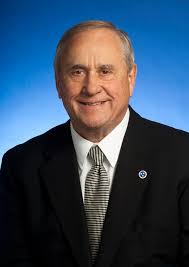
my advocacy. About a week later, Jim Henry stopped by my office at the former Tennessee Legislative Plaza. I knew he had a ‘servant’s heart’ which seems to be very rare today. I began opening up about the struggles I was having with one of my sons. Jim listened quietly, then said, “Representative, I had challenges with one of my own sons too.” He paused. “My son looked up at me from a hospital bed and asked for my help… and there was nothing I could do.” Jim’s son passed away a week later. I then thought to myself “Thank God I have a son to worry about.” Two years later I drove the late state Senator Thelma Harper to Jim Henry son’s funeral. Sadly, a few weeks later his wife passed away from cancer.
Needless to say — I’m a big fan of Jim Henry.
“I Know Who You Are —You’re a Child of God — Go and Claim Your Inheritance”
(A story about identity, legacy, and children who refuse to be defined by their beginnings)
I first heard this story when I attended a meeting in Murfreesboro with then-Commissioner Jim Henry of the Tennessee Department of Children’s Services. Commissioner Henry was sharing the challenges facing the department — the weight of caring for Tennessee’s most vulnerable children — the amount of children in state care (now roughly 8000 children) — when he paused and told us about a boy born to a single mother in Newport, Tennessee, in 1870.
Before I share that story, let me tell you a little about Jim Henry.
James M. Henry, born February 22, 1945, in Jefferson City, Tennessee, is one of Tennessee’s most distinguished public servants. He served as minority leader in the Tennessee House of Representatives from 1979 to 1991. He ran for governor in 2002 in the Republican primary, ultimately losing to Van Hillary, who went on to face Phil Bredesen in the general election. But politics only tells part of Jim Henry’s story. He served with distinction in Vietnam as a young man, attended Hiwassee College and the University of Tennessee, and went on to lead as President and CEO of Omni Visions, Inc., as Tennessee’s first Commissioner of Intellectual and Developmental Disabilities, as Commissioner of Children’s Services, and as deputy to Governor Bill Haslam and his chief of staff. He is a man who has spent his life in service to others — especially those the world might overlook. I will admit there aren’t many people who have made a strong impression on me more than Jim Henry.
That’s why the story he told that day carried such weight. As Jim spoke, I looked around and there wasn’t a dry eye in the room — a local judge, two senators, even a few of my fellow state representatives, and the Murfreesboro Police Chief were all visibly moved. I’ll admit, it reached me as well. I guess due to the difficult relationship I had with my own late World War 11 hard military father.
The Boy on Abbey Lane
If ever a child was born into circumstances that should have guaranteed failure, it was Bennie Wade.
He came into this world in 1870 — just five years after the end of the Civil War — in a small home on what is now Abbey Lane in Newport, Tennessee.

His father was Dr. Lemuel Hooper, a young physician of some standing in the community. His mother was Sarah Wade, a servant. They were not married. In a town of 800 people where everyone knew everyone else’s business, that was not a small thing.
Not long after Bennie’s birth, his mother left Newport and placed her child in St. John’s Orphanage in Knoxville. Meanwhile his father married someone else. When Bennie was nine years old he was brought from the orphanage to Newport to live with Dr. Hooper and his wife, whose only child had died. He was renamed Ben Walter Hooper. But a new name could not erase what the other children already knew — and they made sure he never forgot it.

He was taunted. He was shamed. He went to recess alone. He dreaded going downtown on Saturday afternoons because he could feel every eye burning into him, every whispered question hanging in the air: Who’s your daddy?
That question followed him everywhere.
The Moment That Changed Everything
When Ben was a young boy, a new preacher came to the Newport church. Ben had developed a habit of arriving late and slipping out early — anything to avoid the stares, the whispers, the weight of that unanswered question. But one Sunday the preacher said the benediction so quickly that Ben got caught in the crowd filing out.
Just as he reached the door, he felt a large hand on his shoulder. The new preacher looked down at him and asked the question Ben had dreaded his entire life: “Who are you, son? Whose boy are you?”
The whole room went quiet. Every eye turned.
But the preacher looked at that boy’s face — really looked at him — and a smile of recognition spread across his features.
“Wait a minute,” he said. “I know who you are. I see the family resemblance. You are a son of God. Boy, you’ve got a great inheritance. Go and claim it.”
Ben Hooper would later say that was the single most important sentence ever spoken to him in his entire life.
He walked out of that church a changed person. And he never looked back.
From the Orphanage to the Governor’s Mansion
Ben Hooper went on to graduate from Carson Newman College in 1890. He read law under Newport attorney H.N. Cate and was admitted to the bar in 1894. He served in the Tennessee State Legislature, fought as a captain in the Spanish-American War, married the accomplished Anna Belle Jones, and raised six children.
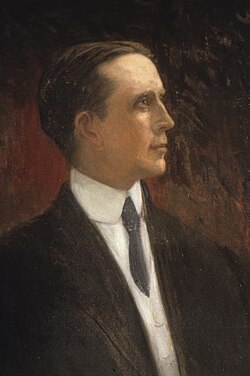
In 1910 — this boy who had been placed in an orphanage, who ate his lunches alone on the playground, who flinched every time someone asked who his father was — was elected Governor of Tennessee. He was re-elected in 1912. He later served on the Railroad Labor Relations Board under President Harding, helped negotiate land purchases for Great Smoky Mountains National Park, and resigned from that role when he concluded the property owners were not being treated fairly — because integrity mattered more to him than a title.
At past the age of 80, he served as vice-president of the Tennessee Constitutional Convention.
He wrote his autobiography before he died. The University of Tennessee Press published it posthumously in 1963. He titled it — with no bitterness, only honesty — The Unwanted Boy.
It remains one of the most remarkable stories in Tennessee history. And one of the most urgent for our time.
Rep. Mike Sparks of Smyrna, recently passed two resolutions aimed at promoting mentorship and improving mental health among students.
The Epidemic Nobody Wants to Talk About
What Ben Hooper survived was not just poverty or shame. He survived fatherlessness. And in 2026, fatherlessness is not a rare circumstance in America. It is an epidemic.
The numbers are staggering and they should break our hearts. I have found during my many years of public service that there isn’t one person in the Tennessee Book of Lobbyist (yes, there’s book) that advocate for this issue — totaling roughly 330 lobbyists. Yet this single issue costs the taxpayers billions of dollars each year.
The scope of fatherlessness in America has reached crisis levels. Today, 18.3 million children — 1 in 4 — live without a father in the home, a number that has grown 25% since 1960. Eighty percent of all single-parent homes are fatherless. The consequences of this epidemic do not stay behind closed doors. They spill into our classrooms, our courtrooms, our emergency rooms, and our streets — costing American taxpayers over $112 billion annually in social programs alone.
The link between fatherlessness and crime is impossible to ignore. Seventy-two percent of adolescent murderers and 70% of long-term prison inmates come from fatherless homes. Ninety percent of all homeless and runaway children are from fatherless homes — 32 times the national average. Seventy-one percent of all high school dropouts come from fatherless homes — 9 times the average. And 75% of all adolescent patients in substance abuse centers grew up without a father — a rate 10 times higher than the national average. These are not coincidences. They are a pattern.
The emotional toll is equally devastating. Sixty-three percent of youth suicides come from fatherless homes — five times the average — and children without a father are more than twice as likely to take their own life. Eighty-five percent of children who exhibit behavioral disorders come from fatherless homes, and children from single-parent households are twice as likely to suffer from mental health problems. Teen pregnancy follows the same trajectory — adolescents with nurturing, present fathers are 75% less likely to become pregnant, yet teen pregnancy costs American taxpayers $11 billion every year in healthcare, foster care, and lost tax revenue.
The data also reveals a painful racial divide. Father absence rates stand at 20% among white families, 31% among Hispanic families, and 57% among African-American families. Yet the solution is the same across every community — an involved father changes everything. Children with a present, engaged father are 80% less likely to be incarcerated, 40% less likely to repeat a grade in school, and 5 times less likely to grow up in poverty. The statistics make the case clearly: fatherhood is not a luxury — It is a lifeline.

Leave feedback about this