
By Mike Sparks
If you want to see how our culture views the importance of fathers in society, just take a look at television and movies. Dads were once elevated as wise and loving role models.
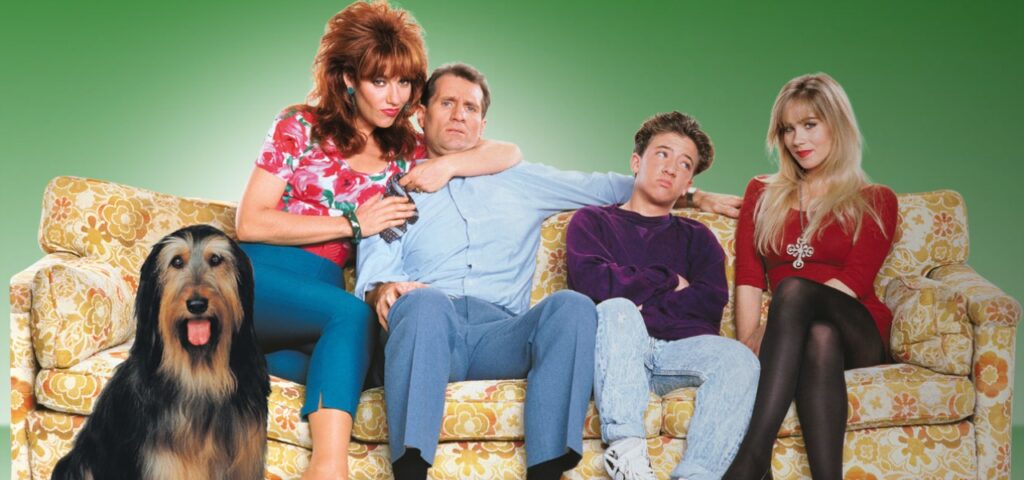
Today, they are more likely to be portrayed as foolish and lost—bumblers without a day’s worth of common sense on one end, or manipulative abusers on the other. In too many stories, fathers are simply nowhere to be found.
Whatever the depiction — it’s not a pretty picture. And it’s certainly not an accurate portrayal of what genuine fatherhood means.
For decades, research has consistently affirmed the importance of fathers. Academic studies and real-life evidence alike highlight the damage done when dads don’t step up and fulfill their family responsibilities. Fathers are incredibly important—in fact, their role can’t be overstated. Among all the reasons the world needs involved and active dads, one stands out as most vital to families and society: the lasting imprint a good father leaves on his children.
The growing fatherless rate is a national public safety threat.
America’s rising rate of father absence—with nearly one in four children now growing up without their biological father—is fueling higher crime across the nation. Communities with high levels of single-parent households experience dramatically elevated violent crime and homicide rates, even after accounting for poverty.
Decades of research, including U.S. Department of Justice studies, show that youths from fatherless homes are far more likely to engage in delinquency, join gangs, drop out of school, and end up incarcerated. As many as 70–85% of youths in prisons come from father-absent homes.
This is not just a family issue—it drives more emergency calls, strained police resources, and billions in taxpayer costs. Strong, involved fathers instill discipline, responsibility, and purpose that help prevent the very problems government later tries to solve. Treating fatherhood as a serious public safety strategy is essential for safer communities.
A good father doesn’t just provide for his children—he shapes them. His words, his discipline, his consistency, and even his quiet sacrifices become the blueprint his children carry into adulthood. Long after the toys are gone and the house is quiet — the lessons remain. The way he treated others, the way he handled adversity, and the values he lived out daily become the foundation upon which his children build their own lives.
That imprint is not always made in grand moments, but in the ordinary rhythms of life—showing up, keeping promises, offering guidance, and demonstrating love through action. A father’s presence teaches confidence; his correction teaches wisdom; his encouragement builds courage. Over time, these small deposits compound into a legacy far greater than wealth or possessions.

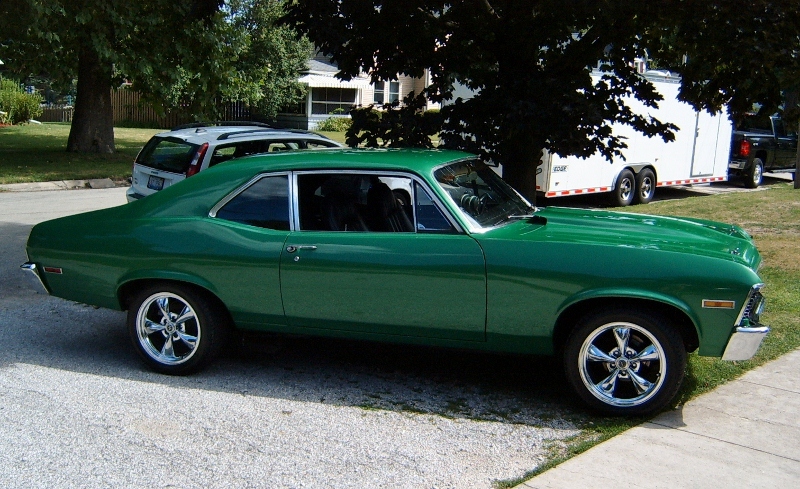
Eric Richey, owner of Crusader Auto Works shared the story of his late father repairing a hole in his first car — a 1971 Chevrolet Nova — where an old antenna had been removed from the trunk lid. He needed a quick patch, so young Eric, just a boy at the time, lay underneath in the trunk and held a penny firmly in place from below while his dad welded it from above. The metal grew so intensely hot that the penny seared a clear imprint of Abraham Lincoln into Eric’s thumb. That distinctive mark remained visible on his skin for several days as it healed.
That simple, gritty moment between father and son reminded me of a powerful truth:
“A good father leaves an imprint on his children that lasts a lifetime.”
— Roy Lessin
 Some imprints come from wisdom and words. Others come from heat, metal, and a father who trusted his boy to help with the work — either way, they last.
Eric began talking about his late father, who passed away last year. He said his dad was good at many things, though not necessarily an expert in any one field. One of the guys there chimed in with the old saying, “A jack of all trades, but a master of none.” But as we all reflected, sometimes those are the very men who teach us the most—steady, capable, and present.
Then Eric shared a story about his first car —a 1971 Chevrolet Nova he bought for $500. I asked him what color it was, and he said, “British racing green with gold stripes.” That definitely caught my attention.
I often talk about coincidences—what some might call simple coincidences, and what I like to call “God-wink moments.” Because that was the exact color of my first car—a 1969 Chevrolet Camaro my dad had bartered a Honda CX 500 motorcycle for, with he had $500 invested.

I was working at the former Omni Hut restaurant in Smyrna—owned by my neighbors,

Major James and Sally Walls—my very first job at 13 years old, making $1.50 an hour. I worked hard often walking to work and saved enough to paint that Camaro, spending $350 on the paint job. Two years later, I sold the car for $2,500—turning a $1,000 profit. It didn’t take long for me to realize I was a lot better at working on cars than I was being a busboy at the Omni Hut.
Looking back, those moments weren’t just about cars or money—they were about lessons passed down, work ethic, and the quiet influence of fathers. And that’s the point. Strong fathers don’t just shape homes—they shape futures. They help prevent many of the problems government later tries to solve. They instill responsibility, discipline, and purpose—things no policy can fully replace.
Serving in public office, I see firsthand an often overwhelming number of challenges facing our society—problems that in many cases continue to grow while meaningful solutions lag behind. Many of these issues have few advocates, few voices speaking up, and certainly no taxpayer-funded lobbyists pushing for change—yet they cost taxpayers billions each year. Too often, these are the quiet crises affecting families, children, and communities at their core.
It is estimated that U.S. taxpayers pay roughly $154 billion annually in programs like Medicaid, SNAP, and TANF connected to father-absent homes. Today, nearly 25% of children in the United States live without a biological father in the home—an absence often linked to higher poverty rates and long-term societal costs. These are not just statistics—they represent real lives, real struggles, and generational consequences—some may even call it a ‘generational curse.’





Leave feedback about this