
Key Takeaways
- Tennessee added more than 51,000 net new residents in 2023, driven largely by Millennials (28%) and Gen Z (25%), who together made up over half of all
newcomers.
Rutherford County ranked #2 with Net move-ins: 8,000 - Knox County led the state with 8,800 net move-ins, fueled by the largest share of Gen Z newcomers among Tennessee’s top migration magnets.
- Montgomery County (Clarksville) has the highest share of newcomers arriving from out of state (69%)
- Shelby County, anchored by Memphis, recorded the biggest net loss: 6,100 more residents left than came into the county.
- Over half of Tennessee’s newcomers came from out of state (52%).
Tennessee remains one of the country’s strongest magnets for interstate migration. In 2023, the state added nearly 52,000 more residents than it lost, with Millennials (28%) and Gen Z (25%) driving much of the movement. A small group of counties pulled in most of the momentum — places with expanding job markets, university influence, outdoor access or simply prices that still feel attainable. These regions are shaping where Tennessee is headed next, whether we’re talking about absorbing metro spillover.

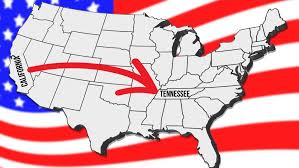
In terms of origin states, California remained Tennessee’s biggest feeder state in 2023, sending roughly 22,000 new residents. More than half — about 56% — bought homes within their first months in the state, a reflection of how quickly California transplants act when faced with Tennessee’s far more accessible housing market. With home prices running about 63% lower than in California, many newcomers see little reason to wait before putting down roots. Florida followed with nearly 21,000 people relocating to Tennessee.
Among the counties with the highest net migration, Hamilton and Montgomery drew the most renter-heavy influxes, with renters making up 57% and 55% of new arrivals, respectively (in both cases, Millennials made up a bulk of the inflow). In contrast, Cumberland–Fentress–White Counties posted the strongest homeownership rate among new residents: nearly 68%. These counties have a majority of Baby Boomers among newcomers.
Here are Tennessee’s top ten counties with the most net newcomers, both from inside and outside the state:
1. Knox County (Knoxville)
Net move-ins: 8,800
Top move-in generation: Gen Z
Homeowner/renter ratio among move-ins: 34% / 52%
Knox County sits at the top of the state’s migration ranks, adding more newcomers than any other Tennessee county in 2023. Arrivals skew young — the average age rests just under 31 — and Gen Z alone made up nearly 39% of all new residents. Newcomer incomes hover around the low-$40K range, about one in five remotely, and more than half of the people moving in come from outside Tennessee. California leads among origin states, sending almost 2,300 migrants with a homeownership of 72%.
Knoxville’s appeal stems from a mix of job anchors and lifestyle perks. The University of Tennessee, Knoxville continues to pull in students, faculty and professionals; healthcare systems and logistics companies round out a sturdy economic base. The area also operates one of the largest self-storage markets in the state — more than 4.5 million square feet — a sign of steady rental turnover, frequent student moves and a mobile young workforce settling into the region at their own pace.
2. Rutherford County (Murfreesboro)
Net move-ins: 8,000
Top move-in generation: Gen Z
Homeowner/renter ratio among move-ins: 40% / 53%
Rutherford County remains one of the fastest-growing places in Tennessee, and newcomers still arrive young — average age just over 30, Gen Z making up close to 29% of the wave. About one-third of new arrivals come from outside the state (Florida and California being the top origins), and incomes cluster around $42.5K. Home values continue rising and now sit in the mid-$300K range, which hasn’t slowed migration but has definitely reshaped the local housing conversation.
Proximity to Nashville plays a massive role. Many residents work in Davidson County or in the expanding constellation of employers along I-24 — including Amazon, Nissan and suppliers tied into the broader Nashville metro economy. Middle Tennessee State University brings its own gravitational pull, drawing students, young adults and educators who decide to stay after graduation. The county’s newcomers tend to lean toward homeownership more than in Knoxville or Chattanooga, which goes to show the both price pressure in the core Nashville market and the sense that Murfreesboro still offers attainable first homes with metro access.
3. Washington–Unicoi–Carter–Johnson Counties (Tri-Cities Region)
Net move-ins: 5,000
Top move-in generation: Gen Z
Homeowner/renter ratio among move-ins: 42% / 44%
The Tri-Cities cluster draws one of the highest out-of-state shares in the entire state — 61% of newcomers point their move from beyond Tennessee’s borders. In this case, the top states of origin are North Carolina (1800 migrants), Florida (1200) and Virginia (1100).
The average arrival age sits near 34, and Gen Z holds a solid 28% share, though incomes trend lower, around $33.9K. Housing in this region remains among the most approachable in Tennessee, with home prices in the low-$200Ks and rents well below statewide metro averages. Unemployment here runs modestly higher than the state norm, yet the value proposition still stands strong.
Plenty of newcomers cite affordability, views and breathing room as their primary motivations. Johnson City serves as the region’s economic anchor, home to East Tennessee State University and a growing healthcare and research network. People coming from pricier states appreciate that they can buy a home near mountain trails, lakes and state parks without sacrificing access to hospitals, shops and basic amenities. For retirees and remote workers alike, this corner of Tennessee offers a slower pace without isolation and a smaller-city feel that still supports day-to-day convenience.
4. Hamilton County (Chattanooga)
Net move-ins: 3,600
Top move-in generation: Millennial
Homeowner/renter ratio among move-ins: 28% / 57%
Hamilton County, anchored by Chattanooga, continues to punch above its weight. About 66% of newcomers arrive from out of state — one of the highest shares in Tennessee. We have a whopping influx of 3,700 people coming in from Georgia, trailed by usual suspect like California and Florida, whose numbers hover around 1600.
Millennials represent roughly 29% of the inflow, and newcomer incomes average just under $39K. Hamilton County runs a sizable self-storage footprint, almost 4 million square feet, which fits a market where renters make up a large share of moves and where mobility remains high.
Several factors drive the interest. Chattanooga has leaned hard into tech, entrepreneurship and remote-work branding since becoming the nation’s first “gig city.” Startup communities, co-working hubs and employer incentives have drawn professionals who want lower housing costs than coastal metros but still want culture, coffee shops and neighborhood life. Outdoor recreation is practically built into the city — with easy access to the Tennessee River, Lookout Mountain, climbing areas and biking trails — and the revitalized downtown areas continue to attract people who want a walkable lifestyle. Logistics and manufacturing employers still anchor thousands of jobs, giving the county range in who it attracts and keeps.
5. Montgomery County (Clarksville)
Net move-ins: 3,500
Top move-in generation: Millennial
Homeowner/renter ratio among move-ins: 39% / 55%
Montgomery’s out-of-state share is the highest in Tennessee at 69%. Kentucky sends in the highest share of migrants at 2,100, followed by Georgia and Cali, which send about 1,400 each. Montgomery County brings in one of the youngest newcomer groups in the state — the average age is just 29, and Millennials make up 30% of all new arrivals. Here, incomes among movers average around $40.2K.
Much of the local momentum revolves around Fort Campbell, which fuels both short-term moves and long-term stayers. Service members arrive, rotate, separate, and many decide they want to remain in the region for its affordability and job growth. Austin Peay State University contributes another steady stream of students and young adults who either start their careers locally or move back after graduation.
Add in Nashville’s rising prices and the manageable commute, and Clarksville becomes a landing place for people who want a mix of lower housing costs, job freedom and a younger community. New construction, expanding hospitals and industrial growth point to more inflow ahead.
6. Williamson County (Franklin / Brentwood)
Net move-ins: 3,100
Top move-in generation: Millennial
Homeowner/renter ratio among move-ins: 57% / 40%
Williamson brought in just over 3,000 net new residents, nearly 53% of whom came from outside Tennessee. The average newcomer was 32 years old, with Millennials accounting for 32% of the inflow. Reported income came in high — $70.3K on average, by far the top figure among counties in the top ten.
Buyers with strong salaries or large down payments continue to favor Franklin and Brentwood for their newer homes, low crime rates and well-regarded schools. Many arrivals work remotely or for corporate offices in finance, healthcare or services. New subdivisions keep pace with demand, and greenways, parks and commercial centers help maintain the county’s suburban appeal. Prices remain steep, but people who land here tend to stay put.
7. Robertson and Sumner Counties
Net move-ins: 2,900
Top move-in generation: Millennial
Homeowner/renter ratio among move-ins: 45% / 50%
This two-county cluster northeast of Nashville added nearly 2,900 net residents. The average new arrival was 33, with Millennials making up 31% of the group. Incomes averaged $53.9K, while just under 47.5% of newcomers came from outside the state.
Proximity to Nashville keeps these counties in steady demand. Sumner’s Hendersonville and Gallatin offer fast commutes and lake access, while Robertson provides space, quiet and lower taxes. Families tend to favor this area for its schools and stability. Growth in new construction continues, especially near the main arteries leading back toward Davidson County. For buyers who want space but need to stay tethered to metro jobs, this region fills the gap.
8. Cumberland, Fentress and White Counties
Net move-ins: 2,800
Top move-in generation: Baby Boomer
Homeowner/renter ratio among move-ins: 68% / 26%
Together, these three counties on the Cumberland Plateau added just under 2,800 net residents. The average age of new arrivals reached 44, the highest among the top ten. About 30% are Baby Boomers, and more than 52% of all newcomers relocated from out of state. Median income for in-movers landed near $36.1K.
The area’s slower pace and modest cost of living appeal to older movers, early retirees and long-time remote workers. Housing in the low-$200K range helps explain why so many newcomers transition into ownership quickly. The scenery — ridges, creeks, long views — adds to the draw. These counties offer fewer job centers than others in the top ten, but people often arrive with savings, pensions or flexible work and a clear idea of the lifestyle they want to lead.
9. Coffee, Franklin and Moore Counties
Net move-ins: 2,400
Top move-in generation: Milllennial
Homeowner/renter ratio among move-ins: 50% / 31%
This south-central trio logged about 2,350 net move-ins. The average newcomer was 30 years old, with Millennials holding 22% of the inflow. Overall, incomes averaged $35K, and about 40% of new residents came from out of state.
Tullahoma, Manchester and surrounding towns bring in buyers and renters who want to stay close to jobs in light manufacturing, education or healthcare. Housing remains affordable. Residents often cite the short drives to recreation — lakes, trailheads, and forest roads — as part of the appeal. Though smaller in scale than Chattanooga or Knoxville, this cluster keeps growing as more newcomers look for affordable towns with steady work and space to settle.
10. Anderson, Morgan and Roane Counties
Net move-ins: 1,800
Top move-in generation: Millennial
Homeowner/renter ratio among move-ins: 62% / 31%
This three-county group west of Knoxville saw about 1,800 net move-ins. The average age of arrivals was 34, with Millennials making up 27% of the total. Incomes for newcomers averaged $41.8K, and 54% came from outside Tennessee.
These counties absorb some of Knoxville’s outward movement. Residents mention shorter drives, larger lots and lower home prices. Local job options include government, research and healthcare, while Oak Ridge National Lab and nearby institutions offer high-skill roles. For buyers ready to move beyond city limits but not too far, this group of counties hits the mark.
Generational patterns across Tennessee
Gen Z gravitates toward places with campuses, music venues and lively downtowns. Knox, Murfreesboro and the First Judicial District all match that pattern. These areas see constant demand for compact units near schools and nightlife. Storage properties absorb guitars, kayaks, futons and items that refuse to squeeze into shared apartments.
Meanwhile, Millennials head for Hamilton, Montgomery and Williamson, along with Robertson-Sumner Counties. These residents watch school ratings, commute times and yard size. Storage facilities help them navigate renovations, yard projects and slow moves from one county to another.
Self storage plays a vital support role as newcomers spread across Tennessee
As Tennessee counties absorb tens of thousands of new residents each year, self storage has quietly become part of the relocation toolkit. People arrive before construction wraps up, shift between leases, downsize, or move long distances with belongings trailing behind them. The result is steady demand for flexible space in every corner of the state — from the biggest metros to fast-growing college towns and military hubs.
Memphis holds the largest supply in Tennessee, with more than 6.2 million square feet of storage space and a per-capita footprint just above 8 square feet. Knoxville follows with roughly 4.6 million square feet, one of the highest per-capita levels in the state at 10 square feet per resident, a testament to its mix of students, renters, and short-term movers.
Nashville carries close to 4 million square feet, although the city’s rapid growth and relatively modest 6.77 square feet per capita fall short of the national average of 7.5 square feet. Clarksville stands out with unusually strong concentration: over 2 million square feet and nearly 12 square feet per person, consistent with the churn created by Fort Campbell and a younger renter-heavy population.
Below, you can check out self storage prices and availability across Tennessee’s major cities and counties:
Self Storage Costs and Availability Across Tennessee’s Cities
|
City
|
County
|
2025 Total Self Storage Inventory
|
Sq. Ft./Capita
|
Self Storage Rent ($)
|
|---|---|---|---|---|
| Memphis, TN | Shelby | 6,211,644 | 8.19 | 86 |
| Knoxville, TN | Knox | 4,558,883 | 10 | 125 |
| Nashville, TN | Davidson | 3,994,864 | 6.77 | 144 |
| Clarksville, TN | Montgomery | 2,486,907 | 11.77 | 110 |
| Chattanooga, TN | Hamilton | 2,383,240 | 8.17 | 92 |
| Murfreesboro, TN | Rutherford | 2,290,536 | 10.21 | 119 |
| Jackson, TN | Madison | 992,133 | 12.93 | 112 |
| Johnson City, TN | Washington | 954,060 | 10.27 | 113 |
| Franklin, TN | Williamson | 922,251 | 8.68 | 169 |
| Collierville, TN | Shelby | 816,910 | 12.84 | 121 |
Showing 1 to 10 of 53 entries






Leave feedback about this