












By Mike Sparks, Tennessee Ledger
As I write this from our home in Smyrna, Tennessee, Nashville and the surrounding region are experiencing our first snowfall of the day. Like many Tennesseans, I’m cooped up inside, watching the white flakes accumulate and contemplating the inconvenience of a few inches of snow disrupting our daily lives.
…I then got curious: What’s winter really like in the most extreme part of our country?
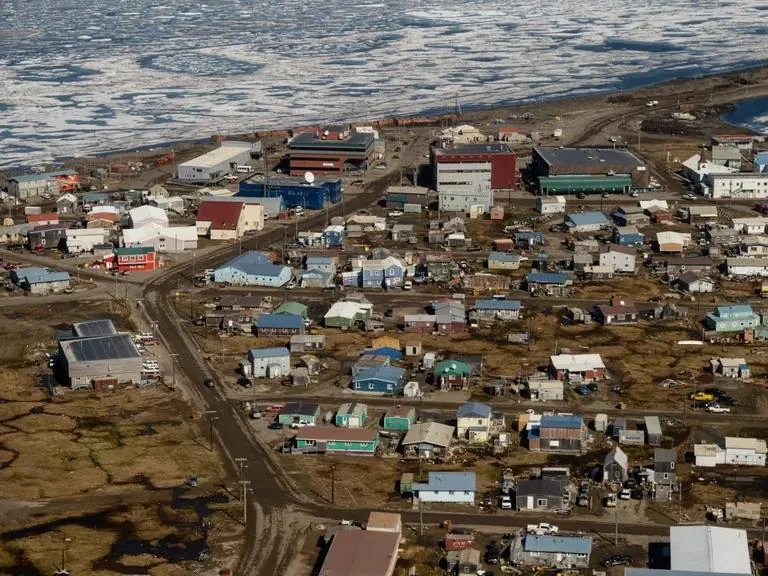
That curiosity led me north—way north—to Utqiaġvik (formerly Barrow), Alaska, the northernmost city in the United States. What I discovered puts our Tennessee winter complaints into some perspective.
65 Days Without Sunlight
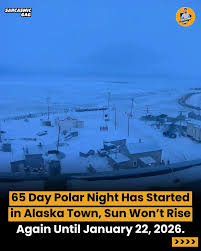
While Felicia and I are bundling up for a day or two of snow, the residents of Utqiaġvik saw their last sunrise on November 18, 2025, and won’t see the sun again until the other day of January 22, 2026—a staggering 65 consecutive days of darkness known as the “polar night.”
Think about that for a moment. Nearly 5,000 people living in a city where the sun simply doesn’t rise for more than two months. The phenomenon isn’t some apocalyptic disaster—it’s an annual reality for America’s northernmost settlement.
Their last sunset occurred at 1:38 p.m. local time on November 18, with the town experiencing only 45 minutes of sunlight that final day. After that? Complete darkness, save for a few precious hours of what scientists call “civil twilight.”
Why Does This Happen?
The science behind polar night is straightforward but mind-bending. Earth’s axis is tilted about 23.5 degrees as it orbits the Sun, and Utqiaġvik sits approximately 1,200 miles from the North Pole and 300 miles north of the Arctic Circle.
During winter, the Northern Hemisphere tilts away from the sun. For most of us in Tennessee, that means shorter days and longer nights. But for communities above the Arctic Circle, it means something far more extreme: the sun literally cannot peek above the horizon, no matter the time of day.
“This happens every year,” CNN meteorologist Judson Jones explains in coverage of the phenomenon. “If you live above the Arctic Circle, there will be a day when the Sun sets for the rest of the winter. The good news? It will return, and then during the summer, it won’t set for days.”
 Not Total Darkness—But Close
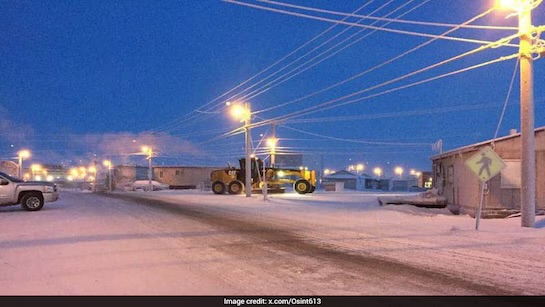
Here’s where it gets interesting: Even without the sun, the town will not be completely dark due to “civil twilight,” a phenomenon where the sun’s rays bend around Earth and appear just above the horizon.
This creates what residents describe as a soft, ethereal blue light—similar to what we experience just before sunrise or after sunset. Initially, this twilight lasts about six hours each day, but by mid-December, it shortens to just three hours as the North Pole tilts farther away from the sun.
During these brief twilight periods, the sky displays beautiful hues of blue, orange, and pink as sunlight scatters through Earth’s atmosphere. Combined with moonlight and the spectacular Northern Lights (Aurora Borealis), Utqiaġvik isn’t plunged into complete blackness—but it’s a far cry from the daylight we take for granted.
Extreme Cold and Daily Life
As if 65 days without direct sunlight weren’t challenging enough, temperatures during polar night frequently dip well below zero degrees Fahrenheit, with brutal wind chills making outdoor conditions even more dangerous.
The absence of solar heating allows frigid arctic air to strengthen in the upper atmosphere, contributing to the formation of the polar vortex. Ironically, that same polar vortex occasionally pushes southward, delivering the harsh winter snaps that occasionally hit Tennessee and the rest of the Lower 48 states.
Yet life goes on in Utqiaġvik. Schools remain open. Businesses keep regular hours. The community, predominantly indigenous Iñupiat people who have lived in the region for 1,500 years, has adapted remarkably to these extreme conditions.
Residents rely heavily on artificial lighting and maintain strict routines to help stabilize their circadian rhythms. The town even hosts America’s northernmost high school football team at Barrow High School, where players and coaches have become accustomed to practicing and playing in conditions most of us can barely imagine.
A Community Shaped by Extremes
Utqiaġvik sits at the northern tip of Alaska about 300 miles north of the Arctic Circle, making it the northernmost community in North America. With a population of approximately 4,400 to 5,000 residents, the city was formerly known as Barrow until officially changing its name on December 1, 2016, as part of a decolonization effort.
The name comes from the Iñupiat word “utqiq,” which refers to the “Eskimo potato” and means “a place for gathering wild roots”—a nod to the indigenous heritage that has sustained this community for millennia.
The town’s roads are primarily unpaved due to the underlying permafrost, and everything from food to fuel must be flown or barged in. Yet despite—or perhaps because of—these challenges, Utqiaġvik has developed a tight-knit community culture that thrives in one of Earth’s most inhospitable environments.
The Silver Lining: Midnight Sun
The flip side of polar night is equally remarkable. While winters in Utqiaġvik feature more than 60 days of darkness, in summer the city experiences nearly three months of total sunlight.
From approximately May 10 to August 2, 2026, Utqiaġvik will experience the “midnight sun”—84 straight days when the sun never sets, remaining visible around the clock. Imagine stepping outside at midnight and seeing full daylight. That’s the reward for enduring the long, dark winter.
Leave feedback about this