TennesseeLedger.com Mission Statement
Support Independent Journalism That Serves Tennesseans, Not Corporations
The facts are stark: Corporate giants now own 90% of the media landscape, and with nearly 3,500 local newspapers shuttered since 2005, the truth is being consolidated or silenced altogether.
The Crisis of Trust
It isn’t just about losing outlets; it’s about losing faith. According to recent data from the Pew Research Center:
∙ 77% of Americans believe news organizations are biased when reporting on social and political issues
∙ Only 22% of adults believe the media treats all sides fairly
∙ While 9 in 10 Republicans perceive one-sided coverage, a substantial 67% of Democrats now feel the same
Despite this erosion of trust, 75% of Americans still believe a watchdog media is essential to holding leaders accountable. They haven’t given up on the role of the press—they’ve given up on the current players.
Our Mission: Truth, Fairness, Accountability
TennesseeLedger.com was founded on a simple principle: Tennessee deserves journalism that serves Tennesseans, not Wall Street investors or corporate board rooms.
We are not funded by hedge funds, billionaire owners, or massive conglomerates. We answer to you—the citizens of Tennessee who deserve honest, balanced reporting on the issues that affect your communities, your families, and your future.
Why Your Support Matters
By removing the corporate filter, we aim to restore the fairness that 77% of Americans feel is missing from today’s media landscape.
Your support allows us to:
Provide Non-Partisan Accountability – We use the “watchdog” role Americans still value to hold leaders accountable, regardless of party. Whether it’s a Republican in the State Capitol or a Democrat in city hall, if it affects Tennesseans, we cover it fairly and thoroughly.
Fund Deep-Dive Investigations – We spend the time necessary to uncover stories that corporate media outlets often overlook—stories about nuclear energy development, legislative actions, local government decisions, and the issues impacting communities from Memphis to Mountain City.
Maintain Total Editorial Independence – We never have to pull a punch to satisfy a corporate parent company. Our only obligation is to the truth and to the people of Tennessee.
Cover What Matters to You – From Smyrna to Nashville, from state legislation to local school boards, from economic development to individual liberty—we report on the issues that shape Tennessee life.
Bridge the Partisan Divide – In an era when Americans across the political spectrum distrust the media, we strive to earn back that trust through balanced coverage, transparent sourcing, and a commitment to presenting all sides of important issues.
Our Promise to Tennessee
At TennesseeLedger.com, we pledge to:
∙ Report facts without corporate influence or political agenda
∙ Give voice to all Tennesseans, not just the powerful or well-connected
∙ Investigate stories that matter to your daily life
∙ Hold government and institutions accountable to the people they serve
∙ Maintain the highest standards of journalistic integrity
∙ Provide a platform for important conversations about Tennessee’s future
Independent Journalism Requires Independent Support
Quality journalism isn’t free. It requires experienced reporters, time for investigation, resources for verification, and the courage to report uncomfortable truths.
When you support TennesseeLedger.com, you’re not just subscribing to a publication—you’re investing in Tennessee’s future. You’re ensuring that someone is watching when politicians make decisions behind closed doors. You’re guaranteeing that local stories don’t disappear into the corporate media void. You’re helping restore the public trust in journalism that has been so badly damaged.
Join us in building the news organization Tennessee deserves.
Because when 77% of Americans don’t trust the news they’re getting, the solution isn’t to give up on journalism—it’s to build something better.
Japan’s Quiet Powerhouse: 200 Companies Fueling Tennessee Jobs and Growth – A Story Worth Telling in a Documentary from Smyrna’s Roots.
The stories we read, watch, and hear often leave a lasting impression on our lives. They inspire us to become who we are, guiding our journeys and opening our minds to new possibilities. Some stories move us so deeply that they don’t just touch our hearts—they help shape our future.
The story of the partnership between Smyrna, Tennessee, and Japan deserves a full documentary—one that traces its journey from Sewart Air Force Base’s postwar forgiveness and reconciliation, through the arrival of Datsun and the Nissan Motor Manufacturing plant, to the Omni Hut restaurant where management often gathered for evening meals. This narrative, born from wartime healing and transformed into an economic powerhouse, belongs on the big screen to inspire the next generation.
In my opinion, there’s not another place in America that has a closer relationship with Japan than Smyrna, Tennessee. The bond runs so deep that Smyrna has a sister city in Zama, Japan, commemorated by Zama Park across from the Smyrna Train Depot—a living symbol of the friendship that grew from those early days of reconciliation to today’s thriving partnership.
Who could have imagined that a Japanese company would one day rise near the site of a WWII air base in Smyrna, Tennessee—transforming a former military ground into common ground, lifting entire families out of poverty and securing a better future for the next generation? The transformation of Smyrna from a small Southern town into a thriving community is closely linked to Nissan’s arrival in the 1980s. It’s more than just an economic development success story—it’s a human story about opportunity, dignity, and the American Dream being extended to working families who needed it most.
I remember the days before Nissan, when job prospects were limited and young people often had to leave town to find good-paying work. When Nissan opened its doors, it didn’t just bring jobs; it brought careers, benefits, and a pathway to the middle class for thousands of families.
“I remember clearly the night I learned Nissan was coming to Smyrna. It was a Wednesday night. I hadn’t been home from church but a few minutes when Mr. McClary called me. I kept my horse at his farm. He said, “Guess who just left my house? The governor and some Japanese people. Nissan is coming to Smyrna.” I was a State Farm agent with my office on Lowry Street. I decided that week to buy a lot on JS Young Road and build an office. It was a great investment. My office on Lowry Street was next door to the Nissan employment office. I served donuts every morning to the folks standing in line, which helped my business tremendously.
Then one day, I met the switchboard manager. We connected, and when one of the managers was moving here, she gave me their name and number.
Luffman Building 782 Nissan Drive Smyrna
That was a goldmine. Next I met Eddie, Mr. Marvin Runyon’s (the CEO) limo driver. Another goldmine. My agency was growing like crazy. I moved to my new office around the same time the Nissan plant opened. I remember the riots and protests. Once those were over and the dust settled, Eddie invited me to invitation-only functions. Nissan was a blessing coming to Smyrna,” said local Historian Marty Luffman, owner of Marty Luffman State Farm Agency Nissan Drive.
Today, Japanese investment has quietly become one of the strongest pillars of Tennessee’s modern economy, reshaping communities from the factory floor to Main Street. More than 200 Japanese-owned companies now operate across the state, making Japan Tennessee’s leading foreign investor. These firms—including global names like Nissan, Bridgestone, and DENSO, along with a wide network of auto suppliers, manufacturers, and service companies—have put down deep roots in communities from Smyrna, Murfreesboro, Franklin, Memphis, Jackson, Chattanooga, Clarksville, Knoxville, Cookeville, and beyond.
The numbers tell a compelling story. Together, Japanese companies employ roughly 50,000 to 60,000 Tennesseans in well-paying manufacturing, engineering, logistics, and professional jobs. These aren’t just jobs but long-term careers, offering benefits, skills training, and advancement opportunities that support families and sustain local small businesses. Japanese firms have invested approximately $20 billion in Tennessee facilities and operations—a commitment that shows up clearly in the state’s tax base through property, franchise, excise, and sales taxes that help fund public schools, roads, first responders, and other essential services.
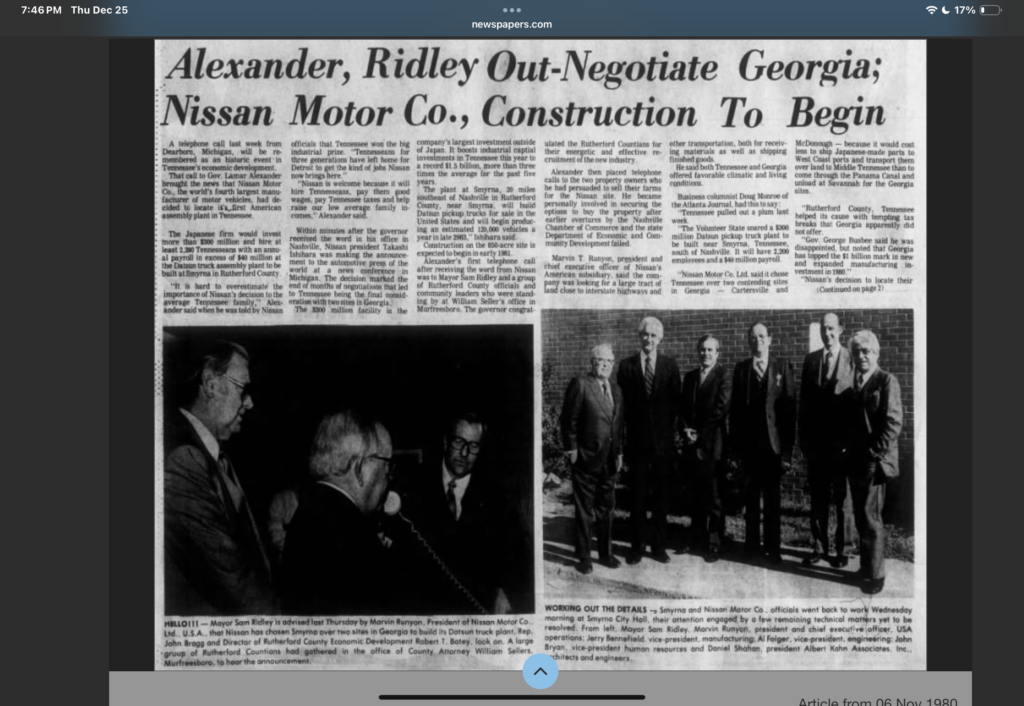
Yet the beginning wasn’t smooth. The groundbreaking for Nissan’s Smyrna plant in 1981 was meant to signal economic progress but instead highlighted deep labor tensions. Union supporters jeered Gov. Lamar Alexander as he was escorted by state troopers through a crowd of about 1,000 protesters who shouted insults at Nissan executives planning a $300 million investment and 2,000 jobs at the company’s first U.S. plant. Alexander later said he was shocked by the crowd’s rudeness. The protest, reported by Kentucky’s Daily News on February 4, 1981, stemmed from Nissan’s use of a South Carolina contractor employing some non-union labor, underscoring the clash between traditional labor disputes and the realities of global manufacturing.
For me, the story reaches far beyond business statistics. As a 13-year-old working at the iconic Omni Hut Restaurant for $1.50 an hour, I often listened to Major James Walls—who had been at Pearl Harbor during the December 7th attack. Major Walls and Sally would often give me rides to work and paid their son and my friend Lonnie and me $20 to mow his three acres with a push mower. I never sensed in him the bitterness toward Japan that some World War II veterans carried.
My late mother once reminded me of something I told her years ago: “Our small town is going to change when the Datsun plant opens.”
Years later, I worked at the Nissan plant in Smyrna from age 25 to 33. Those years shaped in me a deep understanding of manufacturing, community, and the power of economic interdependence.
Rep. Mike Sparks, Consul-General Shinji Watanabe of Japan and staff
Recently, when I was invited to lunch with Consul-General Shinji Watanabe of Japan—Japan’s top diplomat for Tennessee and four neighboring states—the experience felt almost surreal. Sitting across from him, I noticed a picture on the wall of the Smyrna Train Depot, which I believe was a gift from Smyrna Mayor Mary Esther Reed. Seeing that picture and thinking back to our once-small town was deeply moving. I couldn’t help but reflect on how profoundly intertwined Tennessee and Japan have become.
Gov. Bill Haslam, front left, announces March 17, 2015, that Nissan North America plans a $160 million investment in the Smyrna vehicle assembly plant that will add 1,000 jobs in a supplier park. John A. Gillis / DNJ Pictured: Sen. Jim Tracy, Gov. Bill Haslam, Rep. Bryan Terry, Smyrna Mayor Mary Esther Reed and Rep. Mike Sparks of Smyrna
Ironically, our conversation focused not on past success but on future uncertainty. The consulate shared serious concerns about how tariff policies could affect the roughly 200 Japanese companies located in Tennessee. Their worry extended beyond corporate balance sheets to the thousands of Tennesseans whose livelihoods, communities, and public services depend on a strong, stable partnership between Japan and Tennessee in the years ahead.
____________________________________________________________________
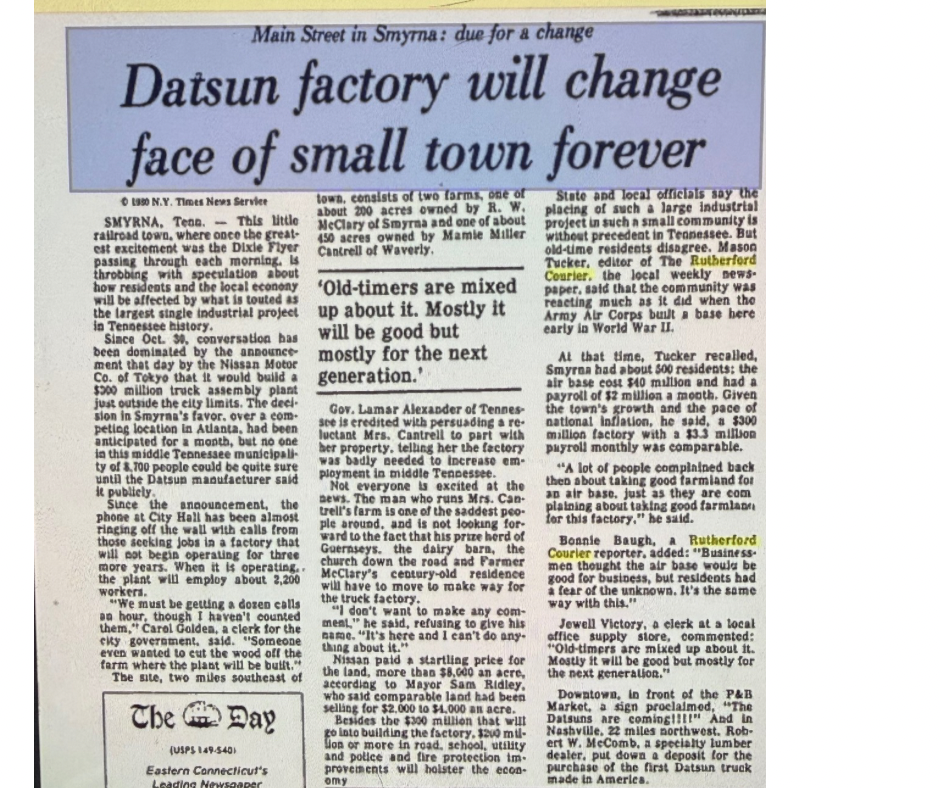
Nissan and Datsun History: Originally published in New York Times, Nov 4, 1980
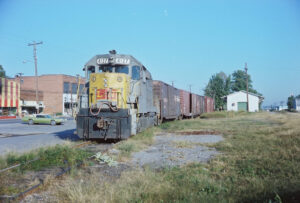
SMYRNA, Tenn. – This little railroad town, where once the greatest excitement was the Dixie Flyer passing through each morning, Is throbbing with speculation about how residents and the local econony will be affected by what is touted as the largest single industrial project in Tennessee history. Since Oct. 30, conversation has been dominated by the announcement that day by the Nissan Motor Co. of Tokyo that it would build a $300 million truck assembly plant just outside the city limits. The decision in Smyrna’s favor, over a competing location in Atlanta, had been anticipated for a month, but no one in this middle Tennessee municipali-Ly of 8,700 people could be quite sure until the Datsun manufacturer said it publicly. Since the announcement, the phone at City Hall has been almost ringing off the wall with calls from those seeking jobs in a factory that will not begin operating for three more years. When it is operating.. the plant will employ about 2,200 workers.
“We must be getting a dozen calls an hour, though I haven’t counted them,” Carol Golden, a clerk for the city government, said. “Someone even wanted to cut the wood off the farm where the plant will be built.”
The site, two miles southeast of town, consists of two farms, one of about 200 acres owned by R. W. McClary of Smyrna and one of about 450 acres owned by Mamie Miller Cantrell of Waverly. ‘Old-timers are mixed up about it. Mostly it will be good but mostly for the next generation. The are of town, consists of two farms, one or about 200 acres owned by R. W. McClary of Smyrna and one of about 450 acres owned by Mamie Miller Cantrell of Waverly.
Gov. Lamar Alexander of Tennessee is credited with persuading a reluctant Mrs. Cantrell to part with her property, telling her the factory was badly needed to increase em-ptoyment in middle Tennessee. Not everyone is excited at the news. The man who runs Mrs. Can-trell’s farm is one of the saddest people around, and is not looking forward to the fact that his prize herd of Guernseys, the dairy barn. The church down the road and Farmer McClary’s century-old residence will have to move to make way for the truck factory.
“I don’t want to make any comment,” he said, refusing to give his name. “It’s here and I can’t do anything about it.” Nissan paid a startling price for the land, more than $8,000 an acre, according to Mayor Sam Ridley, who said comparable land had been selling for $2.000 to $4,000 an acre. Besides the $300 million that will go into building the factory. $200 million or more in road, school, utility and police and fire protection improvements will bolster the economy.
Bonnie Baugh, Rutherford Courier reporter, added: “Business-men thought the air base would be good for business, but residents had a fear of the unknown. It’s the same way with this.”
Jewell Victory, a clerk at a local office supply store, commented: “Old-timers are mixed up about it. Mostly It will be good but mostly for the next generation.” Downtown, in front of the P&B Market, a sign proclalmed, “The Datsuns are coming!!!!” And in Nashville, 22 miles northwest, Robert W. MeComb, a specialty lumber dealer, put down a deposit for the purchase of the first Datsun truck made in America.













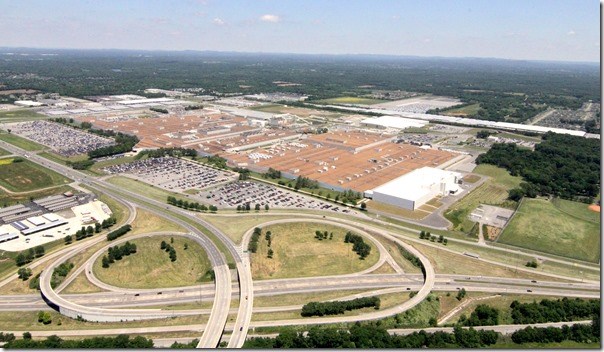
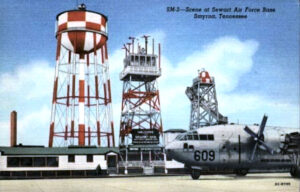 Sewart Air Force Base’s postwar forgiveness and reconciliation, through the arrival of Datsun and the Nissan Motor Manufacturing plant, to the Omni Hut restaurant where management often gathered for evening meals. This narrative, born from wartime healing and transformed into an economic powerhouse, belongs on the big screen to inspire the next generation.
 The transformation of Smyrna from a small Southern town into a thriving community is closely linked to Nissan’s arrival in the 1980s. It’s more than just an economic development success story—it’s a human story about opportunity, dignity, and the American Dream being extended to working families who needed it most.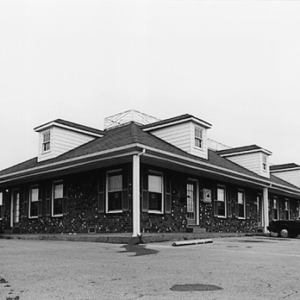

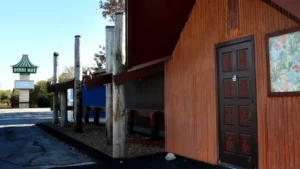 Omni Hut Restaurant for $1.50 an hour, I often listened to Major James Walls—who had been at Pearl Harbor during the December 7th attack. Major Walls and Sally would often give me rides to work and paid their son and my friend Lonnie and me $20 to mow his three acres with a push mower. I never sensed in him the bitterness toward Japan that some World War II veterans carried.
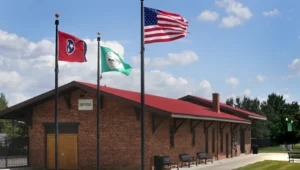 Sitting across from him, I noticed a picture on the wall of the Smyrna Train Depot, which I believe was a gift from Smyrna Mayor Mary Esther Reed. Seeing that picture and thinking back to our once-small town was deeply moving. I couldn’t help but reflect on how profoundly intertwined Tennessee and Japan have become.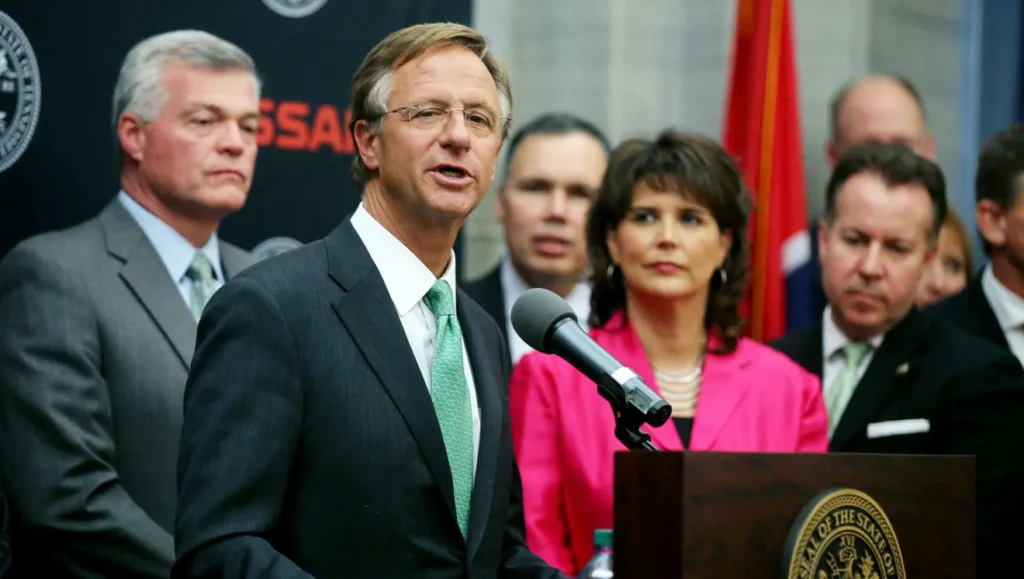
Leave feedback about this