
February 13, 2026
Smyrna, Tn, USA
How To Do More with Less Mental Health & Well Being

Did We Follow the Wrong Psychologist? The Case for Alfred Adler’s Forgotten Legacy

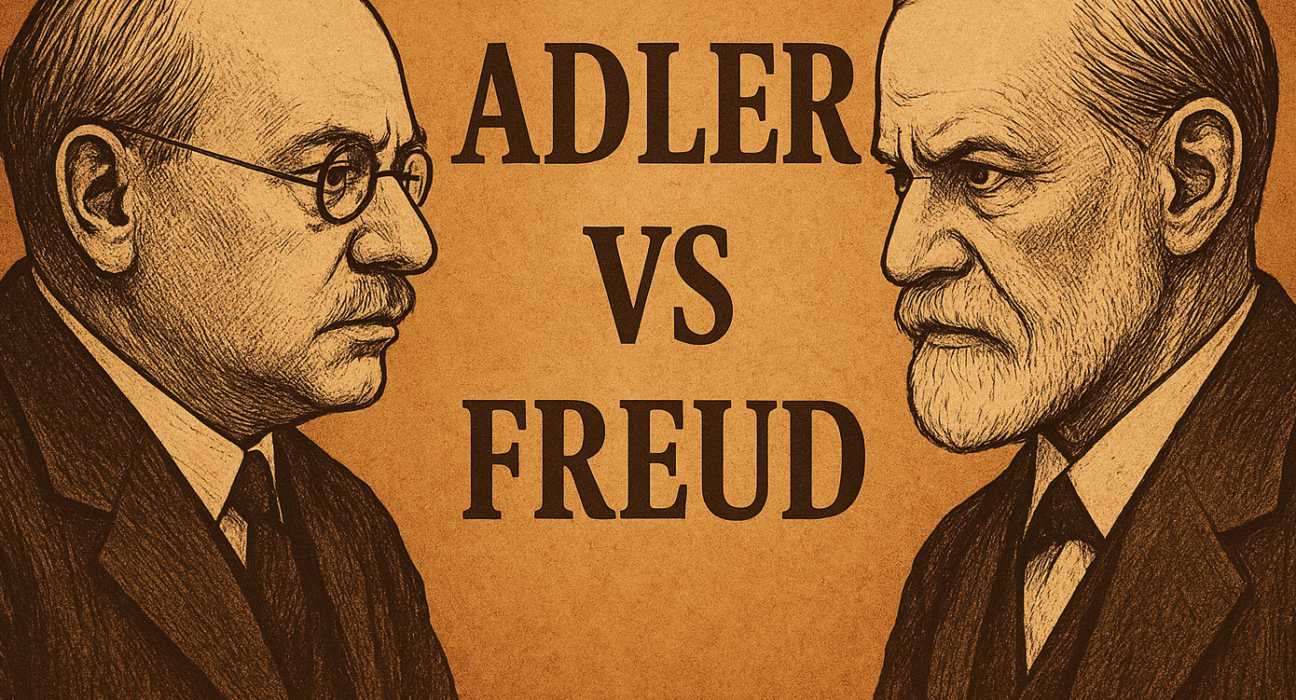
Editor’s Note: Freud vs. Adler Revisited
I’m not a psychologist and don’t claim any expertise, but human behavior has long fascinated me. In my former life running a car business—selling over 2,000 cars and interacting with more than 20,000 to 30,000 people—I saw patterns emerge. Now, as a Tennessee state representative, those insights drive my work to solve real problems. Ironically, problems were much easier to solve in the car business than in politics.
With age brings perspective, and today’s society worries me deeply: rising drugs, violence, divorces, and a mental health crisis—with teen girl suicide rates spiking alarmingly. I’m reminded of my grandkids, 3-year-old Grace and 16-month-old Henry Davis. What world awaits them? Will there be safe drives to Nashville in the future, despite murders along I-24 in LaVergne and Smyrna? Will our growing schools be safe? What will the mental health of my grandkids be?
This week, I met folks trapped in victimhood, blaming past trauma on everyone else—“society’s out to get me. So and so did this! So and so did that!. Even some of my colleagues refused to meet with them. Classic Freud: dwell in the past, play the victim. Adler flips the script—take responsibility, build courage. Freud pioneered work on hysteria; Adler built upon it. But in today’s chaos, Adler resonates: quick action over endless analysis. My late WWII Great Depression-era father would have told me, “Suck it up, buttercup, and get over it!” In fact, I agree with him. It’s time to move on.

The past few months and weeks Ive spoken to many therpist regarding mental health and sadly, teen suicide. There’s no doubt mental delays issues are on the rise. I just gave a heroism of mine a ride from Dr. Automotive and he was telling me a story about a young man committing suicide just last week.

What Are SMART Goals?
SMART goals—Specific, Measurable, Achievable, Relevant, Time-bound—pair seamlessly with CBT for mental health. Swap “get less anxious” for “practice deep breathing 5 minutes daily before bed for two weeks.” Track progress, build momentum, fight procrastination. Small wins crush low motivation and depression.
Integrating CBT with SMART Goals
CBT therapists set SMART targets tied to goals, like boosting social ties against isolation or reframing work fears. Behavioral activation schedules rewards, blending discipline with positivity. Track results to fuel self-efficacy—vague dreams become reality.
Additional Mental Health Strategies
Blend mindfulness with CBT: observe thoughts neutrally to curb rumination. Exercise like weightlifting pumps endorphins—target “bench press 3 sets of 10 reps, 3 days weekly.” Journal distortions daily; forge faith or community bonds. Add gratitude logs, sleep routines (no screens pre-bed), 4-7-8 breathing, and grounding (5 things you see, 4 you touch, etc.). Ditch victimhood—embrace Adler’s courage for resilience. Start today; consistency transforms.

_________________________________________________________________

Originally published in Archology


The Neglected Genius of Adler

by Kain Ramsay

Sigmund Freud is celebrated often celebrated as the father of modern psychology, while his contemporaries such as Carl Jung and Alfred Adler are relegated to the footnotes of history. But what if I told you that Alfred Adler, a name many have never heard, made contributions that are every bit as insightful and practical as Freud’s?
Freud’s influence is undoubtedly monumental, but Adler’s work deserves more attention. From his revolutionary ideas on individual psychology to his emphasis on social connectedness, Adler laid a foundation that challenges and complements Freud’s psychoanalytic framework. This post explores what made Adler exceptional, why his ideas were overshadowed, and how reviving them could reshape modern mental health practices.

Alfred Adler and Adlerian Psychology
Unlike Freud’s obsession with the unconscious and childhood trauma, Alfred Adler focused on a more holistic view of human behaviour. He believed that our lives are guided not by repressed desires but by our goals, social connections, and need to find meaning in life. Here’s a breakdown of some of Adler’s most pioneering concepts.
1. Individual Psychology
Adler’s theory of individual psychology emphasised that people are holistic beings, not a collection of fragmented parts driven solely by the id, ego, and superego. He argued that every individual is unique, shaped by their circumstances and their subjective perceptions of the world. This approach views individuals proactively, as creators of their own lives, rather than passively reacting to unconscious urges.
For example, rather than tracing problematic behaviours back to a singular traumatic experience, Adler advocates for understanding how one’s perception of their life situation motivates their actions.
2. Striving for Superiority
Adler believed the fundamental drive of all human beings is to achieve superiority—not over others, but over one’s earlier self. This isn’t about arrogance but about personal growth and self-improvement.
Striving for superiority allows people to overcome feelings of inferiority, which Adler deemed a normal part of life. For instance, a child who struggles in maths may cultivate a strong work ethic as an adult to overcome those early challenges and achieve career success. Adler saw this as a healthy adaptation, one that creates personal purpose.
3. The Importance of Social Interest
If you think modern psychology’s focus on empathy, kindness, and social connectedness is recent, think again. Adler was decades ahead in identifying the critical role of “social interest”—the intrinsic need to contribute to others and the community. He argued that social relationships are essential for mental health and fulfilment.
For example, Adler believed that building stronger, more meaningful connections with others could alleviate many psychological issues that were otherwise misattributed to internal conflicts.
Sigmund Freud’s Dominance
If Adler’s ideas were so insightful, why did Freud’s theories dominate the field while Adler’s took a backseat?
Part of the reason lies in Freud’s larger-than-life personality and knack for self-promotion. Freud constructed an almost cult-like following around his ideas, which dominated early psychology. By comparison, Adler’s cooperative, socially driven philosophy didn’t grab the same limelight.
Another factor was the nature of their approaches. Freud’s exploration of dark, hidden unconscious urges carried a dramatic, almost literary appeal. It was provocative and sensational, while Adler’s practical and future-focused ideas seemed less exciting on the surface.
Furthermore, Adler distanced himself from Freud early on, forming his separate school of thought by founding the Society for Individual Psychology in 1912. While this enabled him to develop his own theories (Adlerian Psychology), it also removed him from Freud’s influential inner circle, which shaped the academic narrative of 20th-century psychology.
How Mental Health Might Differ if Adler Had Dominated
Imagine a world where Adler’s ideas had shaped psychological thought as much as Freud’s. How might the practice of mental health have evolved?
A Focus on the Present and Future
Adler’s approach encourages us to consider the present and future rather than dwelling exclusively on the past. While Freud’s psychoanalysis often lingered on unresolved childhood conflicts, Adler’s strategies help individuals move forward with actionable goals and a sense of purpose.
Greater Social Connection
Adler’s emphasis on social interest aligns beautifully with contemporary awareness about the impact of loneliness on mental health. If Adler’s legacy had been fully embraced, it’s likely we would have seen earlier adoption of community-focused mental health initiatives and therapy groups.
Personal Growth Over Pathology
Adler saw people as fundamentally capable of change and growth rather than seeing them as “trapped” by their unconscious desires. This could have cultivated a more empowering and optimistic framework for psychology, focused on strengths rather than deficits.
Modern Relevance of Adlerian Psychology
Despite not dominating the 20th-century psychological landscape, Adler’s concepts are making a quiet resurgence today. His ideas resonate strongly with contemporary discussions around mental health, personal development, and workplace dynamics.
Applications in Therapy
Many aspects of Adlerian psychology are already present in modern therapeutic practices like cognitive-behavioural therapy (CBT). For example, exploring and reframing personal goals mirrors Adler’s focus on striving for superiority. Similarly, the integration of family therapy owes much to Adler’s work on the family’s influence on personality.
Social and Workplace Psychology
Adler’s emphasis on social interest aligns perfectly with the modern workplace, where empathy, collaboration, and teamwork are valued more than ever. By taking a page from Adlerian psychology, today’s professionals can create healthier and more productive work environments.
Empowering Individuals
Self-help movements that encourage individuals to find purpose and contribute meaningfully to society strongly echo Adlerian principles. His belief in human potential and the importance of meaningful goals continues to inspire personal growth enthusiasts worldwide.
Why Adler’s Work Deserves More Attention
When considering the giants of psychology, Alfred Adler and Adlerian Psychology often ends up overshadowed by the works of Freud and Jung. But his contributions are far too significant to ignore.
Adler’s ideas challenge traditional psychological theories by offering an optimistic, forward-thinking approach to understanding human behaviour. His emphasis on individuality, personal growth, and the importance of social relationships marks him as a true pioneer in his field.
By reexamining Adler’s work and applying it to contemporary challenges, we have an opportunity to foster deeper connections, empower individuals, and build a healthier society.
If you’d like to learn more about the greatest thinkers who have contributed to the field of psychology and it’s evolution over the last century, check out our Diploma Course in Modern Applied Psychology (DiMAP).
Article Title: The Neglected Genius of Alfred Adler and Adlerian Psychology
 

Leave feedback about this

  • Quality
  • Price
  • Service

PROS

+
Add Field

CONS

+
Add Field
Choose Image
Choose Video
X