May 3, 2026
Sparks Media Group 732 Nissan Drive Smyrna, Tn, 37167 USA
Tennessee Highways and Byways

Absurd Geography: 50 Surprising Truths About the Tennessee You Never Knew Existed

The Hidden Geography of the Volunteer State: 50 Surprising Truths
NASHVILLE, TN — While Tennessee is world-renowned for its neon-lit Broadway and smoky barbecue, a deeper look at the state’s landscape reveals a world of “absurd geography” that remains largely unknown even to locals. From a subterranean ocean with no known edges to mountains that predate the existence of bones, the Volunteer State is hiding a complex geological history right under our feet.
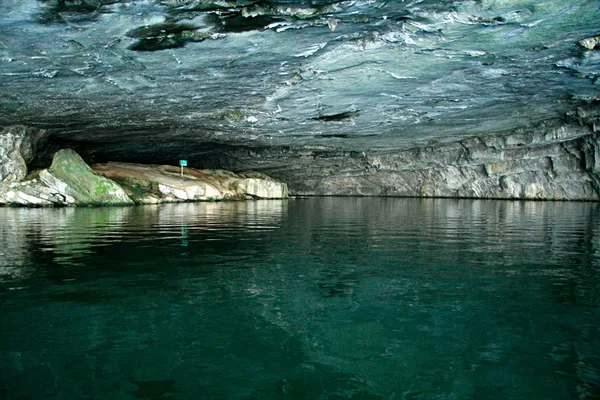
Nickajack Lake Cave
The Subterranean Frontier
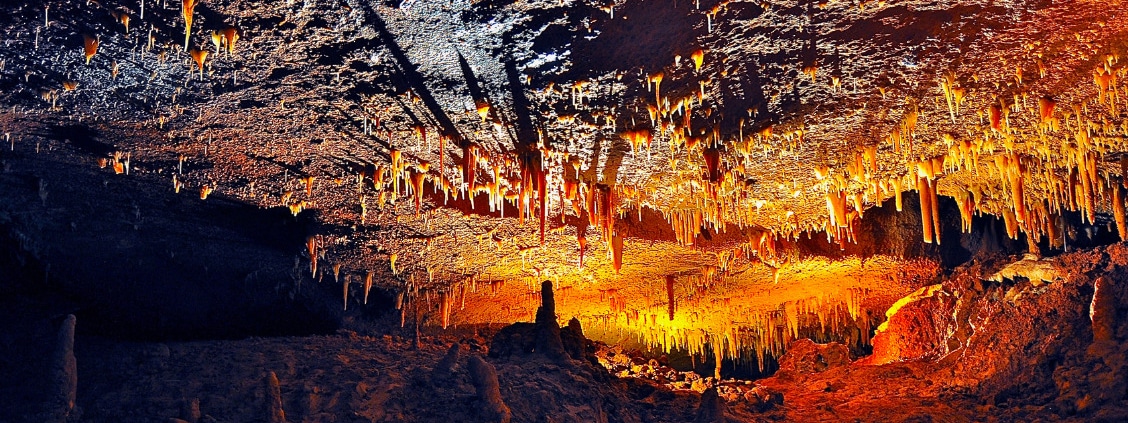
Tennessee holds more caves than any other state in the Union, with nearly 12,000 documented systems—roughly 20% of all known caves in the United States [00:00:37]. Deep beneath Sweetwater lies the Lost Sea, America’s largest underground lake. Discovered in 1905 by a 13-year-old boy, its true dimensions remain a mystery; sonar mapping has covered 13 acres without ever finding the lake’s edges [00:01:21].
This hidden world is more than just empty voids. In the dry chambers of Craighead Caverns, geologists protect “cave flowers”—rare, needle-thin crystal formations found in only a few spots on Earth [00:03:35]. Meanwhile, the Rumble Room inside Rumbling Falls Cave stands as the second-largest cave chamber in America, a five-acre cathedral so massive it houses a 100-foot underground waterfall.

A State Defined by Seismic Shocks
Modern West Tennessee was largely sculpted by the New Madrid earthquakes of 1811-1812. These quakes were so powerful they caused the Mississippi River to flow backward for over a mile [00:08:26] and rang church bells as far away as Boston [00:09:04].
The most visible scar of this event is Reelfoot Lake, Tennessee’s only large natural lake. Formed overnight when the ground dropped up to 20 feet, the lake is essentially a “drowned forest,” where 200-year-old cypress stumps still lurk just beneath the shallow water [00:10:30].
Biodiversity Beyond Borders
The Great Smoky Mountains National Park is famous for its “smoke,” which is actually a chemical reaction where trees release volatile organic compounds to cope with heat [00:13:53]. But the real story is the diversity:
• Tree Species: The Smokies house more native tree species (over 130) than the entire continent of Europe [00:14:36].
• Salamander Capital: The park is the salamander capital of the world. Incredibly, the combined weight of these amphibians exceeds the total biomass of the park’s black bear population [00:17:03].
• Synchronous Fireflies: Every May, thousands of fireflies in the Elkmont region coordinate their flashes in perfect, pulsing waves—a phenomenon once thought to exist only in Southeast Asia [00:16:08].
Living in the Depths
In Cumberland County, geography is a way of life. Grassy Cove is a community where people farm, go to church, and live inside the largest sinkhole in North America [00:22:42]. Spanning five square miles, it is so massive that most residents don’t realize they are standing in a geological crater. No water drains from the surface here; every drop of rain disappears into a cave, traveling seven miles underground before resurfacing as the headwaters of the Sequatchie River [00:23:20].
A Legacy of the Ice Age
Tennessee acts as a biological time capsule. At the Coon Creek Science Center, 70-million-year-old shells from an ancient inland sea still retain their original pearly gloss [00:30:22]. In East Tennessee, the Gray Fossil Site continues to yield surprises, including the only prehistoric red panda ever found in the Americas [00:31:07].
From the high-voltage transformation of the TVA that powered the Manhattan Project [00:33:54] to the “ghost meadows” of Roan Mountain—ancient grasslands likely maintained by extinct Ice Age mastodons [00:35:24]—Tennessee remains a land of extremes.

Leave feedback about this

  • Quality
  • Price
  • Service

PROS

+
Add Field

CONS

+
Add Field
Choose Image
Choose Video
X