
The Power of Direct Communication: Choosing Dialogue Over Ego
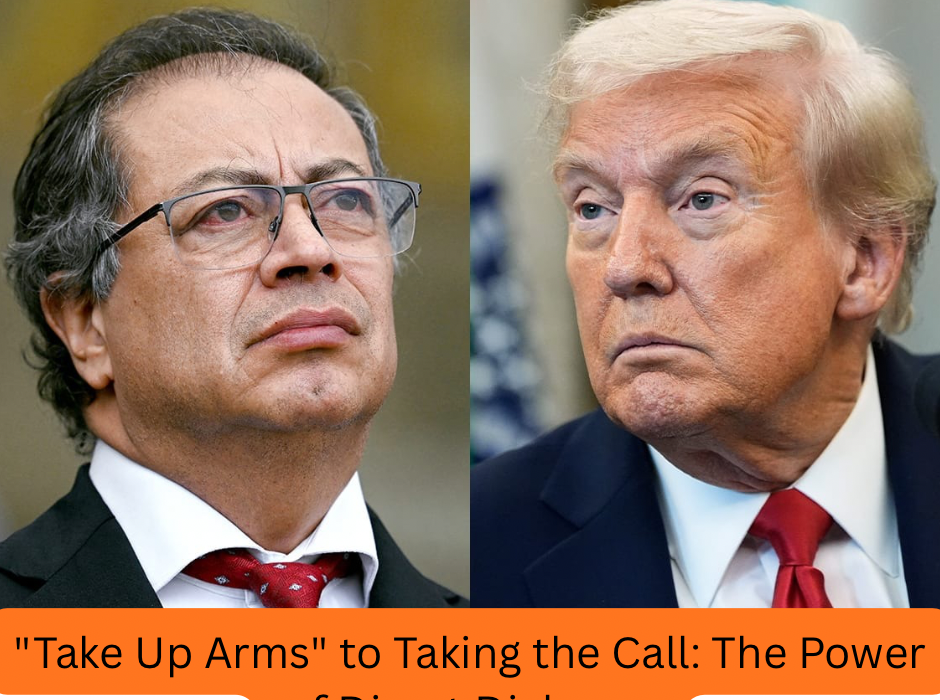
As a state legislator, I was struck by Colombian President Petro’s surprise pivot from confrontation to conversation with President Trump. After threatening to “take up arms” against the U.S. and posting defiant warnings on social media, Petro could have delivered the fiery speech 6,000 supporters expected. Instead, he announced he’d spent an hour on the phone with Trump—actually solving problems. The crowd went silent, their energy drained, but Petro had chosen dialogue that could change outcomes over theater that reinforces divisions. Leaders at all levels must make this same choice: prioritizing problem-solving over performative politics to achieve real results.
A Lunch That Changed Everything
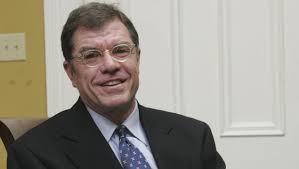
I learned this lesson just before I took office. When I first announced I was running for state representative, a few people laughed. The odds were stacked against me. My opponent, Kent Coleman, was a great guy—a Vanderbilt University graduate and attorney, far more educated and credentialed than me. He was an eight-year lawmaker and chairman of the powerful House Judiciary Committee. During the election he was outraising me 5 to 1.
So I did something a few local state representatives

thought was insane—something I even caught criticism for: after the election was over I invited my opponent, Kent Coleman to lunch to ask for advice.
We met at the former iconic City Cafe—the same place where, during the election, I won their straw poll. Oddly enough, that simple straw poll gave me hope while many others offered only discouragement. Over lunch, I asked Kent a question that had been weighing on me for years as a young Rutherford County commissioner: “Kent, how come no elected officials seem to care about the drug problem and looking for solutions to help folks battling addiction?”
Kent, in his calm professional manner, paused to take his pills for cystic fibrosis—he was the longest-living survivor of the disease, I’m told—before responding with wisdom I’ve never forgotten: “Mike, if someone has never faced addiction, they probably don’t care about it because they’ve never been touched by it. You should ask the next Speaker of the House to appoint you to the House health committee. That way you can be a changemaker, and it would even help your reelection campaign because you’ll raise money easier being on that committee.”
That lunch taught me something profound: your opponent isn’t your enemy. Abraham Lincoln said it best: “Do I not destroy my enemies when I make them my friends?”
Sometimes the person across from you—politically, ideologically, personally—has answers you need. But you’ll never get them if you’re too proud to ask.
…Life lesson: Let go of the ego!
That simple conversation over lunch planted seeds that would shape my entire approach to public service.
The Grandchildren Question
Last week, I spoke at an Americans for Prosperity event and posed a simple question to a crowd of about 120 attendees: “How many of you have grandchildren?”
Very few hands went up. Tori and her husband Nick Veneble proudly raised theirs, beaming with excitement. As the only member of our Rutherford County delegation who has grandchildren, I understand their joy. That reality has fundamentally changed my perspective. When you have grandbabies, you begin to see life through the lens of their future—and the future of their children.
 What kind of country are we preparing to leave them? A nation carrying $38.5 trillion in debt. A place where young families struggle to buy a home. Where traffic congestion grows worse by the day, and our county is forced to plan a $400 million jail while claiming we cannot afford to build the schools our children desperately need.
We face a growing crisis of fatherlessness, reaching levels never seen before, yet serious discussion of real, lasting solutions remains rare. Two young men were recently shot and killed on I-24, yet officials tell us crime is “down.” Call Metro Police at 862-8600 and see whether anyone answers the phone—or whether you’re placed on hold indefinitely. That is the reality many of our citizens experience today.
This is where we stand as a nation: at a deeply troubling crossroads. The need for honest dialogue, courageous leadership, and real solutions is not sometime in the future. It is upon us today.
What We Can Learn from Petro and Trump call?
Strategic Flexibility Over Rigid Posturing
Petro demonstrated willingness to abandon a prepared confrontational approach when circumstances changed. Rather than deliver the “quite hard” speech he’d planned to satisfy supporters’ expectations, he prioritized diplomatic progress. This shows that effective leaders sometimes need to disappoint their base to serve broader interests.
The Power of Direct Communication
The hour-long phone call between Petro and Trump—their first since Trump’s return to office—fundamentally shifted the trajectory of their relationship. Direct dialogue, even between adversaries with significant disagreements, can create openings that public posturing cannot.
Managing the Political Cost
Supporters who came expecting confrontation left “confused,” their energy visibly “drained.” This illustrates a key challenge—leaders must manage disappointed hardliners when choosing negotiation over confrontation. It takes courage.
Reciprocal Tone-Setting
Trump’s response praising Petro’s “call and tone” and agreeing to future meetings shows how one party’s conciliatory gestures can enable the other to respond constructively without losing face. Both leaders found ways to frame the exchange positively to their respective audiences.
Acknowledgment Without Full Agreement
Petro’s statement that “significant differences remain” while arguing “dialogue was preferable to confrontation” shows how parties can deescalate without pretending disagreements don’t exist—a more sustainable approach than forced harmony.
Butthurt Politics
Instead of grappling with these challenges, too many people and elected officials argue over trivial matters. Some spend more time talking about each other than proposing solutions. I’ve coined a phrase for this phenomenon: “butthurt politics”—leaders so wounded by perceived slights, so attached to being right, that they cannot sit down and solve problems together.
This should worry all of us. Our children and grandchildren deserve better than a government paralyzed by ego.
Jesus taught something profound about this when He said, “Blessed are the peacemakers, for they will be called children of God” (Matthew 5:9). Notice He didn’t say “blessed are those who win arguments” or “blessed are those who are proven right.” He blessed the peacemakers—those willing to build bridges rather than walls. In the book of Proverbs, we’re warned: “A gentle answer turns away wrath, but a harsh word stirs up anger” (Proverbs 15:1). How much of our political discourse consists of harsh words designed to stir up anger rather than gentle answers that might actually solve problems?
When Words Turn to Violence
On June 14, 2025, Minnesota state representative Melissa Hortman was assassinated in a shooting at her home in Brooklyn Park,

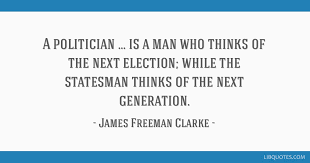 I’m often reminded of an old truth: A statesman will tell you what’s true, even when it’s not popular; a politician will tell you what’s popular, even when it’s not true. The difference is clear—a politician thinks about the next election, while a statesman thinks about the next generation.
Leave feedback about this