Originally published in The Jerusalem Post
Editor’s Note:
Several Western media personalities visiting Iran this week echoed state claims that recent unrest was driven by “foreign-backed rioters.” Experts and press freedom advocates, however, describe Iran’s media as tightly controlled, where independent reporting faces censorship and intimidation. Readers should approach coverage from such restricted environments with caution.
 I’ve personally experienced the damage caused by biased reporting. During a primary race, a local paper placed me on the front page the day of the election, labeling me “Islamophobic and homophobic.” I was polling at 58% — and won nearly 80%. Oddly enough, many said the fake news is why I came in so high. I’ve learned to be a forgiving person and forgave the reporter—I really blame it on the editor. As the Book of Matthew says, “Rejoice when you are slandered.” Those moments only strengthened my belief in honest journalism and inspired me to go back to Middle Tennessee State University to pursue a second degree in communication.
Fair, accurate journalism is the foundation of an informed citizenry. Our country is slowing losing that. When reporters check facts, seek multiple perspectives, and resist sensationalism, they earn what no algorithm can create: trust. A free and accountable press is vital to democracy and remains the cornerstone of our republic.
____________________________________________________________________
Western media personalities who visited Iran this week have parroted the regime’s claims that foreign-backed rioters are behind the recent unrest.
The Iranian regime is using “access diplomacy,” selectively granting entry to Western journalists or influencers seen as sympathetic to the regime or willing to operate within tightly defined boundaries, to reinforce Tehran’s narrative that foreign-backed “rioters” are behind the rising death toll and national instability, experts told The Jerusalem Post on Sunday.
By carefully curating who is allowed to report from inside the country, the regime can project an image of transparency while ensuring that coverage aligns with official messaging, they said. Those granted access often face strict parameters governing what they can film, whom they can interview, and how events may be framed.
Iran’s media landscape is overwhelmingly controlled by Tehran and its security apparatus.
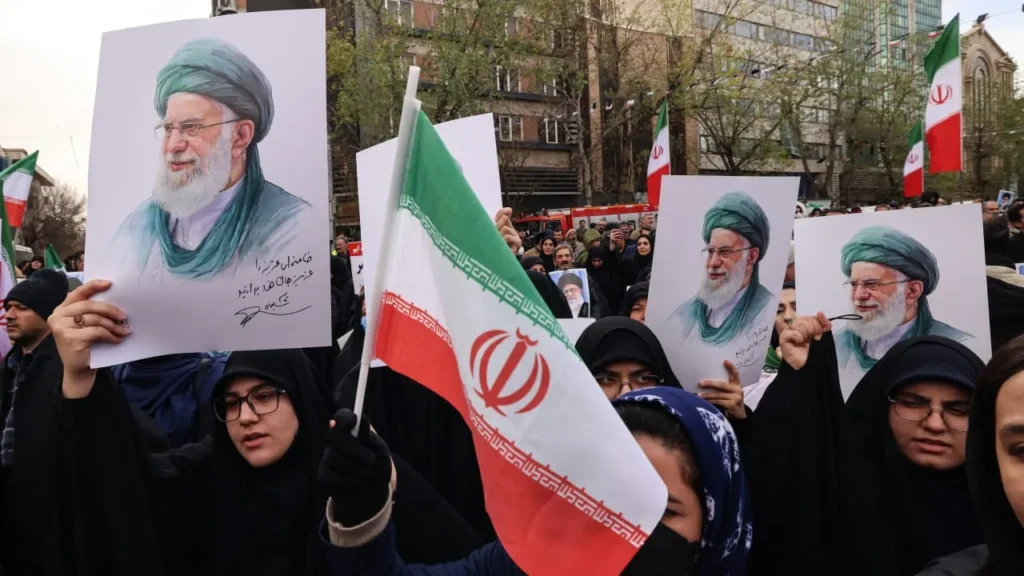
Journalists and independent media outlets frequently face arbitrary arrests, intimidation, and heavy sentences handed down by revolutionary courts, according to the NGO Reporters Without Borders and numerous human rights organizations. Although Article 24 of the Constitution of the Islamic Republic of Iran theoretically guarantees freedom of the press, the 1986 press law gives authorities sweeping powers to censor reporting deemed to “endanger the Islamic Republic,” “offend the clergy and the supreme leader,” or “spread false information.”
ROGER MACMILLAN, a former director of the Persian diaspora site Iran International and an expert in military affairs, told the Post that there was no freedom of the press, only a “state-controlled narrative.”

“Anybody who flies counter to the regime narrative, as has happened to the likes of Iran International, they get labeled as a terrorist,” Macmillan explained.
The regime’s control over information has extended beyond traditional media. On January 8, authorities imposed a widespread Internet blackout, drawing condemnation from the European Parliament, multiple human rights organizations, and UN Special Rapporteur on human rights in the Islamic Republic of Iran, Mai Sato. They accused Tehran of attempting to obscure evidence of large-scale violence against protesters.
IRGC using influencers to legitimize narritive
With digital access largely restored, experts told the Postthat Iran had reverted to its former tactics, using the media and influencers to legitimize its claims.
“The Iranian theocracy is remarkably good at understanding the value of shaping the information domain of war,” Lynette Nusbacher, a war historian and former British army intelligence officer, explained.
Unlike in traditional media, influencers “mostly don’t have editors, or they have really light-touch editors. Nobody is saying, ‘Bushra Shaikh, you’re ignoring other views,’ or ‘Bushra Shaikh, you’re credulously accepting the Iranian government line. Cut out that paragraph, and keep it factual,” Nusbacher said, referencing the British TV star-turned political commentator and self-described independent journalist who recently traveled to Iran.
From my conversations with Iranians, one thing stood out very clearly: their biggest concern was U.S. sanctions – not regime change. Not hijab laws. Not whether they could walk their dogs (which I saw plenty of families doing). What they talked about most was the economic Show more


Leave feedback about this