
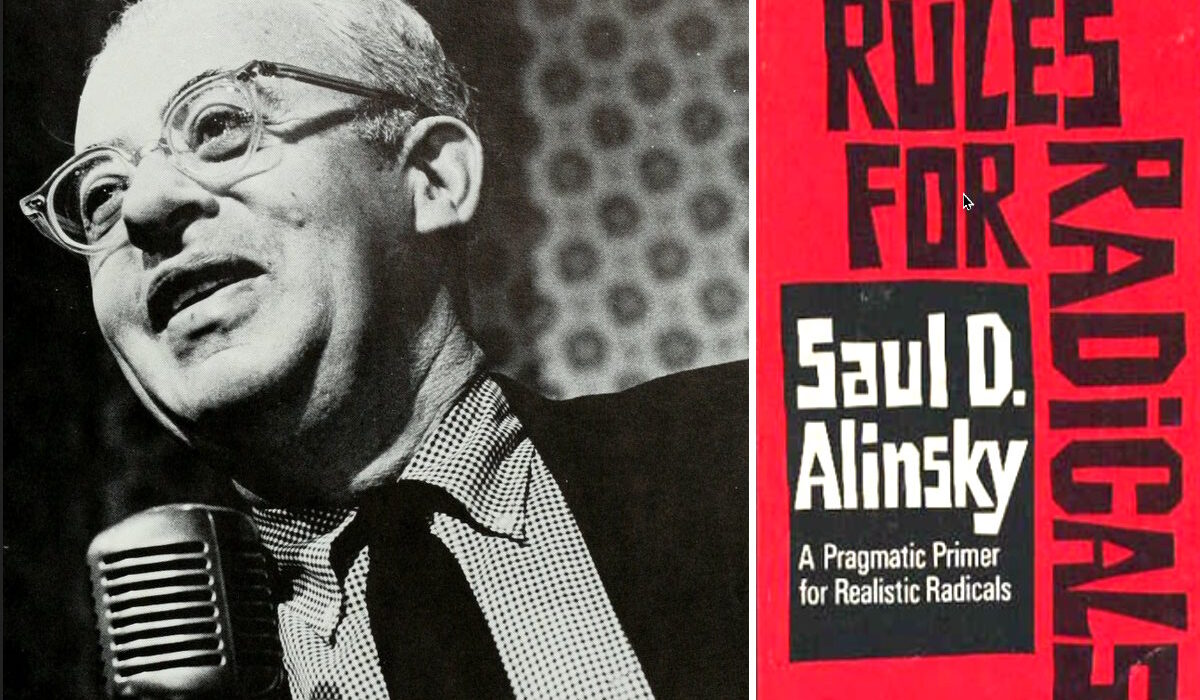
There’s a book that has been quietly shaping American politics for over fifty years. Most people have never read it. Many on the left would prefer you never heard of it. But if you’ve been watching what’s happening in our country — the protests, the personal attacks on political opponents, the media pile-ons, the manufactured crises — and you’ve found yourself thinking, this feels organized, you might be right.

The book is Rules for Radicals, written by Saul Alinsky and published in 1971. Alinsky was a Chicago community organizer who dedicated his life to one goal: the systematic dismantling of existing institutions in order to transfer power to those he believed had been denied it. He was candid about his methods. He even opened the book with a nod to Lucifer as “the first radical” who “rebelled against the establishment.” That tells you something about the spirit behind the strategy.
I’ve studied this book. And I want to walk you through what Alinsky actually wrote — and then let you decide whether you’re watching it play out today.
Rule 1: Power is not only what you have, but what the enemy thinks you have.
Alinsky taught that perception is everything. If your opponent believes you are stronger, better organized, and more dangerous than you really are, they will act accordingly. Look at how the left mobilizes. Whether it’s a weekend march that makes national headlines, a coordinated social media campaign that appears organic, or a protest outside a legislator’s home — the appearance of overwhelming force is the point. The goal is to make you feel outnumbered before the fight even begins.
Rule 5: Ridicule is man’s most potent weapon.
This one stings because it’s so effective. Alinsky understood that rational argument can be countered, but ridicule disarms and demoralizes. It’s why conservatives are consistently mocked rather than debated. It’s why you’re not just wrong on policy — you’re painted as stupid, bigoted, or dangerous. Watch any primetime news segment or late-night program. The laugh track is the weapon.
When they can’t refute your argument, they’ll caricature the man making it.
Rule 8: Keep the pressure on.
Alinsky was clear: never let up. Rotate tactics. Keep your target off balance. The moment your opponent catches their breath, you’ve lost momentum. This is why we see perpetual crisis in modern politics. There is always something to be outraged about. Always a new emergency. Always a reason the other side must be stopped right now. This is by design. Sustained pressure prevents thoughtful governance and exhausts the opposition.
Rule 12: Pick the target, freeze it, personalize it, and polarize it.
This is arguably the most dangerous rule in the book. Alinsky taught that you must identify a specific person — not an institution, not an idea, but a person — and make them the symbol of everything wrong. Freeze them. Don’t let them escape into nuance. Then polarize the public around them.
We’ve watched this done to political figures, business owners, pastors, school board members, and ordinary citizens who simply said the wrong thing at the wrong time. The goal isn’t debate. The goal is destruction. And it’s worked — because too many good people stood silent while it happened to someone else.
What Does Faith Say About All This?
Ephesians 6:12 tells us plainly: “For our struggle is not against flesh and blood, but against the rulers, against the authorities, against the powers of this dark world and against the spiritual forces of evil in the heavenly realms.”
I don’t believe every person on the left wakes up thinking about Saul Alinsky. But I do believe that strategies rooted in division, mockery, and the destruction of individuals are not just politically dangerous — they are spiritually corrosive. A society cannot hold together when its public life is governed by tactics designed to break things down.
Alinsky’s rules work because they exploit our worst instincts. They work because people are afraid to stand up and be targeted. They work because civility can feel like weakness, and weakness invites attack.
The answer is not to match their tactics. The answer is to be clear-eyed about what we’re dealing with, to name it publicly, and to refuse to be demoralized by it.
What You Can Do
First, read the book. Know what you’re up against. Understanding the playbook is not paranoia — it’s preparation.
Second, refuse to be isolated. Alinsky’s tactics depend on making the target feel alone. Stay connected to your community, your church, your neighbors. Sunlight and solidarity are both disinfectants.
Third, engage anyway. The goal of ridicule is to silence you. Don’t let it work. Show up to your city council meetings. Call your state representative. Run for school board. The arena belongs to those who show up.
And finally, pray. Not as a last resort — as a first response. The men and women who built this country, and the communities that have sustained it, have always known that the ultimate source of strength is not a rule in a book. It’s a relationship with the God who made us.
They have their playbook. We have something better.
Leave feedback about this