

From Darkness to Sight: Dr. Ming Wang’s Journey of Faith, Freedom, and Healing
By Mike Sparks
I have known Dr. Ming Wang for many years. He has appeared on my WGNS radio program in Murfreesboro, I have attended a Super Bowl party at his home, and I have helped host his efforts to bring Republicans, Democrats, and independents together for meaningful conversations. I am proud to call him my friend. There is no doubt in my mind that the hand of the Divine has blessed and favored Dr. Wang, enabling him to bring hope, healing, and light to an often-dark world.
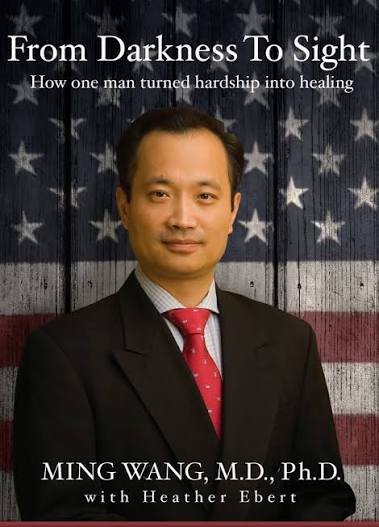
As I read Dr. Ming Wang’s book, From Darkness to Sight, I’m reminded of the late President Ronald Reagan’s words: “Freedom is never more than one generation away from extinction.” Reagan used that phrase to emphasize each generation’s responsibility to preserve freedom. Dr. Wang’s account offers a personal perspective on life under political repression and the opportunity to begin again in America. Ming left communism.
Many people in Middle Tennessee recognize Dr. Wang as a Nashville eye surgeon. Behind that familiar name is a story of a young man whose education and future were threatened by China’s Cultural Revolution—and whose eventual career would bring him into the lives of patients around the world.
His autobiography describes the poverty, uncertainty, and persecution of those years, along with his parents’ determination to help their son survive and continue learning.

A future that almost disappeared
During the Cultural Revolution, universities closed and millions of young people were sent to the countryside for labor. Wang’s parents encouraged him to learn music and dance, hoping that joining a performing troupe might spare him that fate.
When educational opportunities reopened, Wang pursued his studies. He later came to the United States with only $50 and limited English. An account published by the University of Maryland describes how he spent much of that money on a taxi ride from Washington to College Park.
He earned his doctorate in laser physics at the University of Maryland before completing his medical studies through the Harvard–MIT program. Those years of training eventually brought him to Nashville, where he established a distinguished career in ophthalmology. Dr. Ming Wang’s extraordinary journey has inspired two motion pictures: Sight, which tells his life story, and God’s Not Dead, in which the character Martin Yip was inspired by Wang’s conversion from atheism to Christianity.
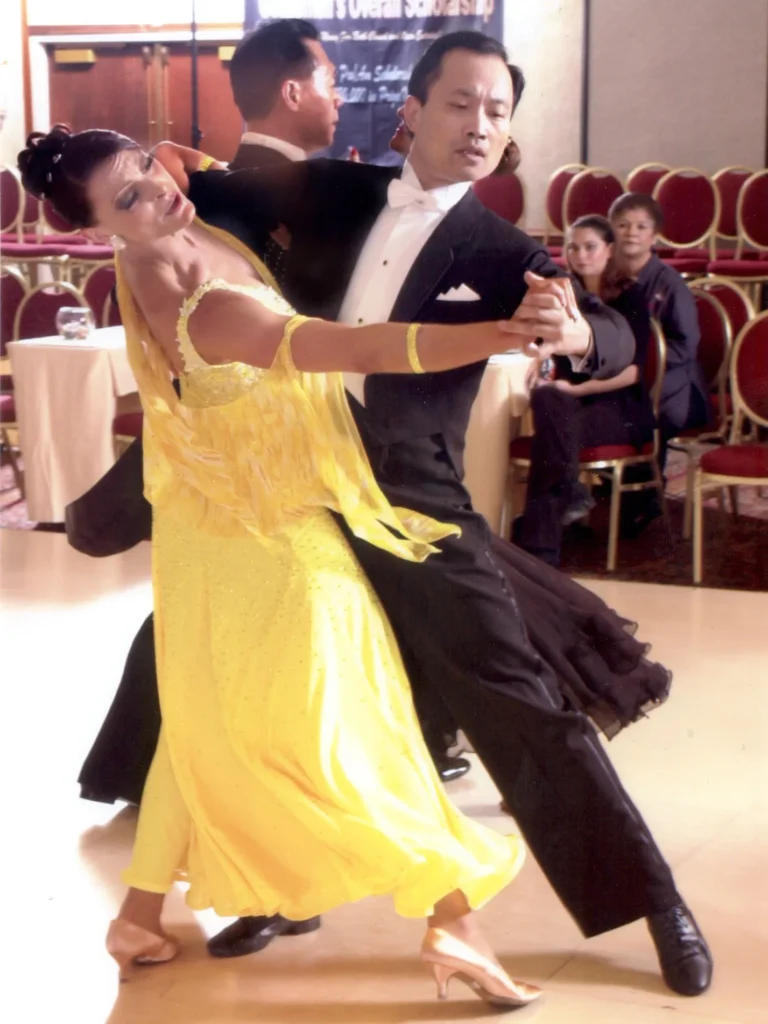
Dr. Wang’s professional biography reports that he has performed more than 55,000 eye procedures, including procedures on over 4,000 physicians. His accomplishments also include numerous scientific publications, ophthalmology textbooks, and medical patents.
Those accomplishments sit alongside another part of his work: the Wang Foundation for Sight Restoration. According to his website, the nonprofit has helped patients from more than 40 states and 55 countries, providing its sight-restoration surgeries free of charge.
For families facing severe vision problems, the challenges can extend beyond obtaining medical treatment. Travel, lodging, and the uncertainty surrounding an unfamiliar procedure can also be difficult. Wang’s fundraising efforts have included support for patients’ transportation and accommodations.
His work has also included developing an amniotic-membrane contact lens intended to support healing on the eye’s surface and reduce scarring. Wang has described his Christian faith as central to his charitable work and his desire to help children with devastating eye injuries.
Faith, science, and a familiar Tennessee friendship
From Darkness to Sight explores Wang’s Christian faith alongside his scientific training. His account considers how those parts of his life influenced his approach to medicine and service.
The book also includes an endorsement from Dolly Parton, who describes him as a dear friend and praises both his surgical skill and his character.

Their connection extends to music. Wang plays the erhu, a traditional Chinese two-stringed instrument, and contributed to Parton’s album Those Were the Days. The musical training that once offered a possible means of surviving a difficult childhood remained part of his adult life in Tennessee.

Leave feedback about this