
Editor’s Note: Twenty-five centuries is a long time. But some stories refuse to stay in the past. Put these two stories side by side and you’ll see what I mean — because at their core, they are the same story. Just different names. Different faces. Same spirit.
So let’s go back to the beginning.
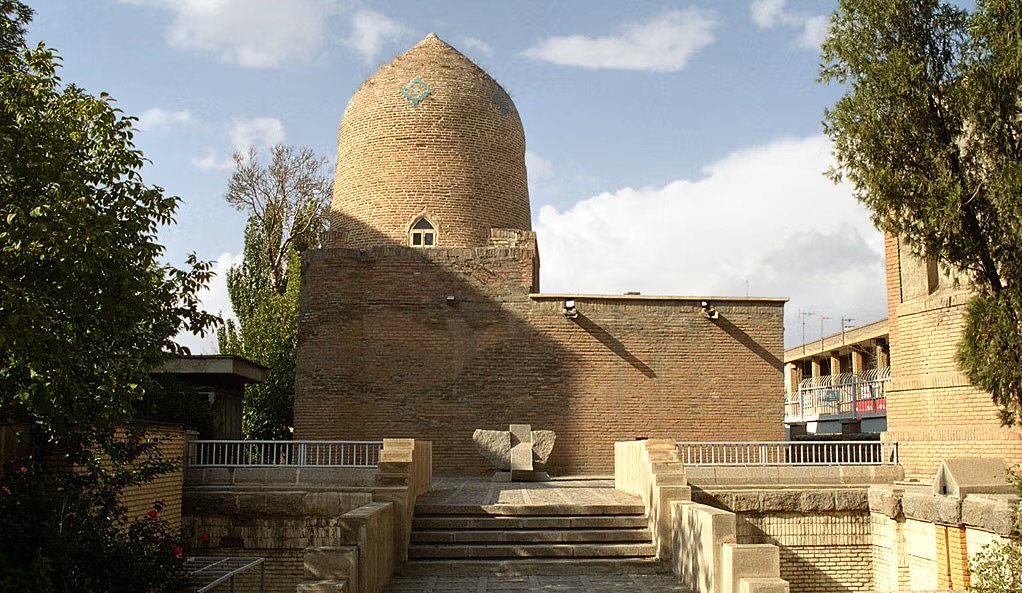
Most people have heard of Queen Esther, and I’ve always loved this biblical story. Did you know the burial tomb of both Esther and Mordecai still exists today? It’s not only a fascinating detail but also a remarkable historical fact.
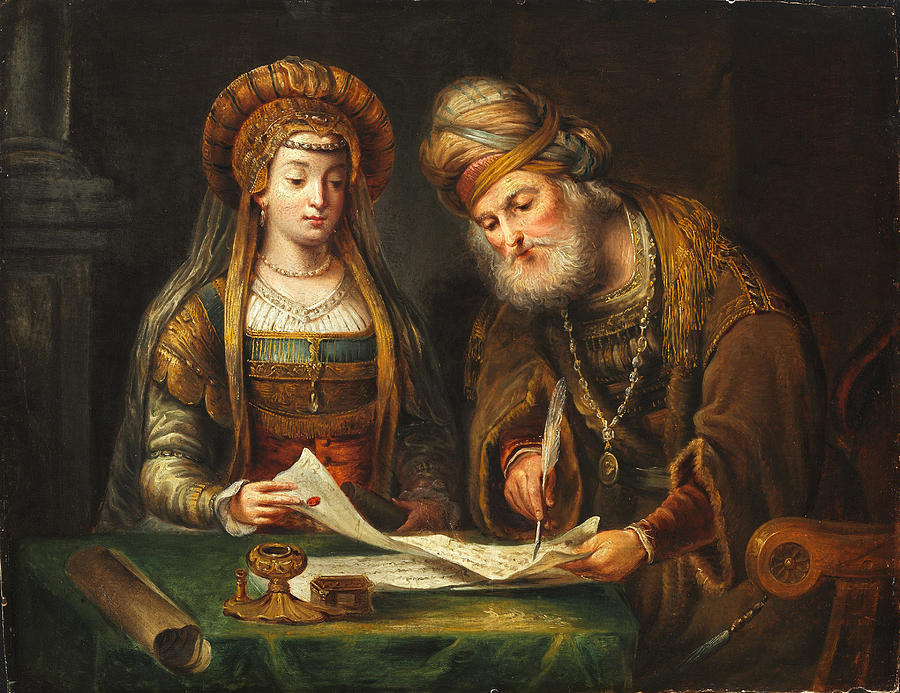
But if you’ve never really sat down and read her story, you’re missing one of the most gripping, human, and flat-out courageous accounts in all of Scripture. This wasn’t some powerful woman with an army behind her. Esther was an orphan. A young Jewish girl raised by her cousin Mordecai, living as a foreigner in a land that wasn’t hers, hiding who she really was just to survive. Somehow, against all odds, she became Queen of Persia. And then everything changed.
A man named Haman — powerful, prideful, and consumed with hatred — devised a plan to kill every Jewish person in the Persian Empire. Every man. Every woman. Every child. Mordecai found out and refused to bow to Haman, which made him a marked man. When word reached Esther, she faced the kind of moment most of us will never have to face. She could stay quiet, keep her head down, and protect herself. Or she could walk into the king’s court uninvited — something punishable by death — reveal that she was Jewish, and beg for her people’s lives.
She walked in.
She told the truth. She exposed Haman. And she saved her people. Mordecai’s words to her before she made that decision have never left the human conscience: “Who knows whether you have not come to the kingdom for such a time as this?”
Esther stands as one of God’s most inspiring heroines — not because she was fearless, but because she was afraid and she did it anyway. A woman of faith, courage, and quiet strength who changed the course of history because she refused to stay silent when it mattered most.
Now set that Bible down and look at what’s happening in the world today.
The Jewish people have been persecuted for a very, very long time. This is not ancient history that we can neatly file away and forget. For centuries, Jewish communities were blamed for everything wrong in society, forced out of their homes and countries, and massacred in violent pogroms that most history books barely mention. And then came the Holocaust — six million Jewish men, women, and children murdered in cold blood. Not in the heat of battle. Systematically. Deliberately. Simply because they were Jewish.
The world said never again.
And then October 7th happened.
On that morning in 2023, Hamas terrorists poured across the border into Israel and attacked people in their homes, in their beds, and at an outdoor music festival where young people had gathered just to dance and enjoy life. Around 1,200 people were killed — most of them ordinary civilians. More than 200 were dragged back into Gaza as hostages, including small children and elderly Holocaust survivors who had already lived through one nightmare and were now living through another. Experts called it the single worst day of violence against Jewish people since the Holocaust. And in the days and weeks that followed, some people around the world had the nerve to justify it, explain it away, or flatly deny what the entire world had seen with its own eyes.
If that doesn’t tell you that antisemitism is still alive and still deadly, nothing will.
And then there is Iran.
Iran sits on the exact same land as ancient Persia — the land of Haman. And for decades, the Islamic Republic of Iran has made it crystal clear that it wants Israel gone. Not negotiated with. Not contained. Gone. Iran’s Supreme Leader Ali Khamenei didn’t just allow crowds to chant “Death to America” and death to Israel — he stood up and cheered them on. Openly. Proudly. The same way Haman once walked through the streets of Persia confident that his plan would succeed.
And then yesterday, the news broke.
Ali Khamenei — the man who spent decades calling for the destruction of the Jewish state — was killed, along with roughly 40 other Iranian leaders. The man who cheered those chants will not live to see his plans fulfilled. If you know how the Book of Esther ends, you know that Haman didn’t either. The gallows he built for Mordecai became the gallows he died on. History doesn’t just rhyme. Sometimes it repeats almost word for word.
For Jewish people watching all of this unfold, this doesn’t feel like coincidence. It feels like a story they have read before. Because they have. Every single year at Purim, Jewish families gather and read the Book of Esther out loud — the story of a man who wanted them dead and a young orphan girl who stood up and said no. The story has never ended with Haman winning. Not once in 2,500 years.
And the question that story leaves behind has never gone away either.
Who will stand? Who will speak when speaking is dangerous? Who will act when doing nothing is so much easier and so much safer?
I’ll tell you this much — in my time serving in elected office, I have sat across the table from people, looked them in the eye, and recognized something familiar. A certain kind of pride. A certain kind of contempt for those they consider beneath them or in their way. A willingness to use power not to serve people but to crush them. I have seen, up close, a few people who fit Haman’s profile almost to the letter. They don’t carry his name. They don’t wear his clothes. But the spirit is the same — self-serving, calculating, and dangerous to anyone who dares to stand in their way or refuse to bow. You learn to recognize it. And once you do, you cannot unsee it.
That is exactly why this story matters so much right now.
Esther wasn’t a warrior or a politician. She was a young woman with no power of her own who was placed in exactly the right position at exactly the right moment to do something nobody else could do. That is not an accident. That is providence. And the Hamans of this world — whether they sit in Tehran or in a government office closer to home — have never once, in all of recorded history, had the last word.
We don’t have all the answers to what is happening in the Middle East right now. Nobody does. But what we can offer is this — context. A reminder that what feels brand new has actually happened before. That history has a longer memory than the news cycle does. And that understanding where we are requires being honest about where we have been.
Esther was afraid. Of course she was. But she decided that her people mattered more than her own comfort and safety. That is not ancient history. That is a living example of what ordinary faith looks like when it is pushed to its limit.
“Who Will Stand For Such a Time as This?”
____________________________________________________________________
The purported burial site of Purim’s Persian queen was a pilgrimage site for Iran’s Jews.
According to the biblical book named after her, Esther was a beautiful young Jewish woman who caught the eye of the Persian King Ahasuerus, became queen, and with the assistance of her cousin Mordecai, saved Jews throughout the Persian Empire from annihilation. Every year, on the holiday of Purim, Jews around the world celebrate this miraculous salvation by reading the Book of Esther, dressing in costumes, and eating delicacies.
Iranian Jews similarly mark the holiday, but for centuries have also made a pilgrimage–throughout the year, but especially on — to a shrine in the city of Hamadan where, according to tradition, Esther and Mordecai are buried. The origins and contents of this shrine are cloaked in legend and mystery.
Hamadan, known in antiquity as Ecbatana, is in the Kurdish region of Iran. Mount Alvand, which overlooks the city proper, hosted the summer residence of Persian royalty of the Achaemenid Empire (the period when the Purim story is believed to have happened). Tradition has it that Esther and Mordecai — after spending their final years at the royal resort — were buried in the city, next to one another, with a shrine constructed over their graves.
While the original shrine’s date of construction is unknown, its date of destruction, at the hands of Mongol invaders, purportedly occurred in the 14th century. Historian Ernst Herzfeld contends that the current structure may actually belong to Shushan Dokht, the Jewish queen of King Yazdagerd I (ca. 399-420 CE), who is credited with securing permission for Jews to live in Hamadan.
Herzfeld dates the current structure to 1602 CE, partly on account of its traditional Persian architectural style (known as Emamzadeh), which was ubiquitous amongst the shrines of Muslim religious leaders built in that era. In most cases, these buildings include an entry hall and a main square hall with a domed ceiling that surrounds the sarcophagus (stone coffin).
Earliest Reports
For centuries, Iranian Jews, Muslims, and Christians, particularly women praying for fertility, venerated the modest brick shrine. The first detailed accounts in the historical record are from Christian tourists in the 1800s and early 1900s. These records, which include outstanding illustrations, descriptions, and even photographs, were recently digitized–and provide a rare glimpse into the condition of the shrine in the past and the particular observances once held there.
One 19th-century visitor describes a marble plaque on the interior dome walls claiming that the structure was dedicated in the year 714 CE by “the two benevolent brothers Elias and Samuel, sons of Ismail Kachan.” Other visitors describe rooms covered in pilgrims’ graffiti in various languages as well as darkened by candle smoke; a stork’s nest sitting atop the shrine’s dome; and a prayer area within that was designed to enable worshippers to face the tombs and Jerusalem at same time.
They also recount that notes in Hebrew script were placed near the tombs, similar to how Jewish worshippers often tuck prayer notes into the stones of Jerusalem’s Western Wall.For Iranian Jews, who could reach Jerusalem only with great difficulty, the shrine served as a stand-in place at which to pray and weep.
Renovation
Until the 1970s, the shrine was hidden away in a crowded part of Hamadan, surrounded by houses, and accessible only through a narrow dirt alley. But in 1971, in honor of a national celebration of 2,500 years of Iranian monarchy, the Iranian Jewish Society commissioned architect Yassi (Elias) Gabbay to undertake a renovation.
Houses around the tomb were purchased and demolished, making the shrine accessible from the main street via a bridge Gabbay constructed over the new courtyard and a partially-underground synagogue chapel he also built, to complete the shrine complex. The subterranean chapel has a skylight in the shape of a Star of David that can be seen in Google Earth, quite possible making the Islamic Republic in Iran home to the only Jewish star visible from space.
The renovation did not significantly alter the shrine itself, or the grave stones cluttering the plaza outside the old shrine. (Some prominent local Jews had in the past secured burial plots outside the shrine, which they considered holier than plots in the main Jewish cemetery in Hamadan.)
One of the old structure’s remarkable features that Gabbay preserved is its front door, a massive piece of granite with a hidden lock. Less than four feet high, the stunted doorframe forces visitors to bow as they enter, in deference to the site’s holy occupants.
An outer chamber holds tombs of famous rabbis and provides access by means of an archway to the interior chamber. The interior chamber features Hebrew writing along the walls and holds two carved sarcophagi, supposedly marking the burial spots of Esther and Mordecai. This chamber also houses a cabinet with a 300-year-old Torah scroll.
The Contemporary Shrine
Today, Esther’s Tomb has lost some of its former splendor. Iranian authorities, for example, have removed an ornamented gate Gabbay had erected along the sidewalk using a geometric motif common in many mosques. The problem? Part of the classic motif forms a Jewish star — a fact regime officials apparently considered intolerable (unlike the fence, the Star of David skylight is not visible from street level). Gabbay himself lives in exile, having fled after the Islamic Revolution and restarted his architectural practice in Los Angeles, though he dreams of returning to see the site he transformed.
The question of whether the shrine actually marks the resting place of Esther and her uncle remains unanswered, and is perhaps unanswerable. But one 19th-century Christian pilgrim offered her own insight on the effectual significance of the tomb and the 2,700-year-old Persian Jewish community that guards it:
“Beside the tomb of Esther the lowly race she saved have kept loving watch through all the weary ages. More wonderful than any ancient monument are these Jews themselves, lineal descendants, in blood and faith, of the tribes of Israel, and the only vestige of the truly olden time which entirely defies decay and dissolution.”
Leave feedback about this