Four Generations, a ’68 Barracuda, a Raccoon and a Trip Back to 1986
As I get older, I find myself becoming more nostalgic and reflecting on days gone by. Maybe every generation feels this way, but there are times when I genuinely believe life seemed a little simpler—and in many ways better—for a lot of us growing up in the 1970s, ’80s and ’90s.
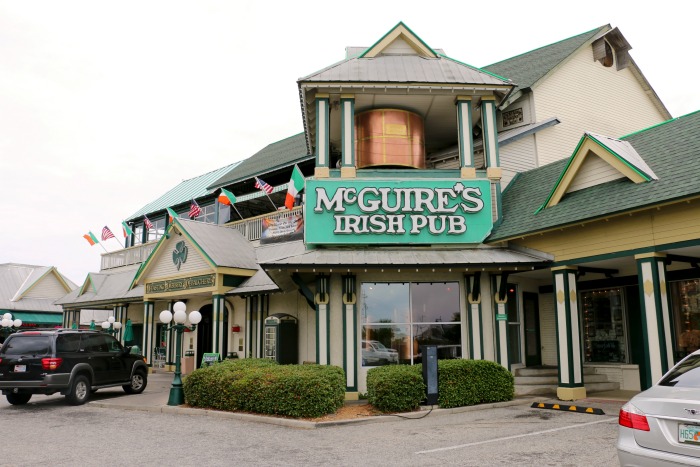
As I write this, our family is visiting Fort Walton Beach, Florida. We rarely get the opportunity to take a vacation with everyone together, but with Felicia’s parents getting older and slowing down, she wanted to do something special: bring four generations of our family together under one roof. We just left McGuire’s Irish Pub restaurant in Destin. If you’re down here visiting I’d highly recommend it.
Being back along Florida’s Gulf Coast has stirred up some memories—especially one from exactly 40 years ago.
It was the summer of 1986.
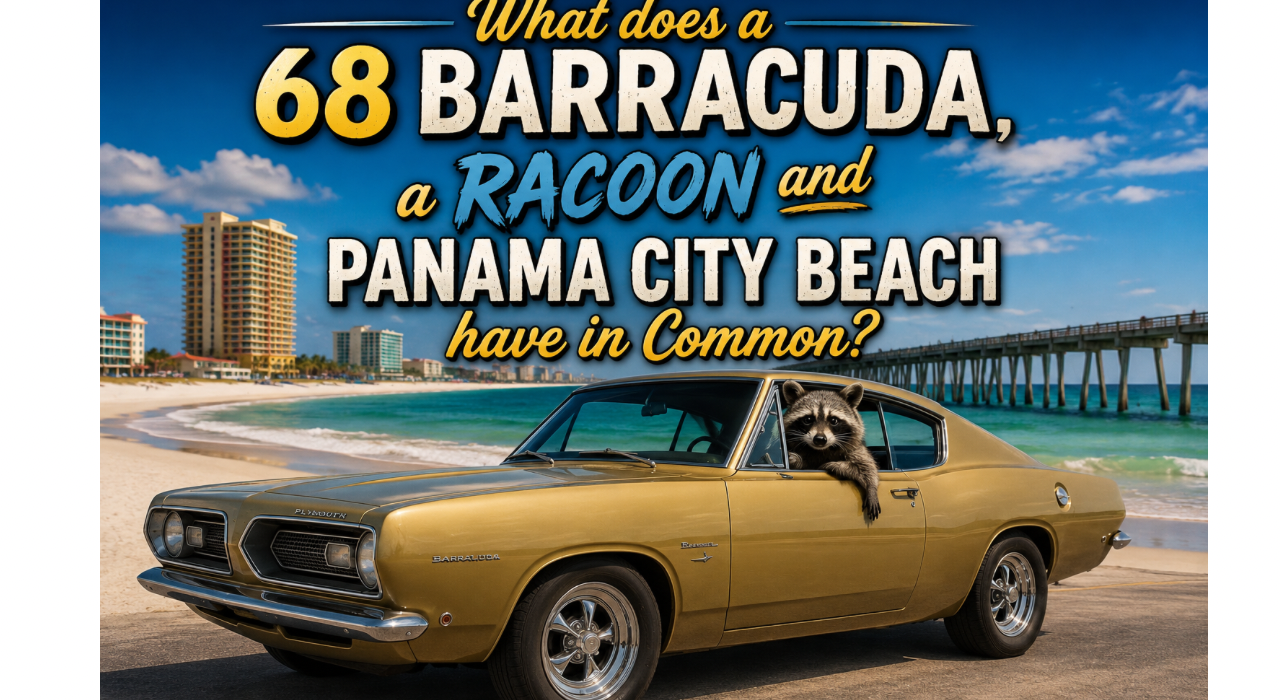
A friend of mine, Mike Carr, and I were out cruising around Smyrna in his gold 1968 Plymouth Barracuda Fastback. For younger readers, “cruising” was actually something young people did back then. We didn’t have smartphones, social media or GPS. Sometimes you simply got in a car with your friends, drove around town and saw who you might run into.
That evening, we ran into two guys we really didn’t know very well. One of them said something along the lines of, “Hey, I know a guy in Panama City Beach. We could drive down there and stay with him.”
For two young guys with about $20 each in our pockets, that somehow sounded like a great idea.
So we all piled into Mike’s Barracuda and headed south for Florida.
At 14–16 miles per gallon, our budget practically burned into the gas tank before Panama City Beach. But hey, we made it.
There was just one problem.
When we arrived at the apartment of the fellow who was supposedly going to give us a place to stay, he wouldn’t let us stay there.
So much for the plan.
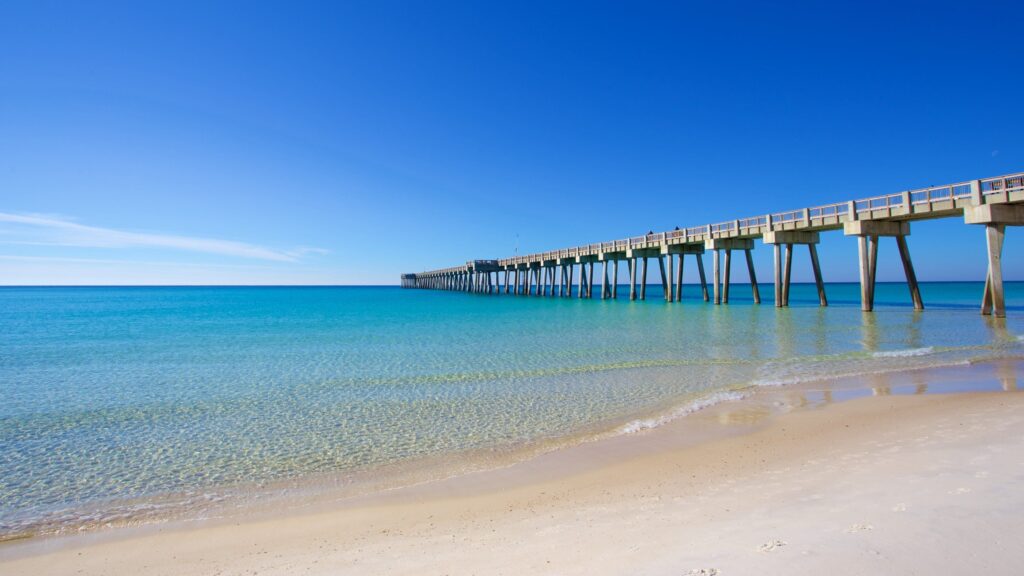
Over 1,500-feet-long, Russell-Fields Pier is one of the longest piers on the Gulf of America
When evening came, Mike and I folded down the rear seat of that old Barracuda and decided the car would become our hotel room for the night. The other two guys headed off to hang around the beach and smoke their weed. They were more of the partying type.
Mike and I weren’t.
I guess you could have called us squares.
But looking back, it really wasn’t such a bad evening.
Mike parked the Barracuda facing the Gulf—the body of water we knew then as the Gulf of Mexico—now Gulf of America and the breeze coming off the water flowed through the car. The Barracuda had those old vent windows in the front, which were great for catching the air.
And we needed every bit of it.
The car didn’t have air conditioning.
Air conditioning wasn’t nearly as common when that Barracuda was built in 1968, and even if the car had originally been equipped with it, the odds of it still blowing ice-cold air 18 years later probably weren’t very good.
So there we were—two nearly broke young men from Smyrna, sleeping in the back of an old Plymouth Barracuda beside the Gulf of Mexico…or, as we call it today, the Gulf of America.
And yet, lying there listening to the ocean waves, my thoughts weren’t really on Florida. The thoughts were back home in Smyrna on a beautiful young lady.
I had recently started dating a young woman named Felicia, and I found myself missing her.
At the time, I couldn’t possibly have known where that relationship would lead. I certainly couldn’t have imagined that nearly four decades later, Felicia would be my wife, and we would be back on Florida’s Gulf Coast surrounded by our children, grandchildren and her parents—four generations of family making memories together.
That’s one of the strange things about getting older.
At 19 years old, you’re usually looking ahead, wondering what’s around the next corner. Decades later, you find yourself looking backward and realizing that some of those ordinary moments weren’t ordinary at all.
A 1968 Barracuda.
Twenty dollars in your pocket.
No hotel room.
No air conditioning.
No cell phone.
And a young man lying awake beside the Gulf, thinking about a girl back home named Felicia.
Forty years later, I’m still traveling with that same girl.
And somehow, that makes that old Barracuda seem a little more special today.
If my memory is correct Mike sold that Barracuda a few years later for $3000. I just saw one like it for sale on Facebook Marketplace for $30,000.
Were Times Better Back Then? …I Think They Were
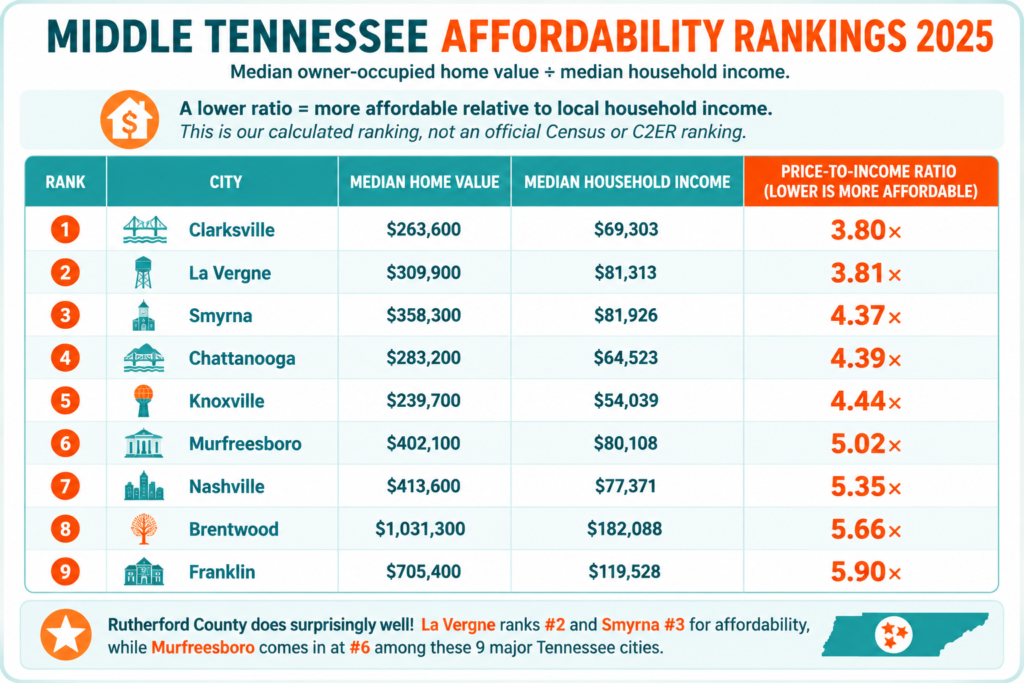
Back in 1986, Tennessee was the undisputed poster child for low cost of living. If you were looking to stretch a dollar, the Volunteer State was practically handing you a rubber band. Everyday expenses were low, and housing wasn’t just affordable—it was almost absurdly cheap compared to the rest of the nation.
The Catch? Local Paychecks Reflected It
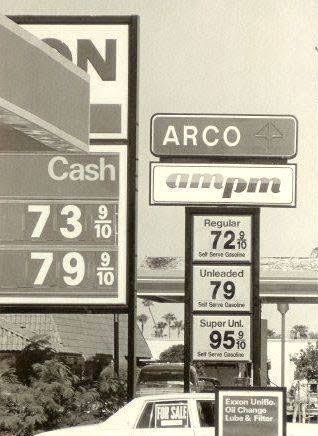
While the national median home price climbed past $90,000 in the mid-80s, a house in Tennessee would set you back between $45,000 and $55,000. Renters enjoyed a similar discount: a one-bedroom apartment in growth hubs like Nashville, Memphis, or Knoxville commanded a modest $250 to $300 a month. Felicia and I rented our first apartment at Kings Crest Apartments in Smyrna for $300 a month. You could fill your tank with gas for less than 90 cents a gallon, pick up a gallon of milk for $2.00, and grab a dozen eggs for $1.20.
To be fair, local earnings were less than other areas of the nation. Tennessee’s median household income sat at $18,260 in 1986, compared to the U.S. average of $23,530. Yet, because a typical home cost just 2.5 to 3 times an average household’s annual earnings, economists classified the state as “very affordable.” Your Tennessee dollar smile went further back then, even if your paycheck wasn’t breaking national records.
Fast forward to today, and that economic math has completely flipped. Driven by a massive influx of out-of-state buyers, corporate relocations, aggressive expansion and even illegal immigration modern Tennesseans face steep affordability hurdles that 1986 residents wouldn’t recognize.
Looking back, 1986 marked the calm before the storm—the exact turning point when the state’s commercial landscape shifted into high gear. Sparked by Dollywood’s opening its gates in East Tennessee that very year, the state began a regional tourism and economic expansion that hasn’t tapped the brakes since. Shout out to the late Dolly Parton who passed away yesterday. What a wonderful woman and great Tennessean.
Back in 1990, just eight months into our marriage, Felicia and I bought our very first home for $60,500. Today, that property on Nissan Drive in Smyrna is zoned commercial and estimated at eight to ten times its original value. She was 19, I was 22, and she was the exact girl I had prayed for since high school. Looking at the market today, it’s heartbreaking to realize how out of reach those essential early steps into homeownership have become for young couples starting out.
Watching our grandbabies splash in the swimming pool, I can’t help but worry about what the future holds for their young lives. How do we build a better world for them—and for the millions of young people who will follow in their footsteps?
And now, for the raccoon story. On our way back from Panama City Beach, one of the guys riding with us somehow managed to buy a tame raccoon at a gas station stop. Picture it: four young guys, one crammed Plymouth Barracuda, and a live raccoon—what could possibly go wrong? By that point, I just wanted to make it back home and see Felicia.
Let me know what your ideas are to find solutions to the myriad of problems are community and our state faces. My email is Rep.Mike.Sparks@capitol.tn.gov or call my office 615-741-6829.