7 Cool Things You Didn’t Know About the Erie Canal
One of America’s greatest early engineering achievements, the Erie Canal transformed a seemingly impossible idea into a waterway that helped reshape the nation’s economy.
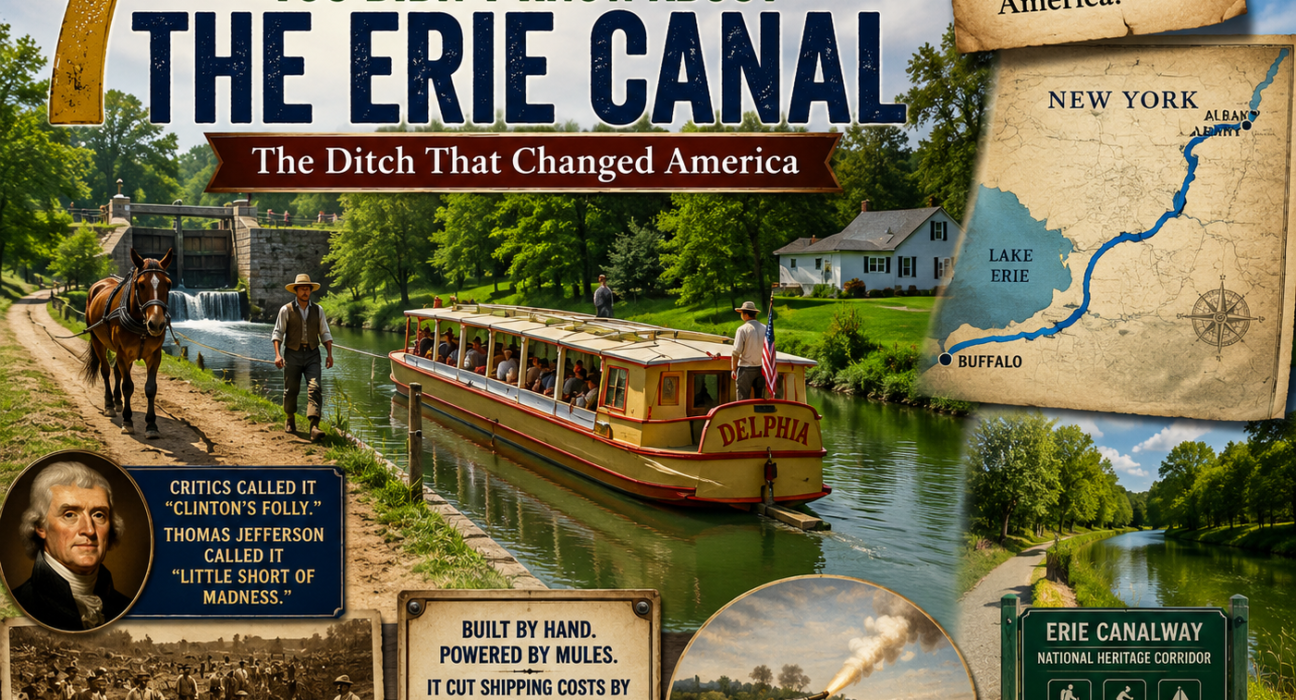
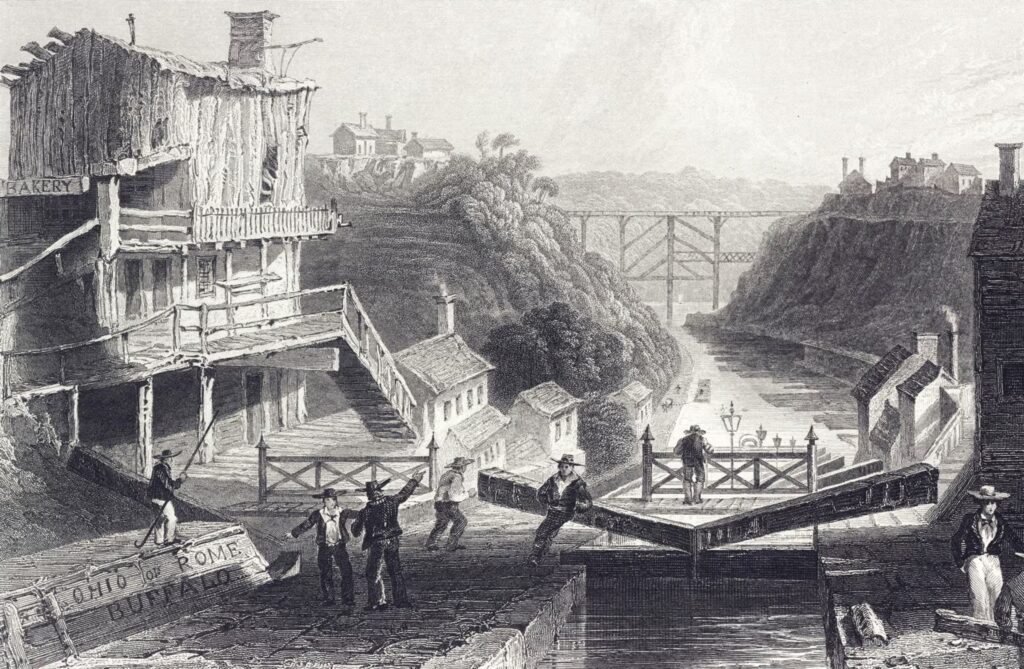
Completed in 1825, the original canal stretched roughly 363 miles across New York, connecting the Hudson River with Lake Erie. It opened a dramatically cheaper transportation route between the Great Lakes and the Atlantic coast and helped propel New York City toward its position as America’s leading commercial center.
Two centuries later, the Erie Canal remains an important part of American history. Here are seven fascinating things you may not know about it.
1. Thomas Jefferson Thought the Idea Was Crazy
Not everyone believed the Erie Canal could—or should—be built.
When the proposal was presented to Thomas Jefferson, he reportedly dismissed the undertaking as being “little short of madness.” Other critics ridiculed the project as “Clinton’s Ditch” or “Clinton’s Folly,” references to New York political leader DeWitt Clinton, the canal’s greatest champion.
Clinton persisted.
Construction began on July 4, 1817, and when the canal opened eight years later, the project that critics had mocked quickly became an economic success.
2. Some of Its Engineers Weren’t Actually Engineers
Perhaps one of the most remarkable aspects of the Erie Canal is who designed it.
America had very few formally trained civil engineers at the time. Many of the people who surveyed and engineered the canal—including Benjamin Wright and James Geddes—learned largely through practical experience.
Workers had to figure out how to cut through forests, cross rivers, drain swamps, build aqueducts and overcome major changes in elevation.
The Erie Canal didn’t just demonstrate American engineering ability—it helped create a generation of American engineers.
3. Thousands of Workers Built Much of It by Hand
Forget excavators, bulldozers and modern construction equipment.
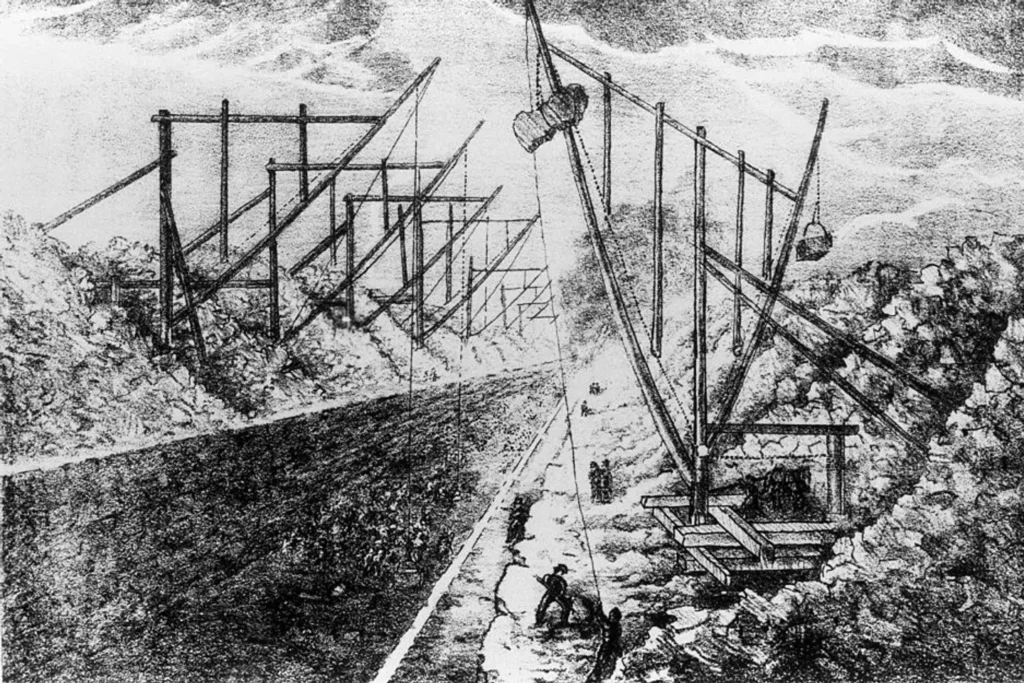
Thousands of laborers—many of them immigrants—dug enormous portions of the canal using shovels, picks, axes and other hand tools, aided by horses and other animals.
Workers removed trees, blasted or broke through rock, dug enormous quantities of soil and constructed locks and stonework.
The original canal was approximately 40 feet wide and four feet deep. Over its journey across New York, boats had to overcome a difference in elevation of roughly 570 feet, requiring an elaborate system of locks.
It was an extraordinary accomplishment for the early 1800s.
4. The Canal Slashed Transportation Costs
This may have been the Erie Canal’s greatest impact.
Before the canal, moving a ton of goods between Buffalo and New York City could cost around $100.
After the Erie Canal opened, the cost reportedly fell to roughly $10 per ton.
That’s an astonishing reduction of about 90 percent.
Goods could also travel much faster. Farmers in the growing Midwest suddenly had a practical route to eastern markets, while manufactured products from the Northeast could move west.
The canal helped create a commercial connection between America’s interior and the Atlantic Ocean.
5. Mules Were the Engines of the Erie Canal
Before motorized boats, horsepower—and more specifically mule power—kept canal commerce moving.
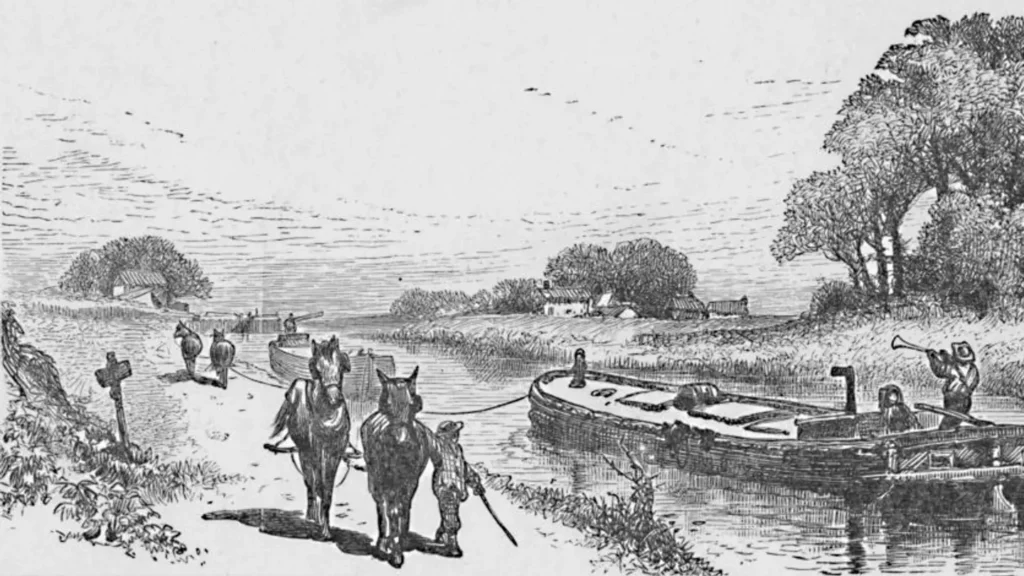
Mules walked along a path beside the canal called a towpath, pulling barges with long ropes.
The person driving the mule team was sometimes called a “hoggee,” and the job was frequently performed by young men or teenage boys.
This unusual transportation system became such a familiar part of canal life that it was immortalized in the famous song associated with the Erie Canal:
“Low bridge, everybody down!”
6. Cannons Announced the Canal’s Opening
When the Erie Canal officially opened in October 1825, New York celebrated in spectacular fashion.
Governor DeWitt Clinton boarded the Seneca Chief in Buffalo and traveled through the canal toward New York City carrying water from Lake Erie.
Meanwhile, cannons positioned within hearing distance of one another were fired in succession across New York to announce that the canal had opened.
When Clinton eventually reached New York Harbor, he ceremonially poured water from Lake Erie into the Atlantic Ocean.
The celebration became known as the “Wedding of the Waters”—symbolizing the new connection between the Great Lakes and the Atlantic.
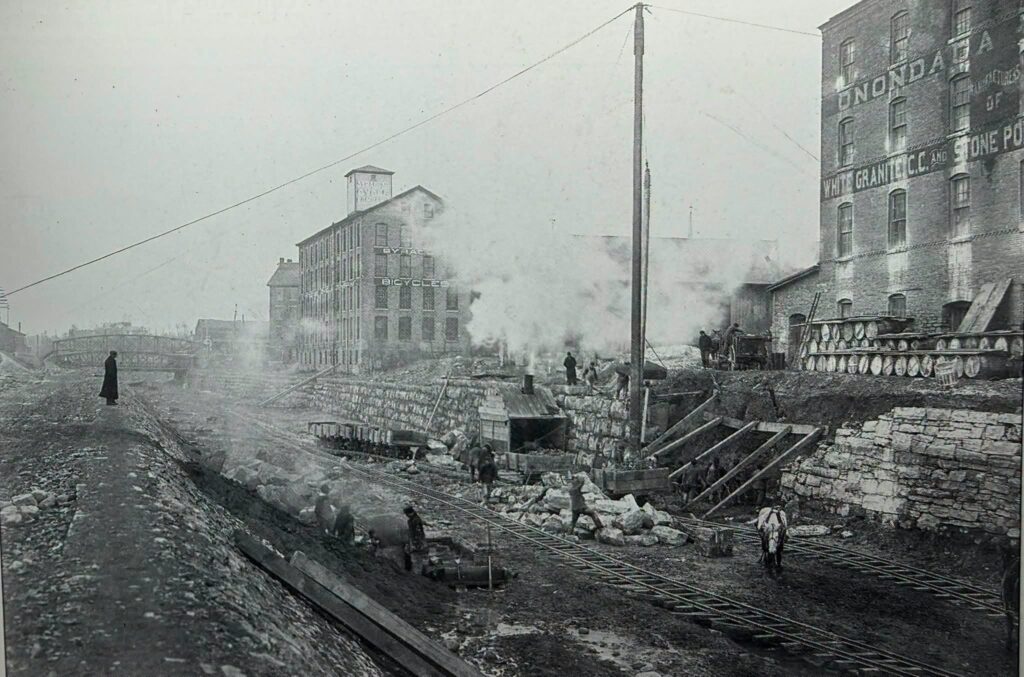
Construction on the Canal west side of Syracuse
7. The Erie Canal Didn’t Disappear—It Reinvented Itself
Railroads and highways eventually replaced canals as America’s dominant transportation systems, but the Erie Canal never completely disappeared.
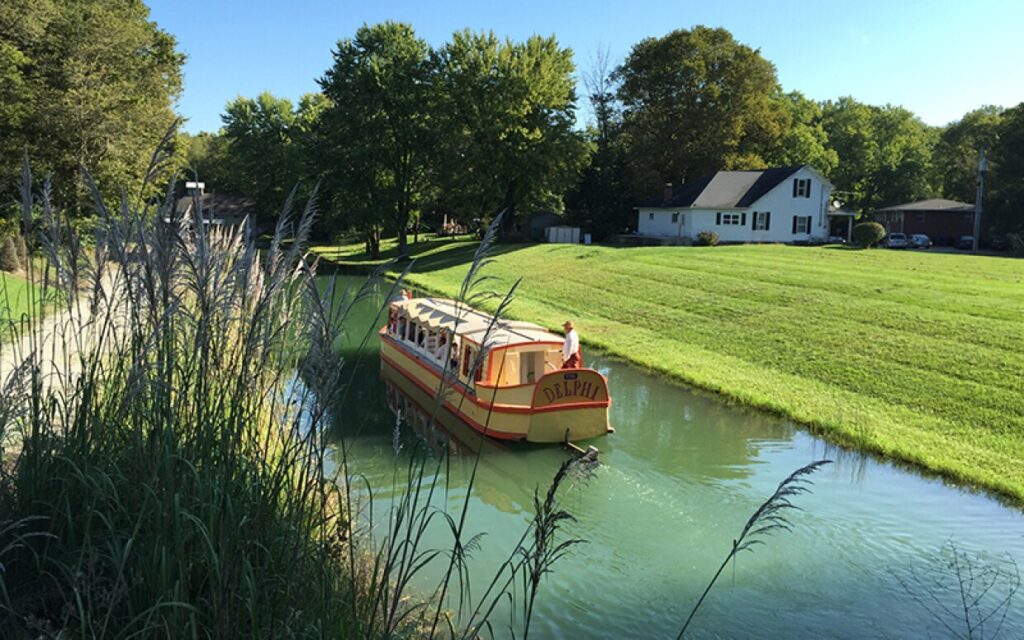
The original canal was enlarged and modernized several times. Today, the broader New York State Canal System continues to carry boats while the historic canal corridor has become a major destination for boating, cycling, hiking, fishing, sightseeing and history tourism.
Communities that grew because of the canal still line its route.
Perhaps that’s the Erie Canal’s greatest legacy.
What critics once called “Clinton’s Ditch” became an infrastructure project that helped connect regions, reduce transportation costs, encourage settlement and commerce, and transform New York into an economic powerhouse.
Two hundred years after its completion, the Erie Canal remains a reminder that some of America’s most consequential achievements began as ideas that other people thought were impossible.
The Erie Canal wasn’t simply a ditch filled with water—it helped build and connect a growing nation.