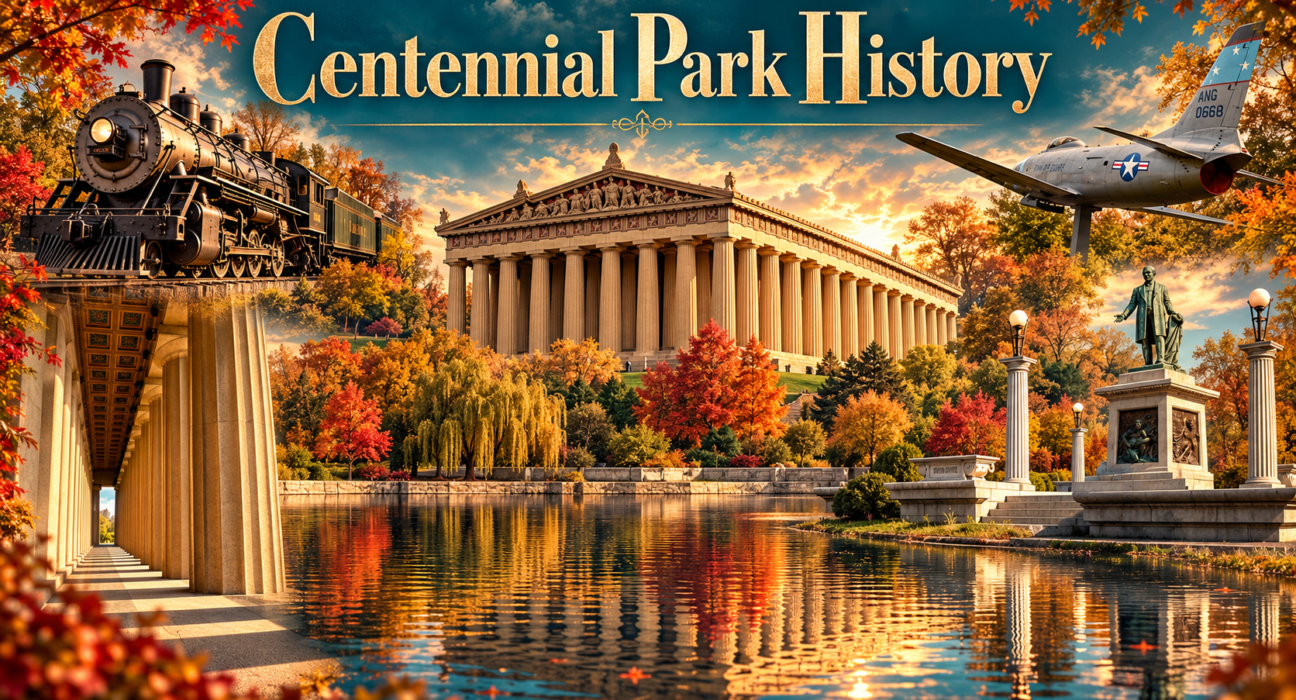
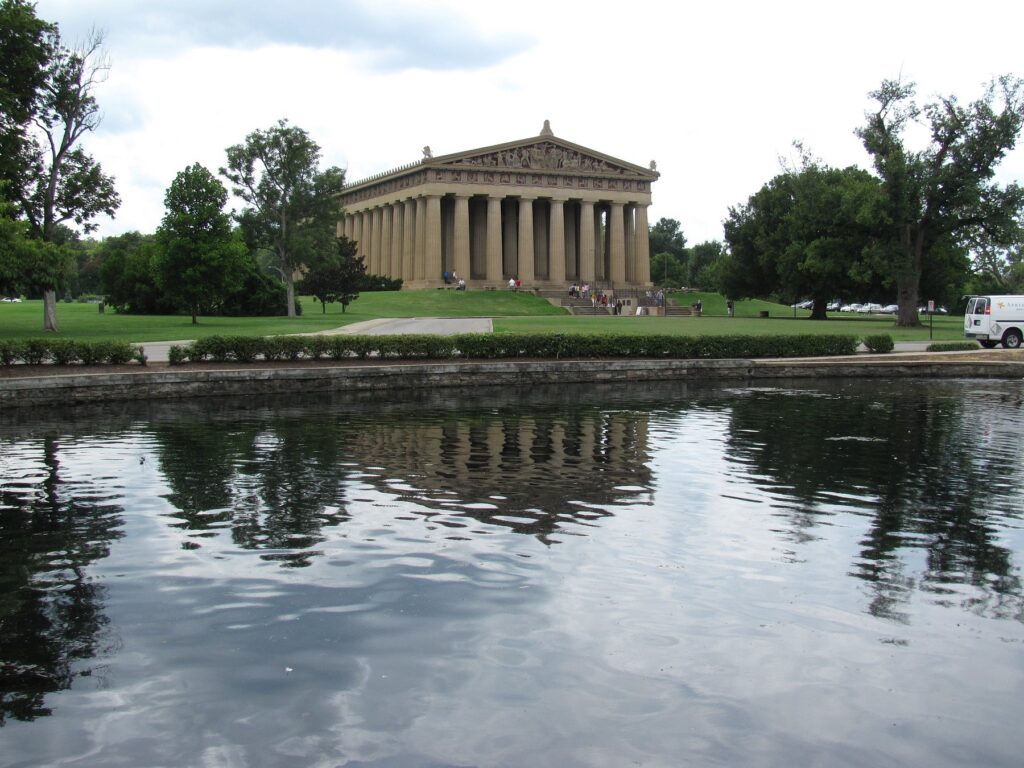
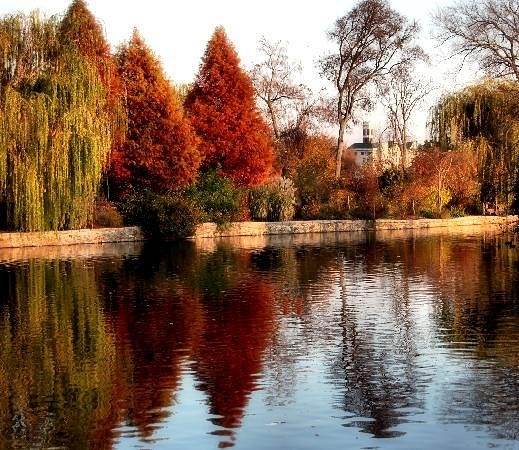
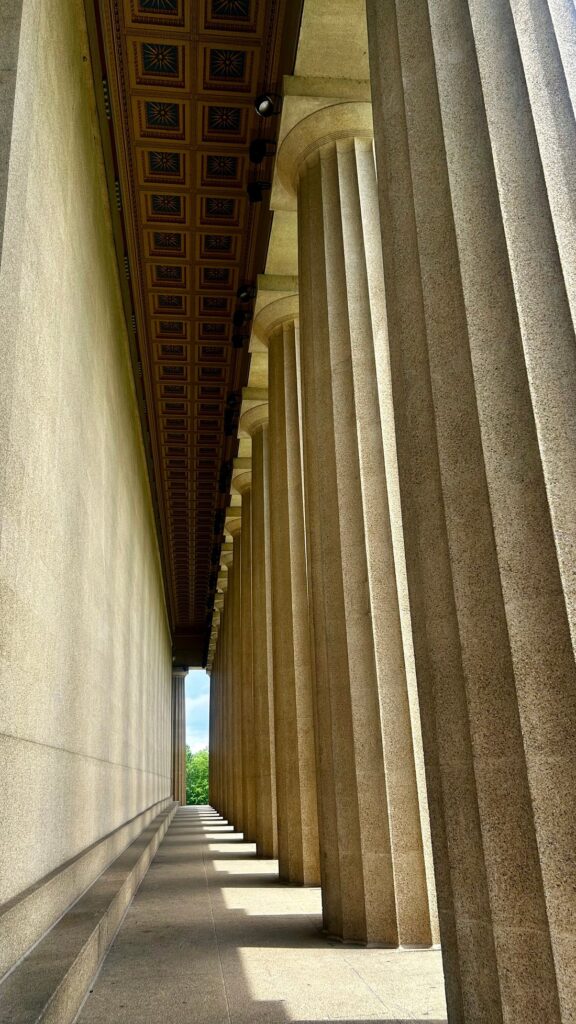
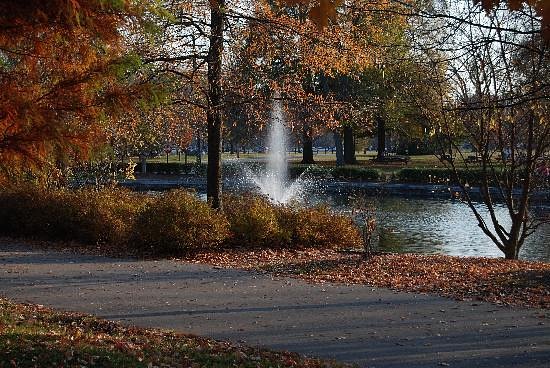
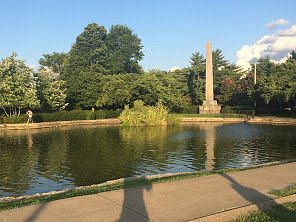
Centennial Park is one of Nashville’s premier public parks. Located at West End Avenue and 25th Avenue North, the 132-acre park is home to the iconic Parthenon, a one-mile walking trail, Lake Watauga, the Centennial Art Center, historical monuments, an arts activity center, a sunken garden, a band shell, an events shelter, sand volleyball courts, a dog park, and an exercise trail. Thousands of visitors come each year to tour the museum, view exhibits, attend festivals, and enjoy the park’s natural beauty.
Park History
Adapted from The Parks of Nashville: A History of the Board of Parks and Recreation by Leland R. Johnson
Centennial Park occupies the site of the 1897 Tennessee Centennial Exposition. The land had earlier been a farm purchased in 1783 by John Cockrill, brother-in-law of James Robertson. After the Civil War it served as the state fairgrounds, and from 1884 to 1895 it operated as a racetrack known as West Side Park.
Construction for the Exposition began in 1895 with the laying of the Parthenon replica’s cornerstone on October 8. A host of elaborate buildings rose to accommodate the 1.8 million visitors who attended, including the President of the United States. When the Exposition closed on October 30, 1897, its leaders urged that the Parthenon and the surrounding grounds be preserved as a public park—an appeal that launched Nashville’s city-park movement.
Through a litigation settlement, Percy Warner and the Nashville Railway and Light Company purchased the first 72 acres for $125,000 and deeded them to the Park Board on December 22, 1902. The Board stocked Lake Watauga with fish, planted flower gardens and shrubs, built drives and walkways, added a swimming pool, and opened the park to the public in 1903. Cultural programming that year included Gilbert and Sullivan operettas and art exhibits inside the Parthenon. Monuments honoring James Robertson and the Exposition’s leaders were also erected in 1903, the first of many memorials placed throughout the grounds.
In the same year the Park Board leased the Elliston Tract across 25th Avenue for ball diamonds, tennis courts, and a football field; it purchased the tract in 1911 and named it Centennial Athletic Field. Subsequent land exchanges with the railroad north of the park and purchases of surrounding residential property gradually enlarged the park to its present size.
Further developments followed over the decades:
•The park’s first community center opened in 1916, accompanied by a trolley car in the playground.
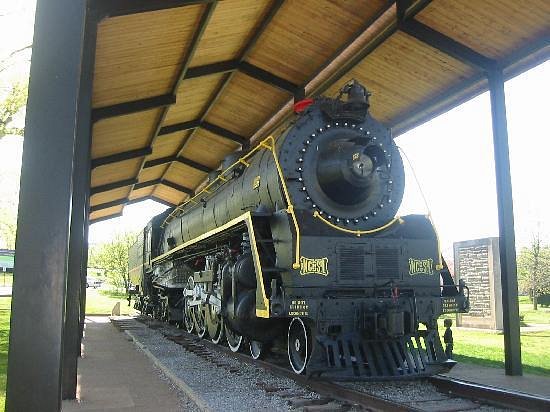
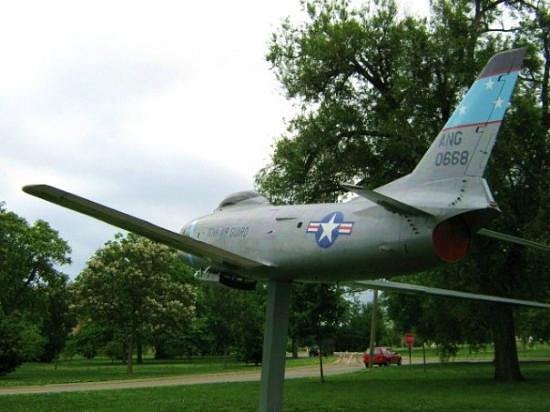
•A steam locomotive was installed in 1953 and a fighter plane in 1961.
•The area known in 1897 as Lily Lake became a Japanese Water Garden (1922–1949) and is now the Sunken Gardens.
•The bridge linking the Sunken Gardens to Lake Watauga, built in 1906, was Tennessee’s first reinforced-concrete bridge.
•The original 1932 swimming pool was reconstructed in 1972 as the Centennial Art Center, with the former pool site converted into a sculpture garden.
•Ice Centennial opened in 1978.
•The Parthenon itself was rebuilt in concrete between 1921 and 1931 and received a minor renovation in 1962.
•The Centennial Croquet Club was constructed in 1963 on grounds that had long held croquet courts.
•Confederate powder wheels, brought from Sycamore Mills for the 1897 Exposition, remain among the most prominent artifacts still visible in the park; many other Exposition relics are scattered more unobtrusively throughout the grounds.