A Personal Connection to the Flying Fortress — and the Incredible Journey of the Lacey Lady
I’ve always been a huge fan of the iconic B-17 Flying Fortress. Growing up, I heard dozens of stories about this legendary aircraft and how it helped win World War II. If it weren’t for the B-17 and the brave airmen who flew her—many of whom never made it home—the outcome might have been very different.
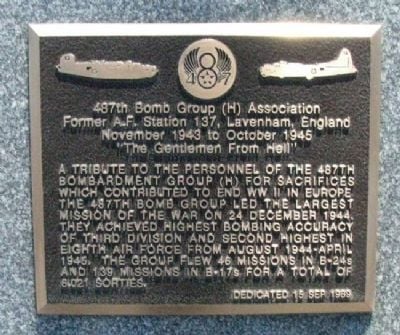

My late father, Sam John Sparks Jr., served in the 487th Bombardment Group (part of the legendary 8th Air Force) during the war. 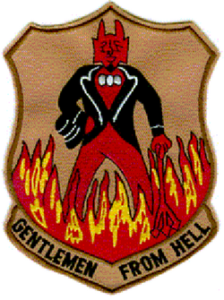
The stories he would share with me of the flak from the German anti aircraft guns.

The Legendary B-17 Flying Fortress
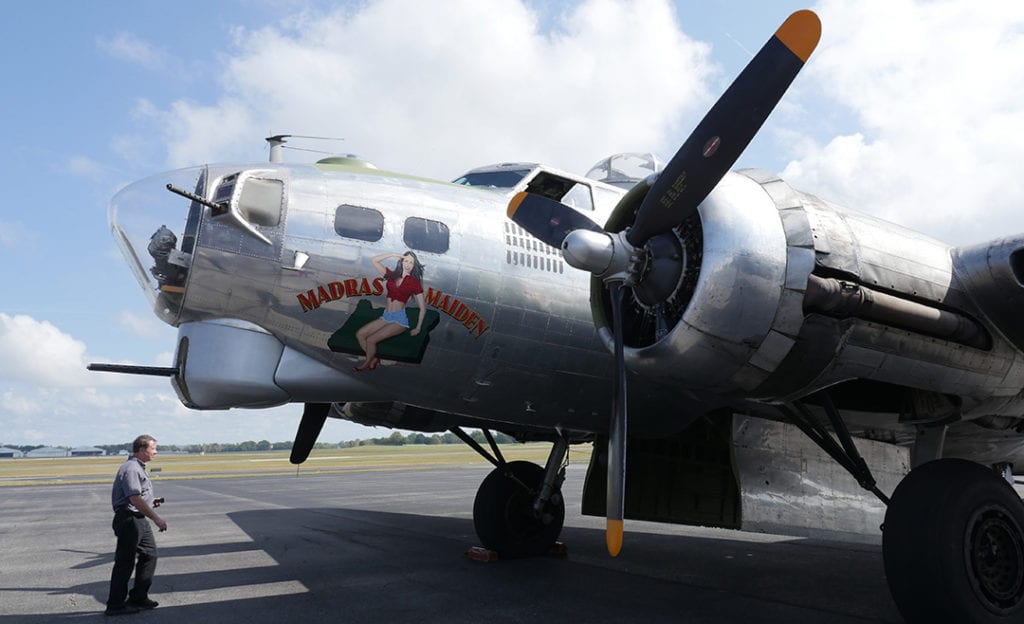
The Boeing B-17 Flying Fortress was one of World War II’s most iconic heavy bombers. Armed with up to 13 machine guns and built to take punishment, it earned its name by bringing crews home through hellish skies.
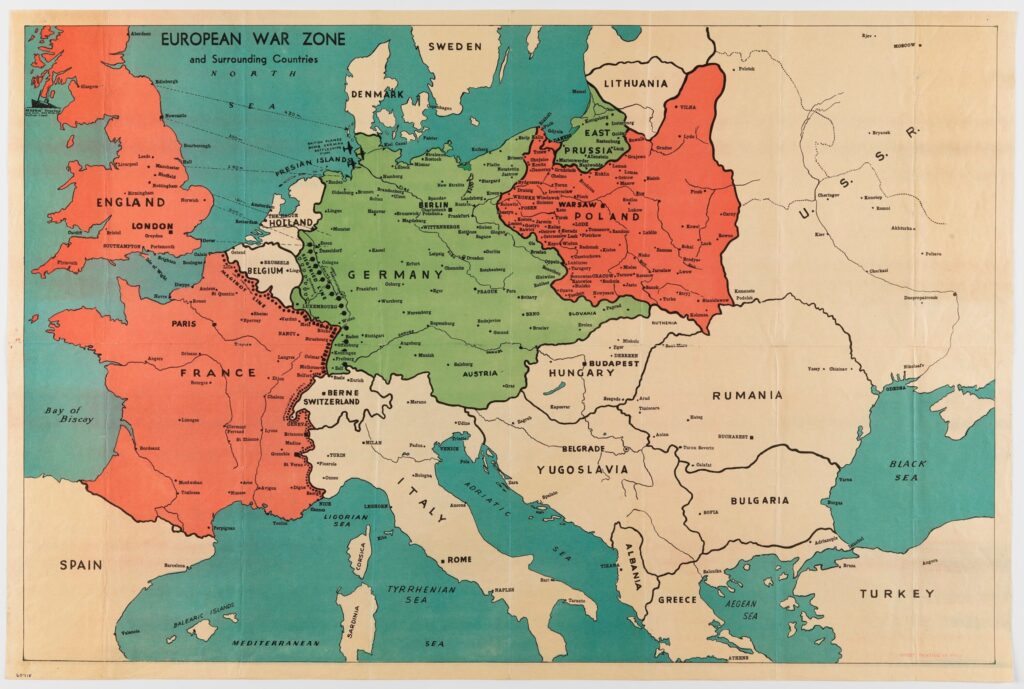

From 1942, the U.S. Eighth Air Force flew daylight bombing raids over Europe in B-17s, hammering German factories, fuel depots, transportation networks, and cities. These risky missions crippled Nazi industry and helped pave the way for Allied victory in 1945.
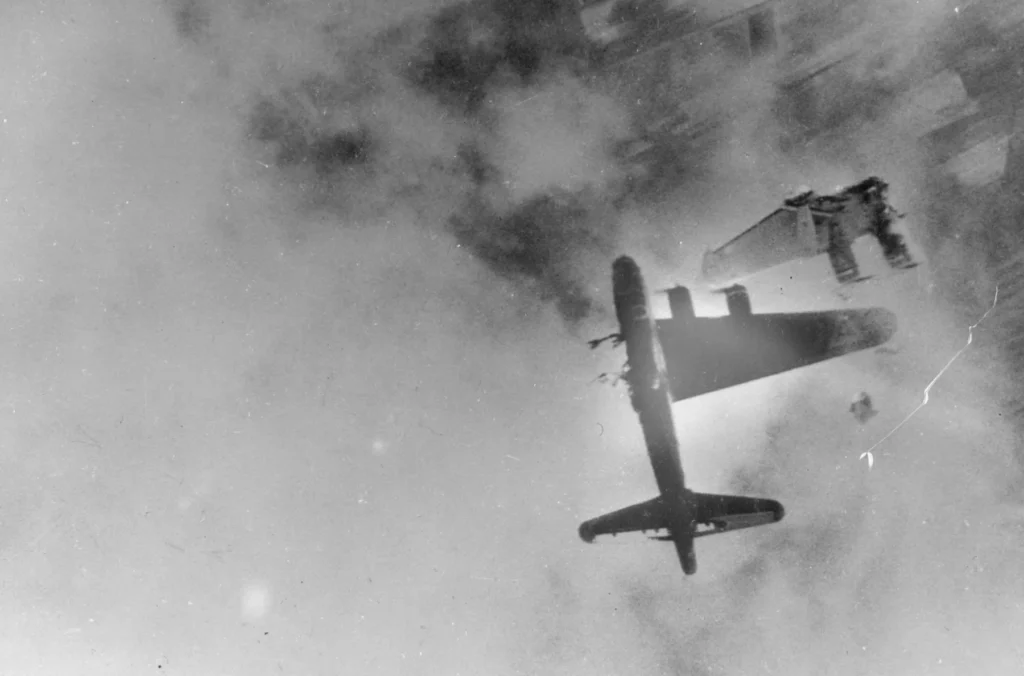
The cost was brutal. Enemy fighters and especially deadly flak—exploding anti-aircraft shells—killed about 20,000 American airmen, wounded 9,300, and sent 26,000 into POW camps. For many crews, flak was the worst enemy.
Tough, reliable, and fearless, the B-17 truly earned its reputation as a Flying Fortress that helped win the air war over Europe.
Hitler’s Fortress Europe Had No Roof: The Allied Air War That Cracked the Nazi Stronghold
When Adolf Hitler began his conquest of Europe in 1939, he turned much of the continent into “Festung Europa” — Fortress Europe. Britain stood alone as the last holdout. After the Royal Air Force’s victory in the Battle of Britain in 1940, the island nation became the launching point for the Allied air war. Until ground forces could invade, the Allies took the fight on wings — because Hitler’s fortress had no roof.
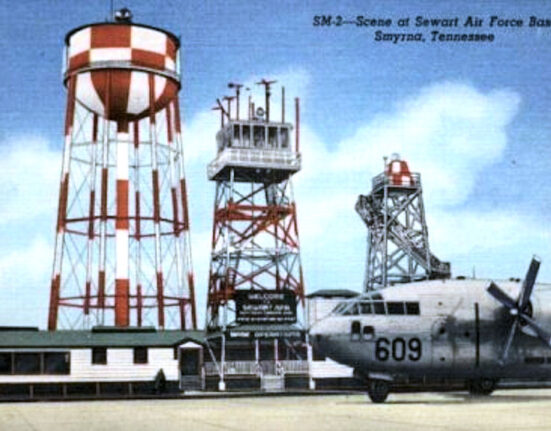
Fascinating Facts About Smyrna’s Sewart Air Force Base

Early in 1942, the American 8th Air Force began arriving in England. The R
AF bombed by night; the 8th by day. The air war over Europe became one of history’s greatest conflicts.
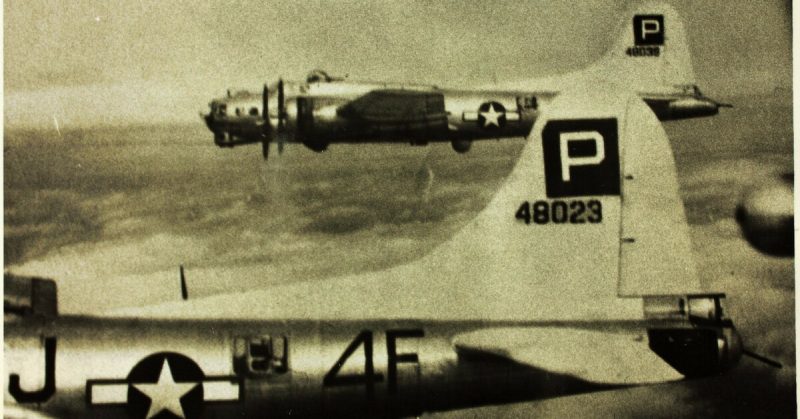

The 8th faced a battle-hardened Luftwaffe and paid a terrible price: more than 26,000 American airmen lost their lives — about 10% of all U.S. deaths in the war — with tens of thousands more wounded or captured.

One of the many groups in that enormous struggle was the 487th Bombardment Group (Heavy), based at Army Air Forces Station 137 near Lavenham, England, in 1944–1945. This page and groups like it are dedicated to those airmen and ground crews.
I hadn’t ever seen a picture of my late WWII father. When I saw a Facebook post in the 487th B-17 group featuring a picture of someone’s late father who had served in the same unit, I commented that I wished I could find one of mine and mentioned his name. Within minutes, a kind group member named Doug Palmer responded by posting a photo of my dad. It was incredibly touching — especially given our complicated relationship in his later years.
Shout-out to Doug Palmer of the 487th B-17 Facebook group — thank you for that heartfelt gesture.

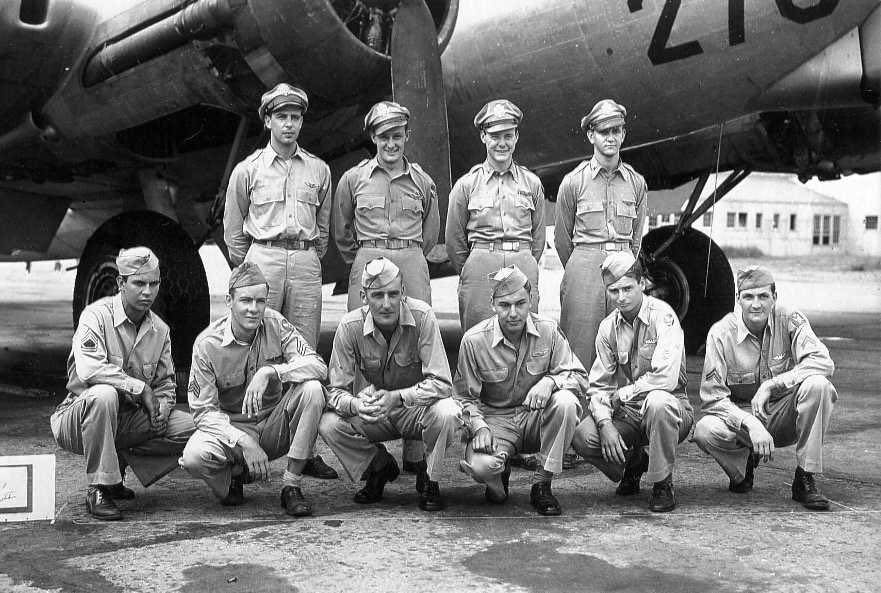
I’ve looked into the 8th Air Force and Sewart Air Force Base Memorial Highway dedication records, but I’m told many were lost in a fire in St. Louis. My dad carried the intensity of his service long after the war. A Smyrna Town Councilman once told me, “I knew Sam Sparks — the meanest man in Smyrna!” At first it pissed me off, but I quickly remembered how my father could be. He never could fully let go of his military life.

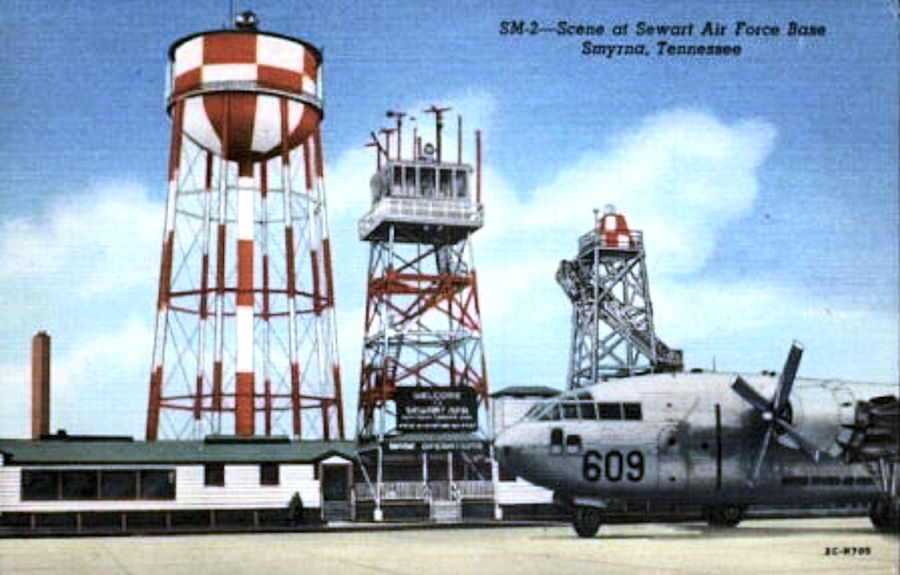
A special memory for my family came when my youngest son Payton and I had the opportunity to fly on the Liberty Bell B-17 when it visited Smyrna Airport — the former Sewart Air Force Base. That’s where I was born, and where my father was once stationed. The base was created in 1941 (originally Smyrna Army Airfield) specifically as a major training center for B-17 Flying Fortress and B-24 Liberator crews. Flying in that historic bomber over the same ground where my dad trained felt like closing a circle across generations.
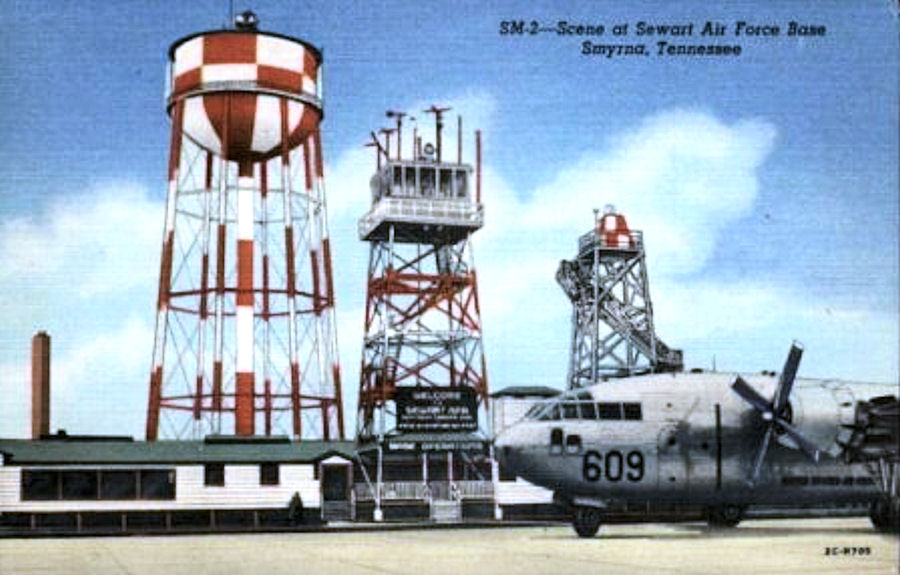
Shout-out to the Greatest Generation — they are greatly missed!
A Funny Thing Happened on the Way to Milwaukie:
A brag, a bet, a birthday, and a bomber: The Lacey Lady’s wild journey to Oregon
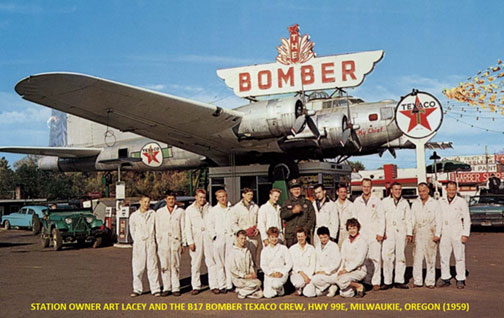

For over 67 years, a WWII B-17G Flying Fortress — now known as the “Lacey Lady” — stood proudly as a service station canopy in Milwaukie, Oregon, just a few miles south of Portland. This iconic “Bomber Gas Station” became a beloved local landmark, but its journey there started with a birthday party, a bold brag, and a $5 bet.
Art Lacey’s daughter, Punky Scott, knows the story well. At her father’s birthday party in 1947, Art (a local businessman and pilot) bragged that he was going to put a B-17 on top of his gas station. A friend called him crazy and said he’d never pull it off. Art bet him five dollars he could — and immediately got to work.
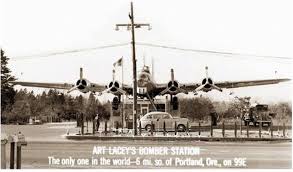

(The rest of the Lacey Lady story continues unchanged from the previous version: the chaotic purchase at Altus AFB with the mannequin co-pilot and crash, the better deal on the second plane, the flight home with the whiskey bribe and snowstorm adventure, the daring midnight truck move with motorcycle escort, the $10 fine, and the modern restoration by the B-17 Alliance Foundation at McNary Field in Salem, Oregon.)
The Lacey Lady is one of the most intact wartime B-17s in existence, with the lowest engine hours of any surviving example. Fewer than 50 B-17s remain worldwide. Her restoration honors the American spirit and the Greatest Generation who flew these incredible machines into history.
Stories like Art Lacey’s wild adventure — and the quiet (and not-so-quiet) heroism of men like my father, Sam Sparks Jr. — remind us how one airplane and the people connected to it can create ripples that last for generations. Seeing that photo of Dad, and flying with my son Payton in a B-17 over the very airfield where my father trained— brought it all home in a deeply personal way.
Thank you to Doug Palmer, the B-17 Alliance Foundation, everyone preserving these histories, and above all, to the men of the 8th Air Force and the 487th Bomb Group. The Flying Fortress truly earned its place in our hearts.