EDITOR’S NOTE:
Tennessee is one of those states people think they already know. Country music, whiskey, Dolly and the Smokies — the shorthand is familiar enough that it’s easy to assume the full picture comes with it. This piece proves otherwise. Did you know that The Volunteer State carries more American history per square mile than almost any other, much of it hidden in plain sight.
What struck us most was how many of these facts connect. The earthquakes that threaten Memphis also created Reelfoot Lake. The TVA that dammed the river also powered Oak Ridge. The mountain isolation that preserved musical traditions in Bristol made the region poor enough to need the TVA in the first place. This is not a collection of curiosities — it is a coherent American story.
We also want to be honest about what sits alongside the wonder. The Trail of Tears crossed this soil. The Hermitage was built by enslaved hands. Beale Street’s brilliance emerged from a community living under segregation. A full accounting requires holding achievements and wounds in the same frame.
Tennessee rewards the curious. Something in these pages will likely change how you see the state — and that is exactly what good writing should do.35 Things You Never Knew About Tennessee
The Volunteer State Has Shaped America More Than Almost Any Other
Most people think they know Tennessee — country music, barbecue, Dolly Parton and the Smoky Mountains. But the Volunteer State runs far deeper than its postcard image. From an underground lake that stretches into unmapped darkness, to a secret city that helped win World War II, to a river that literally reversed its flow, Tennessee is one of the most geologically wild, historically loaded, and culturally prolific states in the nation. Here are 35 facts that prove it.
1. Tennessee Is Three States in One
Tennessee is officially divided into three distinct grand divisions — East, Middle, and West — and that division is so fundamental it’s written into the state constitution. The three stars on the state flag represent each region. East Tennessee is mountainous, Appalachian in character, and was pro-Union during the Civil War. Middle Tennessee rolls with farmland and centers on Nashville. West Tennessee is flat Delta country, more culturally akin to Mississippi than to its eastern counterpart. The divisions are so distinct that residents often identify as East, Middle, or West Tennesseans first — and Tennesseans second.
2. The Lost Sea: America’s Largest Underground Lake
Deep beneath the hills of Sweetwater sits the Lost Sea — the largest underground lake in the United States and second largest in the world. Located inside Craighead Caverns, divers have explored over 13 acres of its crystal-clear water, yet the lake continues into unmapped passages. The Cherokee used the cave, Confederates mined it for gunpowder, and in the 1940s it hosted a dance floor. Today, visitors can glide across its surface on glass-bottom boats surrounded by limestone formations and total darkness. The lake formed when acidic groundwater dissolved massive chambers in limestone over millions of years — classic Tennessee karst geology at its most dramatic.
3. Bristol: The Birthplace of Country Music
In 1927, talent scout Ralph Peer set up recording equipment in Bristol, Tennessee, and conducted two weeks of auditions that changed American music forever. He recorded the Carter Family and Jimmie Rodgers, among others — sessions now known simply as the Bristol Sessions. Those recordings introduced country music to a national audience and established the genre commercially. Bristol straddles the Tennessee-Virginia border, with the state line running down the middle of State Street. The area’s isolation in the Appalachian Mountains had preserved musical traditions brought by Scottish and Irish settlers, traditions that evolved into country music. A museum now marks the spot — a hat warehouse on the border where American country was born.
4. Memphis Sits on a Geological Time Bomb
The New Madrid Seismic Zone, centered near the Tennessee-Missouri border in the Mississippi River Valley, is one of the most dangerous earthquake zones in America. Between December 1811 and February 1812, it produced earthquakes estimated at magnitude 7.0 or higher — powerful enough to ring church bells in Boston and temporarily reverse the flow of the Mississippi River. One of those quakes created Reelfoot Lake in northwestern Tennessee when the ground dropped and flooded. Memphis sits directly on this fault system. Geologists warn that another major earthquake is inevitable, and the soft river sediment beneath the city would amplify any shaking catastrophically.
5. Graceland: America’s Second Most Visited Home
Only the White House draws more annual visitors than Graceland, Elvis Presley’s Memphis mansion. Over 600,000 people tour it each year, walking through rooms preserved exactly as Elvis left them — shag carpet, mirrored ceilings, the Jungle Room, and all. Elvis purchased Graceland in 1957 for $100,000 and lived there until his death in 1977. At roughly 17,000 square feet, the mansion isn’t especially large by celebrity standards, but it is immaculately preserved. Graceland represents Memphis’s identity as the birthplace of rock and roll — and the home of the man who synthesized Delta blues, gospel, and country into something the world had never heard before.
6. Lookout Mountain Sees Seven States
From the summit of Lookout Mountain near Chattanooga, on a clear day, it’s said you can see Tennessee, Georgia, Alabama, North Carolina, South Carolina, Kentucky, and Virginia. The mountain rises sharply from the Tennessee River Valley, creating a dramatic escarpment. Rock City Gardens on the mountain features massive boulder formations, gardens, and a swinging bridge suspended 180 feet above the ground. The mountain’s flat-topped plateau and sheer cliffs made it a strategic position during the Civil War’s Battle Above the Clouds. Whether you can actually see all seven states depends on the weather — but the view is spectacular regardless.
7. The Grand Ole Opry Has Never Stopped Broadcasting
The Grand Ole Opry in Nashville has broadcast live country music every single week since 1925 — making it the longest-running radio broadcast in American history. What started as a one-hour show called the WSM Barn Dance became an institution that defined the genre and launched the careers of Hank Williams, Patsy Cline, Johnny Cash, Dolly Parton, and countless others. It has survived the Depression, World War II, and every cultural shift since. Today it broadcasts from a custom-built 4,400-seat theater, and an invitation to join the Opry as a member remains the highest honor in country music.
8. Ruby Falls: Tallest Underground Waterfall Open to the Public
Also inside Lookout Mountain, Ruby Falls drops 145 feet inside a limestone cave 1,120 feet below the mountain’s surface — making it the tallest and deepest underground waterfall open to the public in the United States. It was discovered in 1928 by Leo Lambert while drilling an elevator shaft, and he named it after his wife Ruby. The cave tour winds through narrow passages decorated with stalactites and stalagmites before opening into a massive chamber where the waterfall thunders and echoes. Colored lights illuminate the falls in a display that has drawn visitors for nearly a century.
9. Tennessee Whiskey Is Its Own Category
Tennessee whiskey is legally distinct from bourbon because of one extra step: the Lincoln County Process, which filters the whiskey through sugar maple charcoal before aging. This mellowing removes impurities and produces the smooth character that distinguishes Jack Daniel’s and George Dickel from other American whiskeys. Jack Daniel’s, made in Lynchburg, is the best-selling whiskey in the world. Here’s the irony: Lynchburg sits in Moore County, a dry county where the retail sale of alcohol is prohibited. You can tour the distillery where every bottle of Jack is made — you just can’t legally buy one to drink there.
10. Nashville’s Full-Scale Parthenon
Nashville is home to the only full-scale replica of the ancient Parthenon in Athens, Greece — the only such reconstruction anywhere in the world. Built in 1897 for Tennessee’s Centennial Exposition, it was originally meant to be temporary but was so popular it was rebuilt in permanent materials in the 1920s. Inside stands a 42-foot gold-leaf statue of Athena, the tallest indoor statue in the Western Hemisphere. Nashville styled itself as the Athens of the South in the 19th century due to its concentration of universities and educational institutions. The Parthenon in Centennial Park now serves as the city’s art museum — a classical Greek temple in the Tennessee hills.
11. Reelfoot Lake Was Made by an Earthquake in Days
Reelfoot Lake in northwestern Tennessee didn’t exist before 1812. It was created when the New Madrid earthquakes caused the ground to drop and the Mississippi River to surge backward into the depression. Today the shallow lake — averaging just 5.5 feet deep over 15,000 acres — is filled with bald cypress trees standing in the water, creating a hauntingly beautiful swamp landscape. It’s Tennessee’s only large natural lake, and it exists solely because of a geological catastrophe. Eagles and herons use it as a winter refuge, and fishing guides navigate boats through the cypress forest in waters that feel prehistoric.
12. The Trail of Tears Passed Through Tennessee
In 1838 and 1839, over 16,000 Cherokee were forcibly removed from their ancestral homelands in the Southeast and marched westward to Indian Territory in Oklahoma. Several routes passed through Tennessee. Approximately 4,000 died from disease, starvation, and exposure along the way. Tennessee’s geography, positioned directly between the Cherokee homeland and Indian Territory, made it an unavoidable corridor. The Cherokee called it the trail where they cried. Markers and historic sites along the Trail of Tears National Historic Trail remain throughout Tennessee — somber reminders of one of the darkest chapters in American history, with Tennessee soil holding the graves of thousands who didn’t survive the journey.
13. Sun Studio: Where Rock and Roll Was Born
In 1951, Sam Phillips opened Memphis Recording Service on Union Avenue. In 1954, a young truck driver named Elvis Presley walked in to record a song for his mother. Phillips paired him with guitarist Scotty Moore and bassist Bill Black, and they cut “That’s All Right” — considered by many to be the first rock and roll record. Sun Studio also recorded Johnny Cash, Jerry Lee Lewis, Carl Perkins, Roy Orbison, and B.B. King. The studio is tiny — just a small storefront — but its impact is incalculable. You can still stand on the checkered floor where those sessions happened, with the original microphones and acoustics preserved exactly as they were.
14. The Smokies: America’s Most Visited National Park
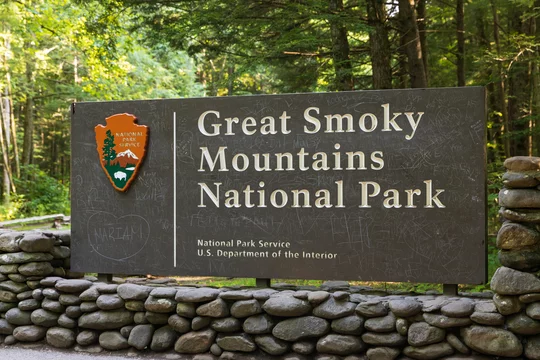
Great Smoky Mountains National Park draws over 12 million visitors annually — more than any other national park in the United States. Split between Tennessee and North Carolina, it preserves over 800 square miles of mountain wilderness, including 16 peaks above 6,000 feet. The famous haze that gives the mountains their name isn’t smoke — it’s fog produced by the vegetation itself, as dense forests release volatile organic compounds that create a bluish mist. The park contains over 19,000 documented species, with scientists estimating 80,000 to 100,000 may exist in total. Some areas receive over 85 inches of rain annually, creating a temperate rainforest environment of extraordinary biodiversity.
15. Clingmans Dome: The Roof of Tennessee
At 6,643 feet, Clingmans Dome is the highest point in Tennessee and the third highest mountain east of the Mississippi River. A half-mile paved trail leads to an observation tower that looks like something from a science fiction film. On a clear day, views extend over 100 miles. The summit ecosystem — a spruce-fir forest more typical of Canada than the South — has been heavily damaged by an invasive insect called the balsam woolly adelgid. Temperatures at the top run 10 to 15 degrees cooler than the valleys below, and the mountain receives over 85 inches of precipitation annually, making it one of the wettest spots in the United States.
16. Beale Street: The Home of the Blues
Beale Street in Memphis is where the blues became a commercial music form. W.C. Handy, the Father of the Blues, made the street famous with his compositions in the early 1900s. It became the center of Black culture and commerce in Memphis, with clubs, restaurants, and shops serving the African-American community. B.B. King, Muddy Waters, and countless other legends performed there. Memphis’s role as a river port — where Delta field hands came seeking work and entertainment — created the conditions for the blues to flourish. Beale Street is where the pain and joy of the African-American experience was transformed into one of America’s greatest musical contributions.
17. Tennessee Has No State Income Tax
Tennessee is one of only nine states that impose no income tax on wages. The state funds itself primarily through sales tax — among the highest in the nation — and industry-specific taxes. The policy has made Tennessee a magnet for businesses and retirees, fueling some of the fastest population growth in the South, particularly in Nashville and surrounding counties. The combination of a central location, relatively low cost of living outside major cities, and no income tax has shaped who moves to Tennessee and where they settle.
18. Bonnaroo Turns a Farm Into a City
Every June, a 700-acre farm in Manchester, Tennessee becomes one of the largest music festivals in America. Bonnaroo, started in 2002, draws over 80,000 fans who camp for four days across multiple stages featuring rock, hip-hop, electronic, and Americana acts performing around the clock. Infrastructure is built specifically for the festival, allowing a temporary city to emerge in the Tennessee summer heat. Bonnaroo represents the state’s continued evolution as a music destination — from the Grand Ole Opry to Sun Studio to a modern festival that attracts artists and fans from around the world.
19. The Tennessee River Flows North
The Tennessee River is one of the few major American rivers that flows primarily northward. It originates in the mountains of East Tennessee, flows southwest through Alabama, then turns north through Tennessee and Kentucky before emptying into the Ohio River. Its unusual path follows ancient valleys and mountain gaps carved into the Appalachian geology rather than flowing toward the nearest coast. Today the river is dammed at multiple points by the Tennessee Valley Authority, forming a chain of lakes used for flood control, power generation, and recreation that defines much of the state’s geography and economy.
20. Oak Ridge: The Secret City That Won the War
During World War II, the federal government built a secret city in the mountains of East Tennessee. At its peak, Oak Ridge housed over 75,000 people who were enriching uranium for the atomic bomb dropped on Hiroshima. The entire city was fenced, guarded, and appeared on no maps. Workers didn’t know what they were building — only that it was critical to the war effort. Oak Ridge’s isolated mountain valleys and access to TVA hydroelectric power made it ideal for the top-secret installation. After the war, it became a center for nuclear research and remains home to Oak Ridge National Laboratory — Tennessee’s contribution to winning the Second World War and to advancing nuclear science ever since.
21. Andrew Jackson’s Hermitage Shaped American Politics
The Hermitage, Andrew Jackson’s plantation near Nashville, is where Old Hickory planned his rise to the presidency and governed throughout his time in office. The mansion and grounds are preserved much as they were when Jackson lived there — including the slave quarters of the people who actually ran the plantation. Jackson’s time at the Hermitage shaped his populist political philosophy, his views on westward expansion, and his policies on Indian removal. The fertile Middle Tennessee landscape, suitable for cotton and tobacco, created the plantation economy that made Jackson wealthy enough to enter politics. The Hermitage preserves a complicated legacy — Jacksonian democracy built on the labor of enslaved people whose contributions are too often erased from the story.
22. Dollywood: Tennessee’s Most Visited Ticketed Attraction
Owned by Dolly Parton and located in Pigeon Forge, Dollywood draws nearly 3 million visitors annually — more than any other ticketed attraction in Tennessee. The theme park celebrates Appalachian culture with craftsmen demonstrating traditional skills, southern food, and rides themed around the Smoky Mountains. Dollywood employs over 4,000 people and has transformed Pigeon Forge from a small mountain town into a major tourist destination. Dolly Parton reinvests much of the park’s profits into the community, including her Imagination Library program that provides free books to children. The park is mountain culture commercialized — but done with genuine affection for the region and its people.
23. The Battle of Shiloh Changed the Civil War
The Battle of Shiloh in April 1862 was the first truly massive battle of the Civil War, producing over 23,000 casualties in two days. Fought along the Tennessee River in the southwestern corner of the state, the battle’s geography — thick forests, ravines, and a creek called Bloody Pond where wounded soldiers crawled to drink and died — turned the landscape into a nightmare. The battle shattered any illusions that the war would be short and made Ulysses S. Grant’s reputation as a general who refused to retreat. Shiloh National Military Park preserves the battlefield today, where visitors can walk the same ground that made Tennessee one of the Civil War’s most contested theaters.
24. Nashville: An Unlikely Hockey Capital
The Nashville Predators have created something nobody expected: a thriving hockey culture in the Deep South. Bridgestone Arena regularly sells out, and the atmosphere — with crowd chants, sing-alongs, and a live band — is more reminiscent of a country concert than a traditional hockey game. The team’s success has made Nashville one of the best hockey markets in the league. Nashville’s rapid growth, driven by transplants from across the country, brought an audience for hockey and has helped transform Tennessee from a purely regional Southern identity into something more cosmopolitan — a state that embraces traditions from all corners of America.
25. The Tennessee Aquarium Revived Chattanooga
When the Tennessee Aquarium opened in 1992, downtown Chattanooga was a decaying industrial area. The aquarium — which focused on freshwater river ecosystems and was the world’s largest freshwater aquarium at opening — sparked a downtown renaissance that included parks, museums, and riverfront redevelopment. Its location on the Tennessee River showcases the geography that defines Chattanooga: a city built at the point where the river cuts through the Appalachian Mountains. The aquarium’s transformation of Chattanooga stands as one of the most dramatic examples of how a single attraction can reshape an entire city’s identity and economic trajectory.
26. The National Civil Rights Museum: Built Around a Balcony
The National Civil Rights Museum in Memphis is built around the Lorraine Motel — the spot where Dr. Martin Luther King Jr. was assassinated on April 4, 1968. King was standing on the balcony outside room 306 when he was shot by James Earl Ray. The motel has been preserved, and the museum chronicles the American civil rights movement from slavery through the present day. Standing outside room 306, looking at the wreath that marks where King fell, is one of the most powerful and sobering experiences in American historical tourism. Memphis’s history as a Southern city with a large African-American population and a deep legacy of segregation made it a focal point of the civil rights struggle — and the museum preserves both the violence and the progress.
27. Tennessee Has More Caves Than Any Other State
With over 10,000 documented caves, Tennessee has more than any other state in the country. The geology is responsible: vast areas of limestone bedrock riddled with underground rivers create perfect conditions for cave formation. Cumberland Caverns has over 32 miles of mapped passages. The Rumbling Falls cave system drops over 1,000 feet underground. The caves range from grand tourist attractions like Ruby Falls to remote wilderness caves requiring technical rope skills to explore. Tennessee is, in a geological sense, hollow — a Swiss cheese landscape where water disappears into sinkholes and reappears miles away at springs.
28. Bristol Motor Speedway: The Loudest Stadium on Earth
Bristol Motor Speedway holds 162,000 fans and surrounds them with steep 28-degree concrete banking that creates a coliseum effect. When 40 NASCAR engines run at full throttle, the sound reaches 140 decibels — louder than a jet taking off. The track’s location in the mountains of East Tennessee creates a natural bowl that traps and amplifies the noise. NASCAR drivers call Bristol the last great coliseum, and races here are consistently among the most intense in the sport. The Tennessee-Virginia border area, with its racing heritage and mountain culture, gave birth to one of motorsport’s most thunderous venues.
29. The Tennessee Walking Horse: Born for the Plantation
The Tennessee Walking Horse was developed in Middle Tennessee in the late 1800s specifically for plantation owners who needed a smooth-riding horse for inspecting their property across long distances. The breed is known for its unique running walk — a smooth, gliding gait that’s exceptionally comfortable for the rider. The Celebration in Shelbyville is the breed’s premier competition, though it has been marred by the illegal practice of soring — intentionally injuring horses’ legs to exaggerate their gait. The Tennessee Walking Horse represents both the state’s agricultural heritage and the ongoing tension between tradition and animal welfare.
30. Memphis Barbecue Is in a Class of Its Own
Memphis-style barbecue focuses on pork — ribs and pulled pork — with a tomato-based sauce. But Memphis also pioneered the dry rub, coating meat with spices instead of sauce before cooking. The Memphis in May World Championship Barbecue Cooking Contest is one of the largest such competitions in the world. Memphis’s history as a riverport where pigs came to market made it a center of pork production, and the barbecue culture that grew from those working-class roots — deeply shaped by African-American culinary traditions — is now central to the city’s identity. In Memphis, barbecue isn’t just food. It’s a claim to cultural supremacy defended with the same passion as the city’s music heritage.
31. The Ryman Auditorium: The Mother Church of Country Music
The Ryman Auditorium in downtown Nashville was the home of the Grand Ole Opry from 1943 to 1974 and is known as the Mother Church of Country Music. Built in 1892 as a church, its exceptional acoustics made it a perfect venue for live performance. Hank Williams, Patsy Cline, and Johnny Cash all made history on its stage. Today, the Ryman is one of the most sought-after concert venues in America, hosting acts across all genres, with the original wooden pews and balcony preserved intact. Nashville’s central location, with railroad access connecting North and South, helped make it the natural headquarters for country music — and the Ryman was its cathedral.
32. The Great Smoky Mountains Are a Rainforest
With up to 85 inches of rain annually in some areas, the Great Smoky Mountains qualify as a temperate rainforest — one of the few in North America. The mountains catch moisture rolling in from the Gulf of Mexico, and the result is staggering biodiversity: more tree species than in all of Europe, over 1,500 species of flowering plants, wildlife ranging from salamanders to black bears, and the spectacular synchronous fireflies that light up the forest each June. You don’t need to travel to the Amazon to see a rainforest. Tennessee has one.
33. Tennessee Has Had Three Capital Cities
Tennessee’s three capital cities trace the arc of the state’s political and demographic development. Knoxville served as the first capital from 1796 to 1812, representing East Tennessee’s frontier origins. Murfreesboro briefly held the title from 1818 to 1826 as Middle Tennessee’s power grew. Nashville became the permanent capital in 1826 and has held it ever since — a reflection of Middle Tennessee’s dominance in state politics. The westward movement of the capital mirrors the shifting center of population and power away from the Appalachian Mountains toward the Nashville Basin. Geography determined where power resided. Nashville won.
34. The TVA Remade the American South
The Tennessee Valley Authority, created in 1933 during the Great Depression, is the largest regional development project in American history — and it was centered in Tennessee. The TVA built dams along the Tennessee River and its tributaries, providing flood control, navigation, and hydroelectric power to one of the poorest regions in the country. Tennessee’s geography — a major river system dropping over 500 feet in elevation from the mountains to the Ohio River — provided extraordinary hydroelectric potential. Cheap electricity attracted industry, lifted millions out of poverty, and transformed the economic landscape of seven states. The TVA’s model was subsequently replicated in development projects around the world. Tennessee literally reshaped itself through its rivers. And in doing so, it provided the blueprint for a new kind of regional development.
Tennessee is not a simple place. It is three states sharing one flag, a land built on limestone and rivers, shaped by music, war, earthquakes, and ingenuity. It is the state that kept a secret city that helped end a world war, that poured the world’s best-selling whiskey in a county where you can’t buy it, and that built a full-scale Greek temple in a Nashville park. From the roof of Clingmans Dome to the underground shore of the Lost Sea, from Beale Street to Graceland to the Ryman, Tennessee has left its mark on America in ways that most states can only aspire to.