Building a Financially Stronger Tennessee One Family at a Time
I’ve carried a lesson from my childhood into every committee room in Nashville: the money lessons you learn around the kitchen table last a lifetime. My dad, who grew up during the Great Depression and served in World War II, always told me, “If you can’t pay cash for it — you don’t need it.”
He taught me that financial discipline isn’t a burden; it’s a kind of freedom. My mom, who grew up poor in Scotland, the Scots undoubtedly known for being thrifty. Growing up we didn’t have much so I got my first job at the age of 13 working at the Omni Hut restaurant for $1.50 an hour—often times walking to work if Major Jim Walls, the owner who lived next doorand reminding me that what you save matters just as much as what you earn.
Those lessons were not taught in a classroom. They were taught in the daily rhythms of a family that understood the weight of a dollar and the dignity of living within your means. I carry that inheritance with me today.
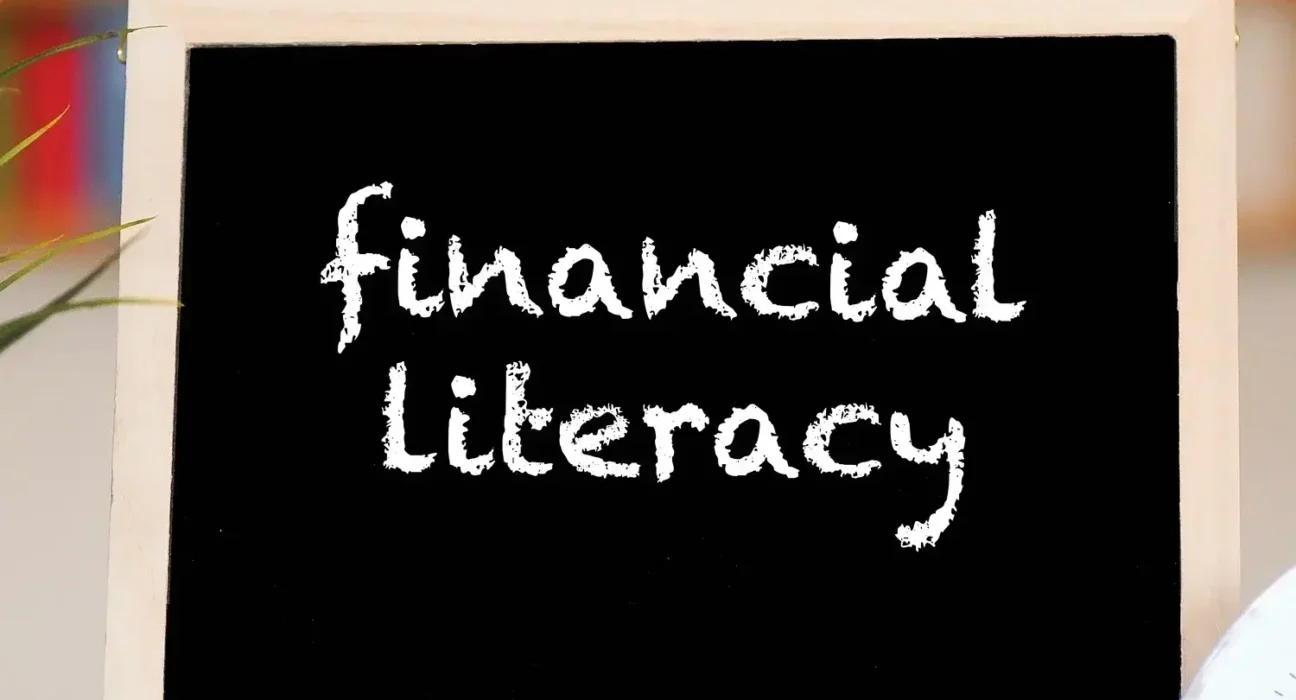
Tennessee credit unions commit $1.8 million over three years to advance financial literacy in Tennessee public schools
From the Finance Committee Floor: The Hidden Cost of Broken Families
Serving on the Tennessee House Finance, Ways and Means Committee, I have the privilege — and the sobering responsibility — of watching every state department present its budget. The numbers tell a story. And year after year, one theme runs as an undercurrent beneath nearly every line item that deals with poverty, incarceration, addiction, and public welfare one subject that never seems to get mentioned — the crisis of fatherlessness.
I often bring up the issue of the fatherless and the importance of having a positive mentor in a young person’s life. The direct correlation between the fatherless and incarceration, addiction, alcoholism, and other social ills is astonishing. The state of Tennessee and our country spends billions of dollars on this issue with increased incarceration, crime, government assistance, mental health cost and more.
The research is not subtle. Children raised without a father in the home are four times more likely to live in poverty, significantly more likely to drop out of school, and dramatically more likely to end up in the justice system. The social costs of these outcomes flow directly into the state budget — into TennCare, into the Department of Correction, into mental health services. When we talk about financial literacy, we cannot ignore the family structure that either reinforces or undermines the lessons we teach.
That is why financial literacy is not merely an academic subject. It is a life skill that, when paired with strong mentorship and stable family environments, has the power to interrupt generational cycles of poverty and dependence. A young person who understands budgeting, saving, and credit is a young person equipped to build something — a career, a household, a legacy.
Tennessee’s Best-Kept Secret: The Financial Literacy Commission
Did you know Tennessee has an entire commission dedicated to helping you make smarter financial decisions?
The Tennessee Financial Literacy Commission, created in 2010, is on a mission to improve the financial well-being of Tennesseans across the state — from students in the classroom to families at home. The Commission operates from a simple but powerful belief: understanding money is not a luxury. It is a necessity.
And here is the reality that motivates everything the Commission does: when Tennesseans make responsible financial choices, we all win. Stronger families produce a stronger workforce. A stronger workforce produces a stronger state. But it all starts with education — and it starts early.
That is why I am grateful to Commissioner Phil Wilson and Chairman Phil Dodd for their leadership and for inviting me to listen in and offer a few words on this critically important issue. Their work is the kind of quiet, consequential public service that rarely makes headlines but changes lives.
Where Does Rutherford County Stand?
Rutherford County is one of the fastest-growing counties not just in Tennessee, but in the entire United States. With that growth comes extraordinary opportunity — and extraordinary responsibility. As thousands of new families plant roots in our communities every year, ensuring that our youth are financially prepared is not optional. It is foundational to our county’s continued success.
“Financial literacy is the foundation of personal responsibility and economic freedom. In a booming county like Rutherford, equipping our kids with these skills today ensures they — and our community — thrive tomorrow.”
The Commission is laser-focused on connecting schools and families with free, high-quality financial education resources designed for all grade levels, no matter where you live or the size of your school district. This work is made possible by the Tennessee General Assembly and key financial supporters who understand what is at stake.
How We Reach Our Youth Right Now
The Commission and its partners are pursuing a comprehensive strategy to reach every young Tennessean with practical, engaging financial education. Here is how that vision takes shape on the ground:
• Partner with local schools to integrate financial literacy into everyday curriculum, from elementary through high school, ensuring every student encounters these skills before graduation.
• Leverage social media and apps that make learning about money fun and relatable for teens and young adults who live their lives on digital platforms.
• Family financial education through competitions, challenges, and simulations that place students inside real-world money scenarios and teach through experience.
• Host family financial literacy nights at schools and community centers so the lessons reinforced in classrooms are echoed at home — where they matter most.
• Collaborate with local banks and credit unions to offer hands-on banking experiences and mentorship for students, demystifying the financial system from an early age.
• Expand after-school programs focused on budgeting, saving, credit, and entrepreneurship — building the skills that translate directly into economic self-sufficiency.
• Engage faith-based organizations and nonprofits as trusted community partners who can deliver financial education beyond the classroom and reach families who need it most.
• Provide teachers with free training and resources so they feel confident and equipped to deliver financial literacy content alongside their core curriculum.
The Bottom Line
My parents never had much. But they had something more valuable than wealth — they had knowledge. They knew how to manage what they had, how to plan for the unexpected, and how to build something from very little. That knowledge was passed to me, and I hope to pass it forward.
Every young person in Rutherford County — in every county across this great state — deserves the same foundation. They deserve the knowledge, the skills, and the confidence to take control of their financial future and to build lives of independence and dignity.
Financial literacy will not solve every social challenge we face. But it is one powerful thread in the fabric of a stronger Tennessee — one family at a time.
Mike Sparks is serves as a Tennessee State Representative serving on the Finance, Ways and Means Committee.
For more information on the Tennessee Financial Literacy Commission and free resources available to your school or family, visit the Tennessee General Assembly website.