Rob Mitchell
When I placed my hand on the Bible and took the oath of office as property assessor, I didn’t swear allegiance to state administrative bureaus or political convenience. I swore to uphold the Tennessee Constitution and protect the citizens of Rutherford County.For the past two years, that oath has required me to fight on the front lines of an administrative overreach campaign.



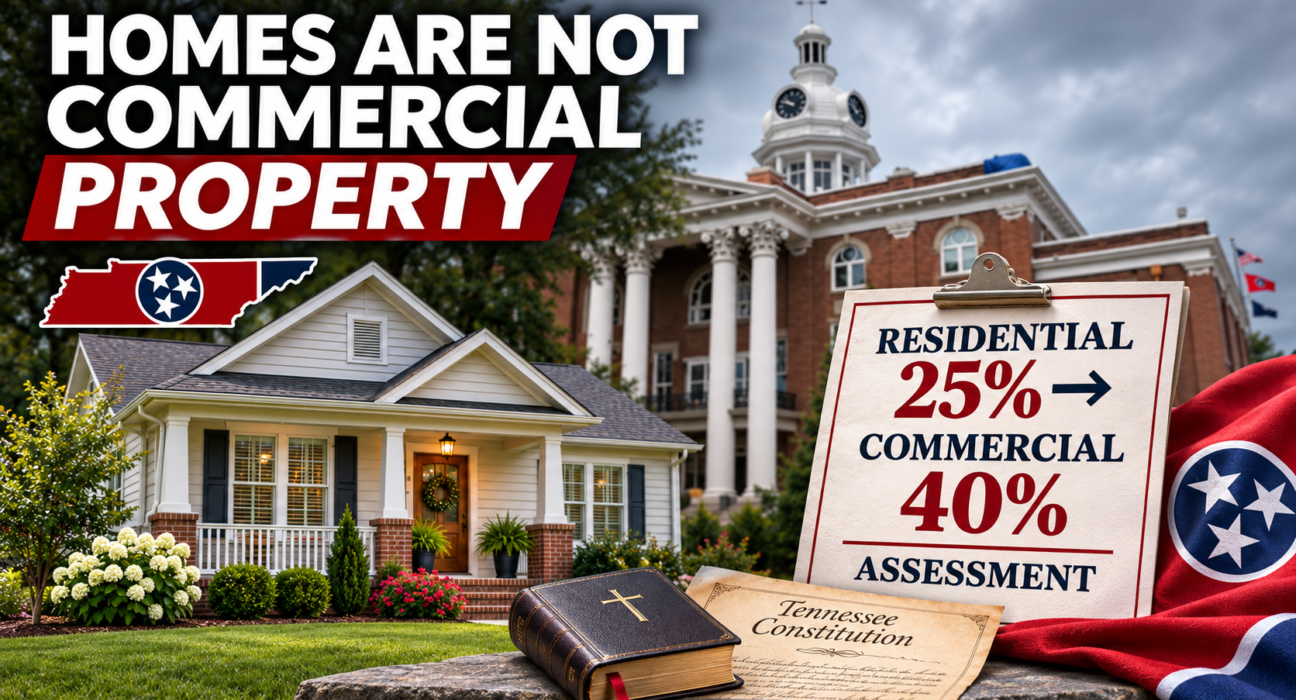
For fifty years, Tennessee Supreme Court precedent has affirmed that a single-family house where a family sleeps, eats, and lives is a residential property.Yet state bureaucrats insisted that if a single-family dwelling was rented or held under an LLC, it should be treated like a shopping mall or hotel. When my office refused to follow directives that violated our Constitution, state agencies leveled threats, imposed burdensome oversight, and attempted to force compliance.I chose to fight back because compliance with an unconstitutional order is a breach of the public trust.Our defense of constitutional principles and affordable housing has been repeatedly vindicated by administrative judges ruling against this state overreach:
-
Ascend Properties v. Sumner County / TDG Properties Ruling: Administrative rulings—including TDG Properties v. Sumner County Assessor’s Office—struck down attempts to classify single-family rental homes as commercial, labeling the state-driven reclassifications as “clearly erroneous”. The court reaffirmed that a home’s physical use determines its classification, not who holds the deed.
-
Marcel Silva v. Rutherford County Assessor: Administrative proceedings overturned improper commercial classifications pushed on local residential properties, returning single-family dwellings to their rightful residential status.
-
Underwood v. Rutherford County Assessor: Further court decisions upheld the principle that single-family rentals and zero-lot-line dwellings remain residential, rejecting attempts to impose commercial tax burdens on local housing.
Rutherford Assessor Rob Mitchell quits assessors group, questions its legal standing
These decisions proved what we knew all along: our office followed the law, protected taxpayers, and held the line against an administrative revenue grab.
Whenever I speak to citizens across Middle Tennessee, one question keeps coming up: “If the law is so clear and the courts agree with you, why are other elected officials so reluctant to stand up?”
Home ownership and the “American Dream” are crushed by Real Estate Investment Trusts
The answer lies in the political and financial pressures of modern government:
-
Fear of State Retaliation: State agencies hold tremendous audit and regulatory leverage. Many local leaders fear that challenging administrative mandates will trigger punitive compliance audits, withholding of resources, or public criticism.
-
The Temptation of “Silent” Revenue: Reclassifying residential properties to commercial inflates county and municipal tax revenues without requiring local commissions or city councils to vote on a tax rate increase. For budget-strapped officials, looking the other way provides short-term cash at the expense of local renters and homeowners.
-
The Path of Least Resistance: Standing up to administrative pressure takes political capital, personal sacrifice, and legal resources. It is far easier to pass state mandates down to local citizens than it is to stand up and shield those citizens from state overreach.
I salute leaders like State Representative Tim Rudd, who had the courage to publicly stand with us and call out state overreach. But we need more leaders willing to put their constituents ahead of state administrative harmony.
These court wins are major victories, but the battle to protect housing affordability in Tennessee is far from over. Bureaucrats will continue seeking loopholes unless we demand accountability.
Here is what we must do now:
-
Demand Legislative Action: Call on the Tennessee General Assembly to pass explicit statutory protections prohibiting state agencies from ever classifying single-family residential dwellings as commercial property, regardless of corporate or rental ownership.
-
Hold Local Officials Accountable: Ask your mayor, county commissioners, and assessors where they stand. Are they willing to defend the Tennessee Constitution and keep local housing affordable, or will they silently collect inflated taxes from working families?
-
Protect Our Constitutional Rights: Never accept improper taxation as the cost of doing business.
I will continue to uphold the Tennessee Constitution