Strengthening Trust in Our Elections: Why the SAVE America Act Matters
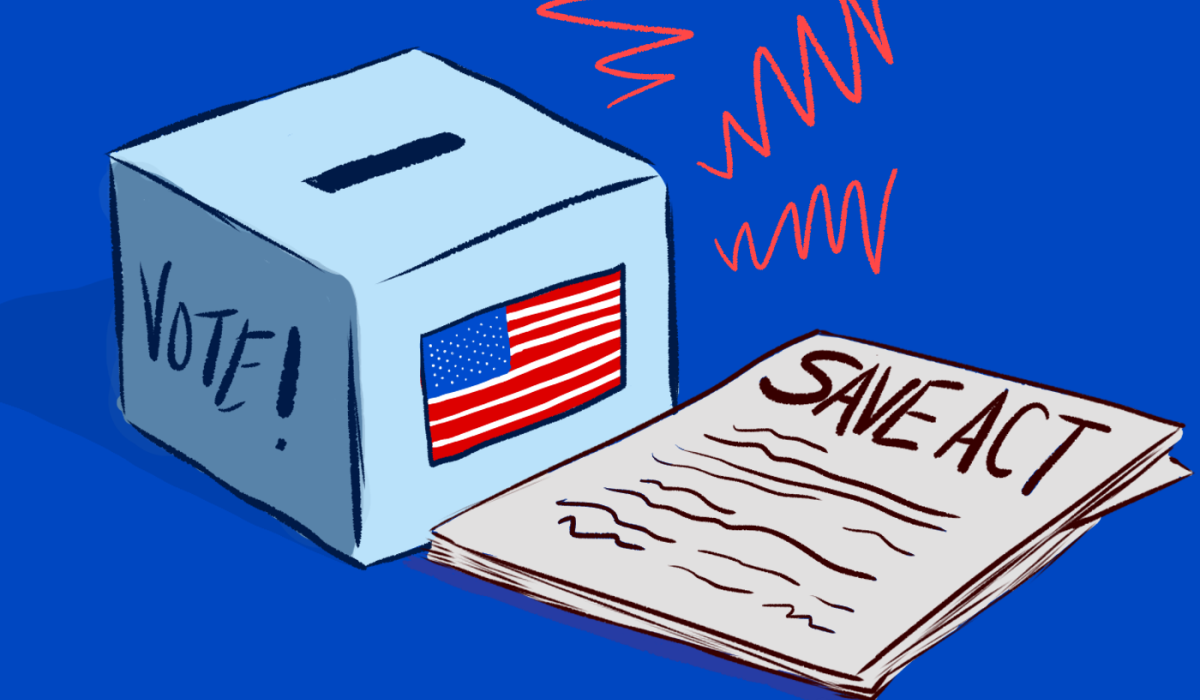
WASHINGTON — Confidence in our elections is the foundation of our republic. Without it, public trust weakens, participation declines, and the legitimacy of outcomes is questioned. The passage of the SAVE America Act in the U.S. House represents a meaningful step toward reinforcing election integrity and restoring voter confidence across the nation.
The legislation establishes clear, commonsense safeguards designed to ensure that only eligible American citizens participate in federal elections. Key provisions include:
• Requiring proof of U.S. citizenship to register to vote.
• Mandating photo identification for voting in federal elections.
• Eliminating mail-in-only voter registration processes that lack in-person verification safeguards.
These measures reflect standards already required in everyday life and are widely supported by the American public. Far from being controversial, voter verification policies consistently receive strong bipartisan backing.
Tennessee serves as a strong example of how election integrity measures can be implemented effectively. National assessments have consistently ranked Tennessee among the states with the highest levels of election integrity, reflecting policies that prioritize secure voter registration, identification requirements, and transparent election administration. These efforts demonstrate that it is possible to protect both access and accountability in the voting process.
Recent polling underscores just how broad that support is:
• Harvard CAPS/Harris Poll: 81% support voter ID, including 79% of independents and 70% of Democrats.
• Pew Research Center: 83% of Americans support voter ID across all major demographic groups.
• Gallup: 84% support voter ID; 83% support proof of citizenship for voter registration.
• Rasmussen Reports: 75% support voter ID, with support steadily increasing over time.
• Harvard CAPS/Harris Poll: 71% support the SAVE America Act, including 69% of independents and roughly half of Democrats.
• Harvard CAPS/Harris Poll: 80% support removing non-citizens from voter rolls.
These numbers reflect a rare area of agreement in American public life: voters want elections that are both accessible and secure.
Opponents often argue that voter ID laws could reduce turnout, particularly among vulnerable populations. However, research over the past two decades does not support that claim. Multiple studies and real-world outcomes indicate that these safeguards do not suppress participation:
• National Bureau of Economic Research (2021): No negative effect on voter registration or turnout across any demographic group.
• Georgia Elections (2022 and 2024): Record voter turnout following implementation of voter ID requirements.
• Election Law Journal (2014): Little evidence that ID requirements reduce turnout.
• America First Policy Institute (2023): Voter ID laws do not negatively impact minority or demographic-specific turnout.
In some cases, stronger election safeguards may even increase participation by boosting voter confidence in the system.
The SAVE America Act also addresses concerns related to mail-in voting. While absentee voting remains important for many Americans, large-scale mail-in systems introduce additional risks that policymakers cannot ignore:
• The bipartisan Commission on Federal Election Reform warned mail-in voting increases the risk of fraud and contested elections.
• A New York Times investigation found mail-in ballots are more likely to be rejected, compromised, or disputed.
• MIT Election Data and Science Lab noted that fraud appears more frequent in mail-in voting than in-person voting.
• The U.S. Supreme Court has acknowledged that absentee ballot fraud is a real risk that can impact election outcomes.
These concerns highlight the importance of maintaining secure, verifiable processes that protect every legitimate vote.
At its heart, the SAVE America Act reinforces a simple principle: American elections should be decided by American citizens. Requiring proof of citizenship is not only logical but overwhelmingly supported:
• Approximately 85% of Americans agree that only U.S. citizens should vote.
• Roughly three-quarters support requiring proof of citizenship to register.
The broader goal of this legislation is not restriction, but restoration—restoring faith in a system that must remain beyond reproach. When voters trust the process, they are more likely to participate, respect outcomes, and stay engaged in civic life.
As the SAVE America Act moves forward, it presents an opportunity for leaders at every level to prioritize integrity, transparency, and public confidence. Safeguarding elections is not a partisan objective—it is a national responsibility essential to preserving the strength of our democracy.