The Power of Prayer: How God Uses Ordinary People for Extraordinary Purposes
By Mike Sparks
At a time when America stands as the most prosperous and powerful nation in history, the depth of human struggle within our own communities is impossible to ignore. I seem to see more brokenness in our world and society today than ever before.
Issues from addiction and homelessness to mental health struggles, truancy, a growing fatherless rate, childhood behavior problems and overcrowded jails, the needs are everywhere. It is striking that while America has become the most successful nation on earth and has even placed a man on the moon, we still face these deep and painful challenges. One thing I have learned as a public servant—what you are supposed to be when you are elected, though many seem to forget that—is that I rarely see a lobbyist for these issues. Yes, there may be churches and nonprofits doing good work, but when it comes to actively advocating for real solutions, the silence is deafening.
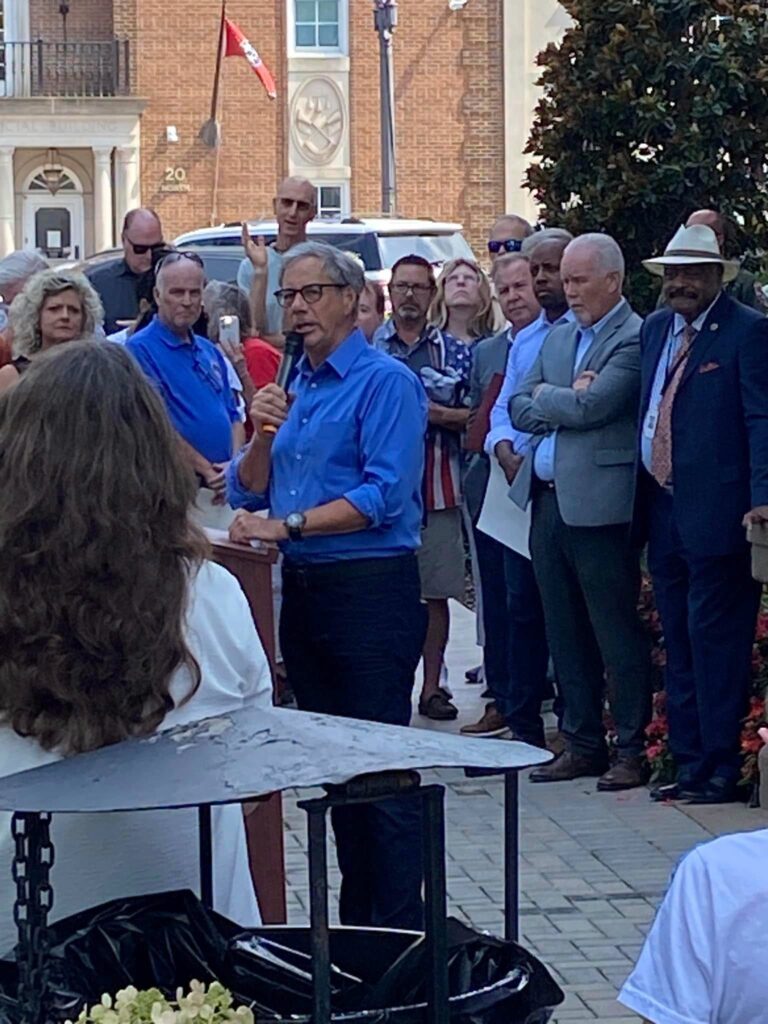
Pray4Tn event the Rutherford County Courthouse 2025
At our recent Pray4TN gathering at the Rutherford County Courthouse, I had the privilege of sharing from one of my favorite passages of Scripture, 1 Corinthians 1:27
“But God has chosen the foolish things of the world to shame the wise; God has chosen the weak things of the world to shame the strong.”
I also shared that God has a phone number.
… What God’s got a phone number? Did you know that?
Jeremiah 33: 3 “… Call to me, and I will answer you, and show you great and mighty things which you do not know.”
As I’ve grown older—and hopefully a little wiser—those verses has taken on even greater meaning.
Prayer changes more than our circumstances; it changes us. It moves us from relying on our own strength to depending on God’s. It shifts our focus from fear to faith, from confusion to clarity, and from the temporary problems before us to God’s eternal purposes.
Throughout Scripture, prayer is where ordinary people encountered an extraordinary God. I have also seen countless moments that I can only describe as miracles—events so improbable that, as my former statistics and probability professor once told me, they seem to point to a higher power beyond human explanation.
When Moses climbed Mount Sinai (Exodus 19-20), he left behind the distractions of the camp and entered God’s presence. The mountain shook with thunder, lightning, smoke, and fire. There, Moses received not only the Ten Commandments but also God’s direction for an entire nation.
Prayer invites us to make that same journey—not to a physical mountain, but into the presence of God. It is there we discover His peace, wisdom, strength, and direction.
The Apostle Paul reminds us:
“Do not be anxious about anything, but in everything, by prayer and supplication with thanksgiving, let your requests be made known to God. And the peace of God, which surpasses all understanding, will guard your hearts and your minds through Christ Jesus.”(Philippians 4:6-7)
One of the greatest lessons prayer teaches is that God often accomplishes His greatest work through the least likely people.
Paul writes in 1 Corinthians 1:26-31 that not many believers were wise by worldly standards, powerful, or of noble birth. Instead:
God chose the foolish to shame the wise.
God chose the weak to shame the strong.
God chose the lowly and despised to reveal His glory.
So that no one could boast except in the Lord.
Throughout history, God has consistently followed that pattern.
Moses believed he wasn’t a good speaker (Exodus 4:10-12).
Gideon described himself as the weakest member of the weakest family (Judges 6:15-16), yet God used him to defeat a mighty army.
David was simply a shepherd boy before God made him Israel’s greatest king (1 Samuel 16:7).
The genealogy of Jesus includes Tamar, Rahab, Ruth, and Bathsheba (Matthew 1), reminding us that God’s grace is greater than our failures.
Even in more recent history, the great evangelist D. L. Moody had little formal education. Yet because he made himself available to God, millions heard the Gospel through his ministry, and institutions like Moody Bible Institute continue to influence lives around the world.
These examples remind us that God is not searching for perfect people. He is looking for willing people.
As Jesus plainly said:
“Apart from Me you can do nothing.”(John 15:5)
And the prophet Zechariah declared:
“Not by might nor by power, but by My Spirit,” says the Lord Almighty.(Zechariah 4:6)
Prayer is also about listening.
We live in a world filled with distractions—phones, television, social media, headlines, and endless noise. Yet God often speaks through what Scripture calls “a still small voice” (1 Kings 19:12). The more time we spend in prayer, the more we recognize His voice and discern His will.
Jesus Himself repeatedly withdrew to lonely places to pray (Luke 5:16). If the Son of God made prayer a daily priority, how much more should we?
Prayer also requires perseverance.
Moses remained in God’s presence for forty days. Jeremiah prayed faithfully even while imprisoned. Jesus taught persistence in the parable of the persistent widow (Luke 18:1-8). Sometimes God answers immediately. Sometimes He asks us to wait. Sometimes His answer is different from what we expected. But He always hears the prayers of His children.
Interestingly, modern research (science) supports what believers have known for centuries. Studies have found that prayer can reduce stress and anxiety, increase hope, strengthen resilience, and improve emotional well-being. Researchers have observed that prayer engages many of our highest mental processes, including reflection, decision-making, memory, and emotional regulation. While science can measure some of these benefits, Christians understand that prayer’s greatest power is spiritual—it brings us into communion with the living God.
As I’ve grown older, I’m reminded of the observations of two remarkable men.
Albert Einstein is often quoted as saying:
“The more I study science, the more I believe in God.”
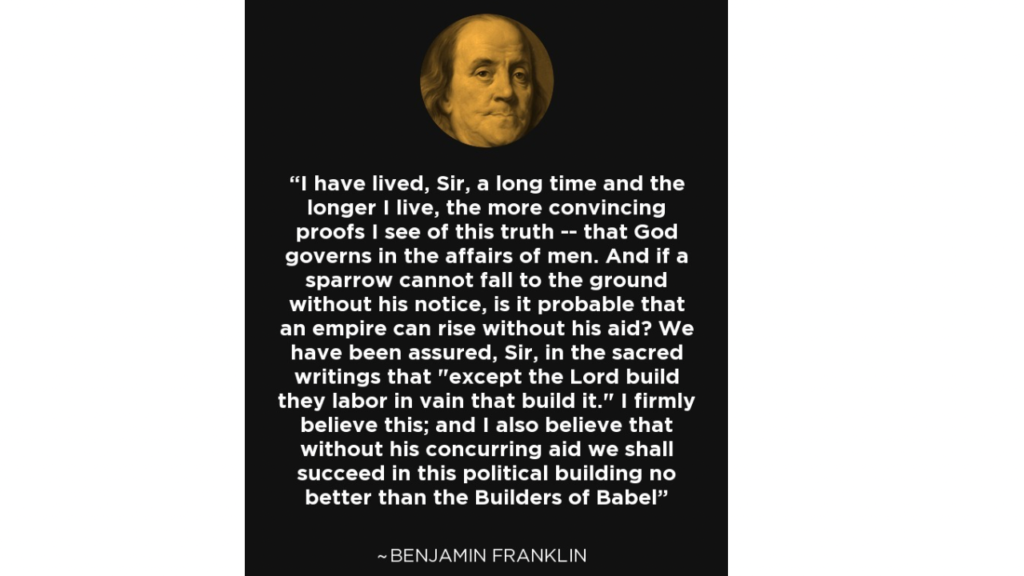
Benjamin Franklin wrote near the end of his life:
“I have lived, Sir, a long time, and the
longer I live, the more convincing proofs I see of this truth—that God governs in the affairs of men.”
Both recognized something our nation should never forget: there is a sovereign God who remains active in human history.
The late Adrian Rogers once told a humorous story about a woodpecker pecking on a tree. Suddenly lightning struck the tree and split it completely in half. The woodpecker flew away, returned later with nine friends, pointed to the shattered tree and proudly announced, “Gentlemen, that’s what I did.”
How often are we like that woodpecker?
We sometimes take credit for blessings, victories, and accomplishments that belong entirely to God.
The Bible reminds us that every good and perfect gift comes from Him. Without His grace, none of us would accomplish anything of lasting value.
Perhaps that’s why Jeremiah 33:3 has often been called “God’s phone number.”
“Call unto me, and I will answer thee, and show thee great and mighty things, which thou knowest not.”
Imagine what could happen if every family, every church, every school, every business, every elected official, and every community intentionally sought God in prayer each day.
America has always been at her best when her people humbled themselves before God.
My prayer is simple:
“Lord, I’m nothing without You. Please use me for Your glory.”
God is still looking for ordinary men and women with humble hearts. He is still answering prayer. He is still changing lives. And He is still accomplishing extraordinary things through people who simply trust Him.
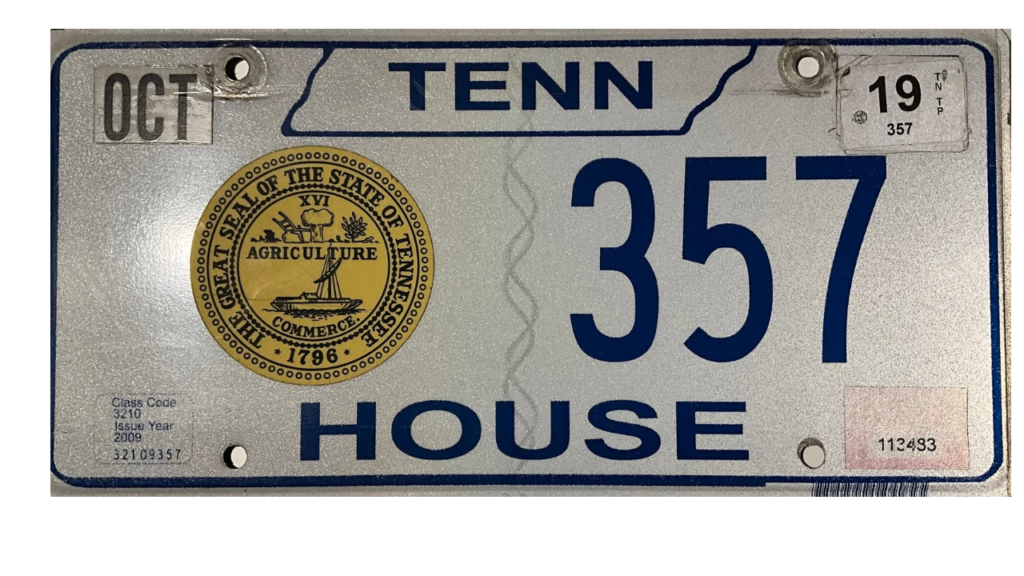
As we seek God may we remember one of my favorite scriptures from Proverbs 3:5-7. Im liked it so much it was even my Tennessee House license plate. “Trust in the Lord with all your heart and lean not on your own understanding; in all your ways acknowledge Him, and He shall direct your paths. Refrain from evil.”
Ironically, at the end of the event an attendee asked me “Mike, it seems that the state and world is full of chaos which governor candidate do you believe can bring people together?” I responded “Neither of them. That’s why this event praying at the courthouse is important. The only thing that will help this state is a revival.”
May we never boast in ourselves, but always give God the glory.