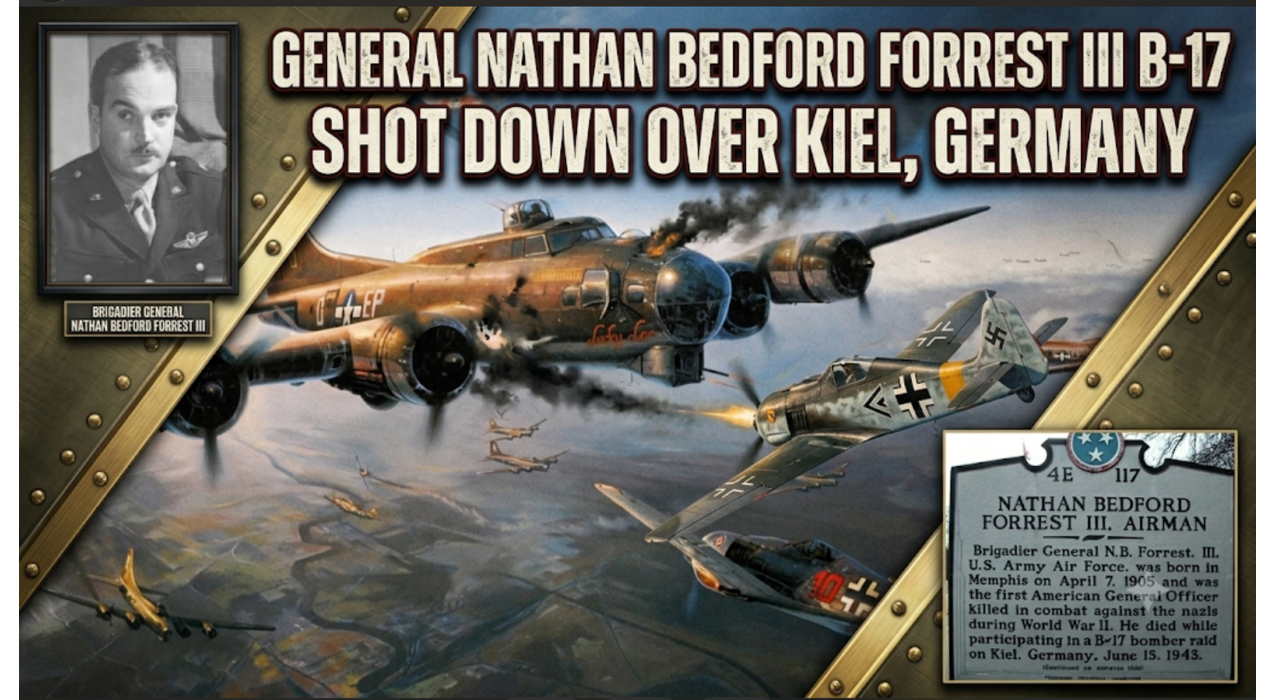
Tragedy Over Kiel: The Day General Nathan Bedford Forrest III Was Shot Down
By Mike Sparks
On June 13, 1943, a catastrophic daylight 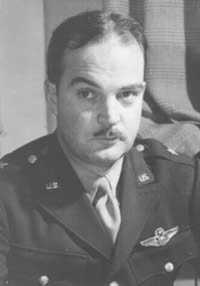

General Forrest, serving as a combat wing commander and observer, flew aboard a B-17F Flying Fortress (Serial Number 42-30164) from the 95th Bomb Group, 334th Bomb Squadron. Heavily targeted by German anti-aircraft flak and fighter planes, his aircraft caught fire and spiraled down into the Baltic Sea.
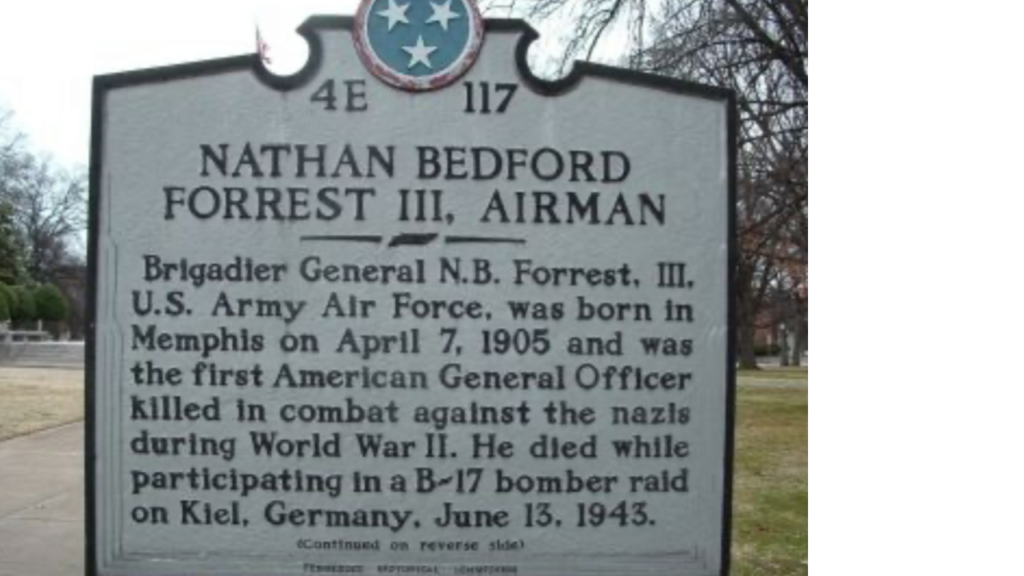

The Survivors and the Crew
There were 13 men aboard the B-17 that day. Witnesses in accompanying aircraft reported seeing several parachutes deploy as the plane went down. However, the freezing waters of the Baltic Sea and the delay in rescue operations proved fatal for almost everyone. Ultimately, only two men survived the disaster to become Prisoners of War (POWs).

The Two Survivors:
The Survivors and the Crew
There were 13 men aboard the B-17 that day. Witnesses in accompanying aircraft reported seeing several parachutes deploy as the plane went down. However, the freezing waters of the Baltic Sea and the delay in rescue operations proved fatal for almost everyone. Ultimately, only two men survived the disaster to become Prisoners of War (POWs).

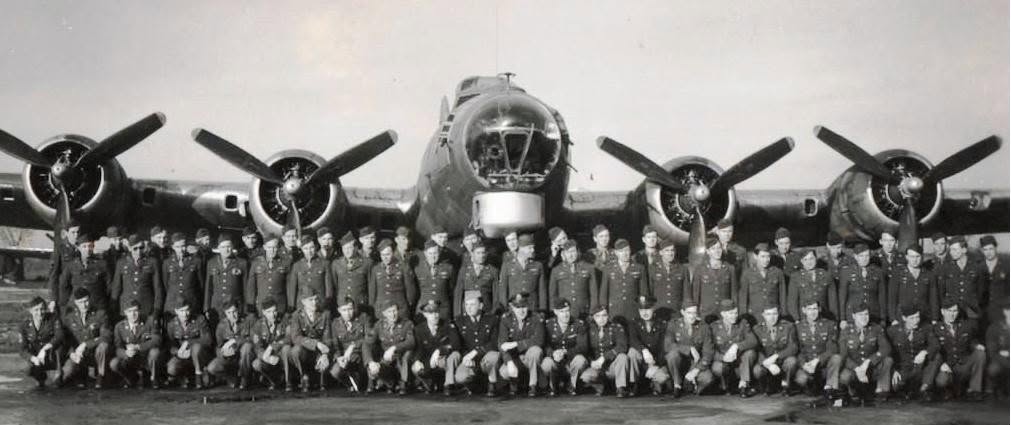
The Two Survivors:
-
1st Lt. Willard W. Brown (Command Navigator)
-
1st Lt. Vincent J. Gannon (Observer)
Both men safely parachuted from the falling aircraft, were pulled from the water, and spent the remainder of the war in a German POW camp.
The Fallen Crew Members:
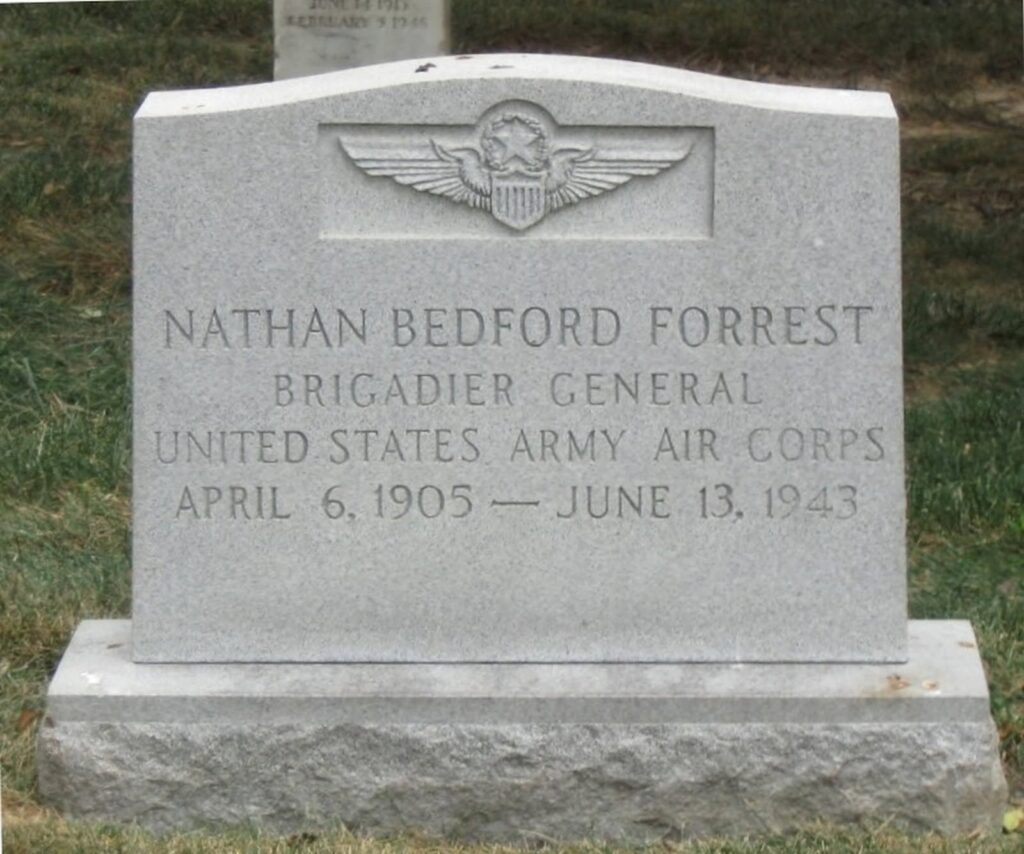
General Forrest earned a posthumous Distinguished Service Cross for heroically staying at the controls to keep the plane steady while others attempted to bail out. The plane exploded before he could escape. His body washed ashore on the German island of Rügen months later in September 1943.
The other 11 men who perished in the action were:
-
BG Nathan Bedford Forrest III (Observer / Wing Commander)
-
Capt. Harry A. Stirwalt (Pilot)
-
Maj. Alan W. Wilder (Co-Pilot / Squadron Commander)
-
1st Lt. Walter J. Thimm (Navigator)
-
1st Lt. Robert L. McNutt, Jr. (Bombardier)
-
T/Sgt. Walter A. Drotleff (Flight Engineer/Top Turret Gunner)
-
T/Sgt. Robert F. Forrest (Radio Operator)
-
S/Sgt. Charles J. Benson (Ball Turret Gunner)
-
S/Sgt. Odes W. Boyd (Waist Gunner)
-
S/Sgt. Angelo Triches Jr. (Waist Gunner)
-
1st Lt. Donald W. Scavotto (Tail Gunner)
Other Aircraft Shot Down During the Raid
The mission to Kiel on June 13, 1943, was brutally costly for the Allies. No British Royal Air Force (RAF) aircraft were lost in this specific battle, as the RAF primarily conducted nighttime operations, while the U.S. Army Air Forces handled high-altitude daylight raids.
However, the 95th Bomb Group took a massive beating. Out of 26 B-17s that set out from the group that day, 10 aircraft were entirely lost or shot down over the target area, 12 returned heavily damaged, and 2 were damaged beyond repair. More than 100 American airmen from the 95th Bomb Group alone failed to return to their base at RAF Framlingham that evening.
Among the other specific B-17s shot down during the same raid were:
-
B-17F (42-29675) – Piloted by William C. Adams (Crew KIA)
-
B-17F (42-3286) – Piloted by Austin V. Stone (Crew KIA)
-
B-17F (42-3206) – Piloted by James G. Perry Jr. (Crew survived as POWs)
-
B-17F (42-3107) – Belonging to the 96th Bomb Group, piloted by Robert M. Webster (Crew survived as POWs)
Summary of the Raid
On June 13, 1943, General Nathan Bedford Forrest III’s B-17 was shot down over Kiel, leaving only 1st Lt. Willard W. Brown and 1st Lt. Vincent J. Gannon as the lone survivors out of 13 men. The raid was a devastating blow for the Allies, witnessing the loss of 10 American B-17 bombers from the 95th Bomb Group alone, though no British aircraft were involved in the daylight operation.
The Luftwaffe Interception: A Tactical Nightmare
The Allied choice to send unescorted B-17 Flying Fortresses deep into northern Germany meant the bombers flew beyond the range of friendly Allied fighter escorts. As the 4th Bombardment Wing approached the German coast on the morning of June 13, 1943, they were ambushed by one of the largest and most coordinated German fighter concentrations encountered up to that point in the war.
The Luftwaffe scrambled multiple specialized day-fighter units (Jagdgeschwader) and even night-fighter detachments (Nachtjagdgeschwader) to defend the vital submarine pens at Kiel. Returning American crew members reported relentless, head-on attacks and tactical formations of German fighters diving in elements of three, directly targeting the vulnerable tail and waist positions of the B-17s.
The primary German units responsible for the heavy toll inflicted on the 95th Bomb Group included:
-
Jagdgeschwader 11 (JG 11): Based out of Husum and Neumünster, JG 11 bore the brunt of the interception. Flying Focke-Wulf Fw 190s and Messerschmitt Bf 109s, their experienced pilots specialized in high-altitude defense against heavy bombers.
-
Jagdgeschwader 1 (JG 1): Elements of JG 1 were vectored in to reinforce the assault, aggressively cutting through the 95th Bomb Group’s defensive boxes.
-
Jagdstaffel Helgoland (Jasta Helgoland): This specialized local defense squadron, flying from the strategic island of Heligoland, intercepted the bombers as they crossed the North Sea coastline.
-
Nachtjagdgeschwader 3 (NJG 3): Desperate to halt the raid, the Luftwaffe even scrambled twin-engine Messerschmitt Bf 110 night-fighters from NJG 3 to assist the day fighters. Operating outside their normal nighttime role, these heavily armed aircraft tracked the B-17s, utilizing heavy cannons and experimental aerial mortar bombs dropped from above the American formations.
This overwhelming mix of single-engine interceptors and heavily armed twin-engine fighters overwhelmed the American gunners, directly contributing to the loss of General Forrest’s aircraft and the devastating 38% casualty rate suffered by the 95th Bomb Group that day.
-