Skip to content
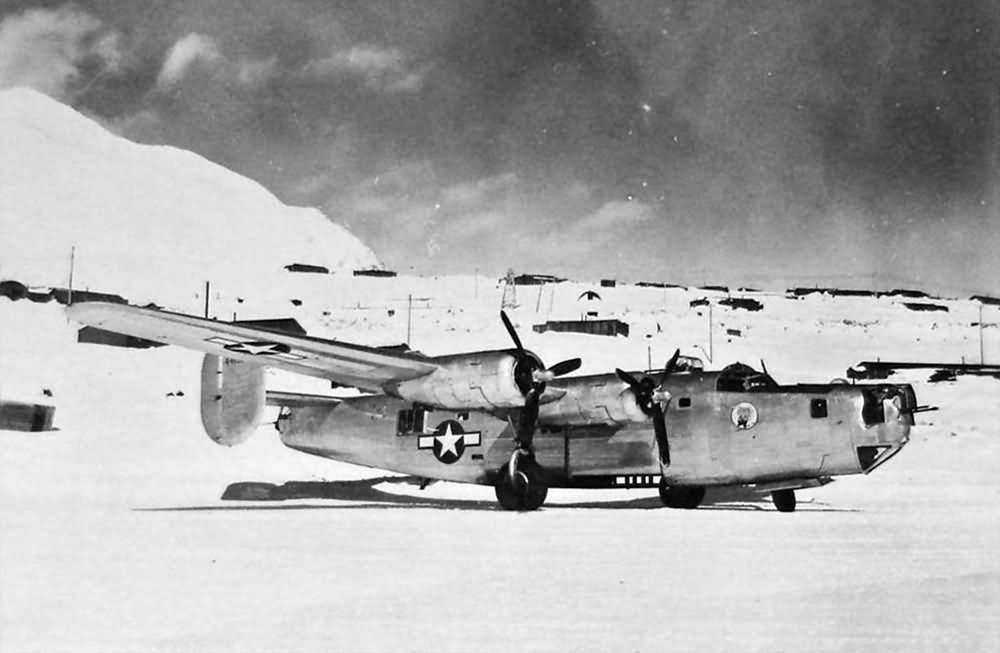
When This B-24 Crashed in Alaska Winter — Its Pilot Survived 81 Days With Zero Training
-
By
admin86
- December 27, 2025
- Comments
- 3 minutes read
- 361 Views
- 9 months ago
At 11:27 on the morning of December 21st, 1943, First Lieutenant Leon Crane sat in the right seat of a B-24 Liberator and tried to pretend the frost crawling across the cockpit glass was just another detail in another routine test.
He was twenty-four years old. A city boy from Philadelphia. The kind of man who could navigate street grids and crowded train stations and the sharp edges of conversation, but who had never once spent a night outdoors on purpose. He had been a co-pilot for a year—twelve months of checklists, engine notes, instrument scans, and the quiet hierarchy of a flight deck where a man learned that confidence was something you performed as much as something you felt.
Outside the windshield, eastern Alaska was a white nothingness under a low, heavy sky. The cloud deck looked like a lid screwed onto the world, and they were climbing toward it anyway, four engines pulling hard, the aircraft shuddering faintly as it passed through thinner and thinner air.

Ladd Field ran these cold weather tests three times a week. That was what they told themselves, and it was what Leon held onto: routine.
Take a B-24 to altitude. See how systems handled minus forty. Bring it back. Write down what froze, what didn’t. Fix it so future crews didn’t die when the world turned to ice.
This wasn’t supposed to be dangerous.
But at twenty thousand feet, “supposed to” was a fragile promise.
Ice crystals formed faster now, a delicate bloom across the glass. The cockpit smelled faintly of oil, metal, and stale coffee. The heating systems were fighting the cold and losing. Leon glanced at the instrument panel—altimeter unwinding upward, manifold pressure steady, engine temps hovering in their narrow tolerances, and the vacuum gauge…right where it always was until it wasn’t.
He checked the pilot beside him—Second Lieutenant Harold Hoskin. Not much older, but somehow built of different material: a man who looked like he belonged in harsh places. Hoskin’s hands rested light on the yoke, but his eyes kept scanning the clouds ahead with the focused impatience of someone searching for a door that didn’t want to be found.
They’d radioed their position twice already—once at 10:03, again at 10:30. Roughly 120 miles east of Fairbanks. Routine.
Then Hoskin said, “You see that?”
Leon leaned forward. A break in the cloud deck—maybe. A lighter patch. A thin seam that looked like it might be a hole.
Hoskin started a climbing turn toward it.
The clouds closed around them like a fist.
Visibility shrank to nothing. The world outside became a gray, swirling blindness. Instrument conditions—under three miles, then less, then nothing at all. Leon felt the familiar tightening in his stomach that always came when the aircraft entered a place where the eyes couldn’t help and the instruments became religion.
The port outboard engine coughed once.
A single ugly sound—like a man choking.
Then it died.
The number one engine quit at twenty thousand feet. Silence on that side, a sudden imbalance you could feel through the seat and yoke. Hoskin’s head snapped, hands compensating automatically, but the vacuum selector valve had frozen solid too—an invisible betrayal inside the aircraft’s nervous system.
This was exactly what they were here to test.
This was also exactly how people died.
The B-24 pitched forward into a spin so fast it felt like someone had grabbed the aircraft by the tail and twisted. Leon’s body was pressed sideways into his harness. The world rotated. The sky became a whirlpool.
He grabbed the yoke hard enough that his fingers hurt.
Hoskin was already hauling back with everything he had, fighting the bomber like it was a wild animal. The Liberator fell in a corkscrew from twenty thousand feet, picking up speed with every rotation.
In the back, radio operator Ralph W—his voice thin with urgency—managed to key the mic long enough to report engine failure and spin.