
Thomas the Apostle: From Doubter to Believer to India’s First Missionary
The Apostle Thomas remains one of Christianity’s most intriguing figures—a man whose initial skepticism gave birth to one of faith’s most enduring phrases, yet whose subsequent dedication may have carried the gospel thousands of miles from Jerusalem to the shores of India.
The Twin and His Character
Known in Aramaic as *Teʾoma* and in Greek as *Didymos*—both meaning “twin”—Thomas was one of Jesus’ twelve original disciples. Syrian Christians referred to him as Judas Thomas, or “Judas the Twin,” though the identity of his twin sibling remains unknown to history.
The Gospel of John provides the clearest portrait of Thomas’s personality, revealing a man of profound loyalty mixed with honest questioning. When Jesus announced his intention to return to Judaea despite threats from hostile opponents, Thomas’s response demonstrated unwavering devotion: “Let us also go, that we may die with him” (John 11:16). Here was a disciple willing to face death alongside his master.

The Questioner at the Last Supper
At the Last Supper, Thomas’s inquisitive nature emerged again. When Jesus spoke cryptically about going to prepare a place for his followers, saying “you know the way where I am going,” Thomas voiced the confusion others likely felt: “How can we know the way?” This honest question prompted one of Jesus’ most famous declarations: “I am the way, and the truth, and the life” (John 14:1–7).
Birth of “Doubting Thomas”
The incident that would forever define Thomas’s legacy occurred after the Resurrection. Absent when the risen Christ first appeared to the disciples, 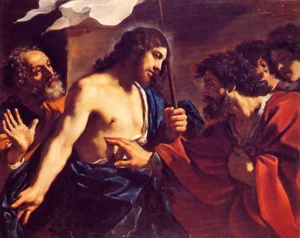

A week later, Jesus appeared specifically for Thomas’s benefit, inviting him to touch his wounds. The transformation was immediate and profound. Thomas’s response—”My Lord and my God”—made him the first disciple to explicitly proclaim Jesus’ divinity. Rather than condemning Thomas’s doubt, this encounter affirmed that honest questioning can lead to deeper faith. Jesus’ gentle rebuke—”Have you believed because you have seen me? Blessed are those who have not seen and yet have believed”—was meant not just for Thomas but for all future believers.
Journey to the East
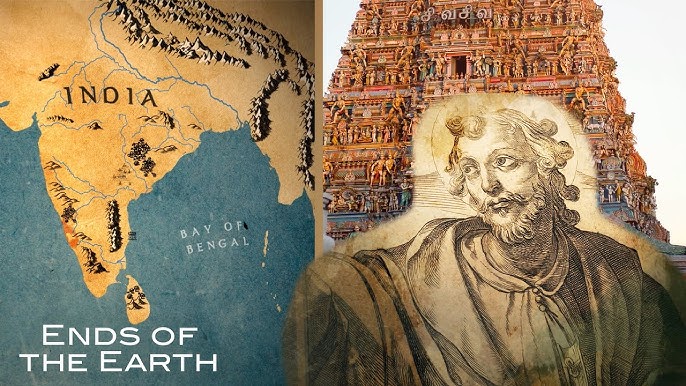
What happened to Thomas after Pentecost remains shrouded in tradition and historical uncertainty. According to Eusebius, the 4th-century church historian, Thomas evangelized Parthia in modern-day Iran. However, a stronger tradition—particularly vibrant in India—claims he traveled much farther east.
According to these accounts, Thomas arrived on India’s Malabar Coast (present-day Kerala) around AD 52, bringing Christianity to the subcontinent. The Christian communities he established became known as St. Thomas Christians or Syrian Malabar Christians, and they persist to this day, representing one of the world’s oldest continuous Christian traditions.
The Indian Mission
The 3rd-century *Acts of Thomas*, composed in Syriac, provides detailed—if apocryphal—accounts of his ministry in India. 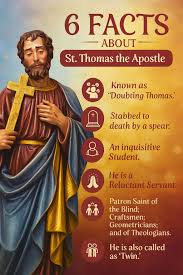

Syrian ecclesiastical records mention Thomas’s work in Edessa, with the poet St. Ephrem documenting miracles performed there. A Syrian calendar entry from July 3 notes: “St. Thomas who was pierced with a lance in ‘India.’ His body is in Urhai (Edessa) having been brought there by the merchant Khabin.”
Martyrdom and Legacy
Tradition holds that Thomas was martyred around AD 72 in Mylapore, near modern Chennai (formerly Madras), under the orders of a local king. The San Thomé Cathedral, also known as Santhome Basilica, marks his traditional burial site and remains a major pilgrimage destination. However, some accounts claim his relics were later transported westward, eventually enshrined at Ortona, Italy.
Literary Legacy
Beyond the canonical Gospels, Thomas features in several ancient texts, though their authenticity and reliability vary considerably:
The *Gospel of Thomas*, discovered among the Coptic Gnostic texts at Nag Hammadi, Egypt, in 1945
The Book of Thomas the Athlete
Evangelium Joannis de obitu Mariae* (“The Message of John Concerning the Death of Mary”)
These apocryphal works reflect the early church’s fascination with Thomas but are not considered historically reliable by mainstream Christianity.
Historical Certainty and Faith
While the biblical record confirms Thomas as a faithful disciple who proclaimed Christ’s divinity, the details of his missionary journey to India cannot be verified with absolute certainty.

However, since these accounts exist outside Scripture, historians and theologians acknowledge that some details may be embellished or legendary. What remains certain is that Thomas transformed from a man demanding physical proof into a bold witness who may have carried the gospel to one of the world’s most distant lands.
The Indian Christian community’s continuous existence since ancient times, their unique liturgical traditions, and their consistent identification with Thomas provide strong circumstantial evidence for his presence there. Whether every detail of the tradition is historically accurate, the legacy of Thomas—both as the honest doubter who found profound faith and as a pioneering missionary—continues to inspire Christians worldwide.
In Thomas, believers find permission to question, assurance that doubt can deepen into conviction, and inspiration that faith, once established, can carry one to the ends of the earth.