82 Years Ago Today — They Flew Before the Sun Rose
By Mike Sparks
Publisher’s Note
My late father flew 24 bombing missions over Germany as a member of the Eighth Air Force, having enlisted in the original Army Air Corps. It is a chapter of his life I wish I knew more about.
Research has proven difficult. I’ve been told that a significant portion of World War II military service records were lost in a 1973 fire at the National Personnel Records Center in St. Louis — a tragedy that silenced the stories of countless veterans before families ever thought to ask the right questions.
That silence is part of what drives my interest in preserving the history of Sewart Air Force Base here in Rutherford County. Sewart played a role in the broader story of American airpower — including connections to D-Day and missions that shaped the outcome of the war in Europe. Those stories deserve to be told before they are lost as well.
If you have knowledge of Sewart’s connection to D-Day or other wartime missions — or if you can point me toward records, photographs, or veterans’ accounts — I’d be grateful to hear from you. Please reach out at MikeSparksTn@gmail.com.
Our Smyrna and Rutherford County history is still being written — please help me write it.
June 6, 1944. D-Day.
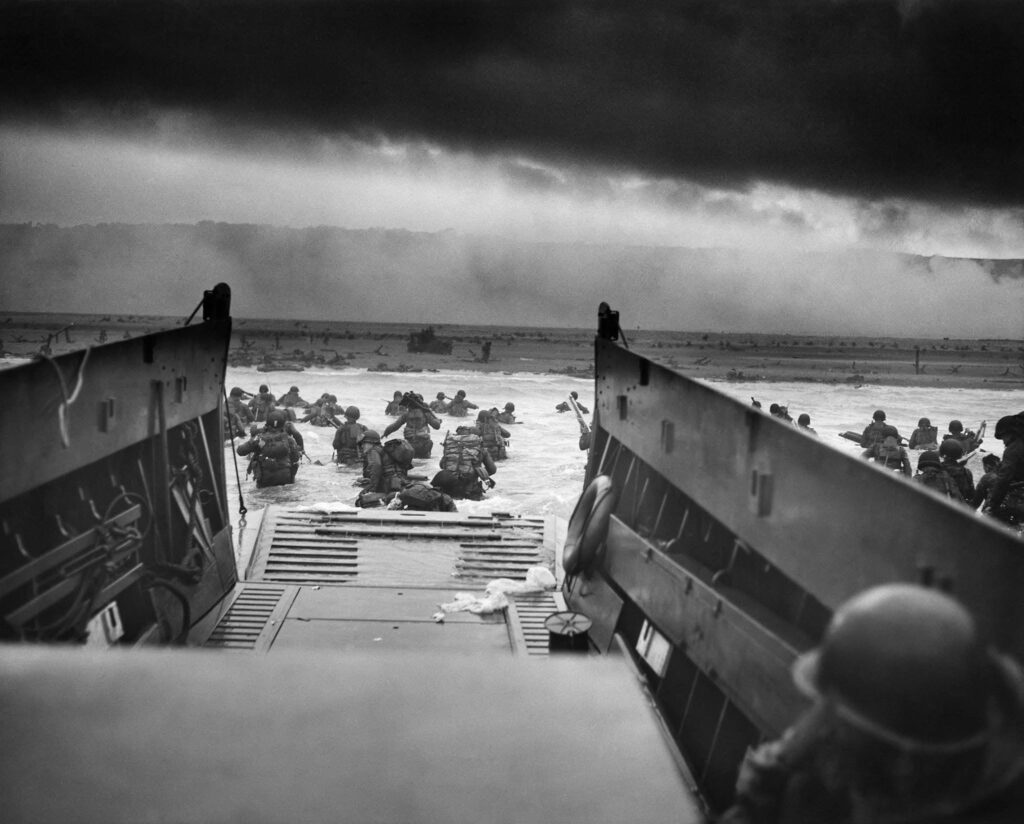
Most of us know the image — the boys wading through the surf at Omaha Beach, rifles raised above their heads, courage outrunning fear. But before the first boot hit that sand, something else was already happening 20,000 feet above the English Channel.
The Mighty Eighth Air Force was airborne.
This day carries a name — and that name is personal to a Rutherford County family.
John Buford Hunter Rodger Thomas. Rodger Thomas’s uncle. He grew up in the Old Jefferson Community — the original county seat of Rutherford County, just outside of Smyrna — and he was killed fighting on D-Day. He was one of ours. A Rutherford County boy who gave everything on the beaches of Normandy so the rest of us could live free.
He was not alone.
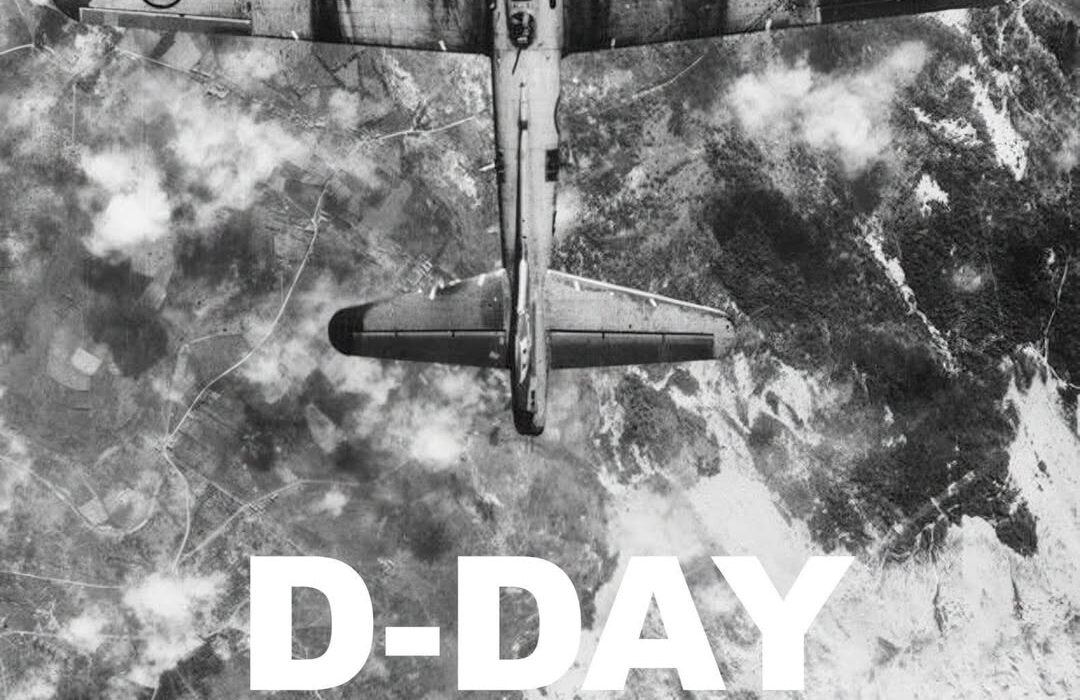
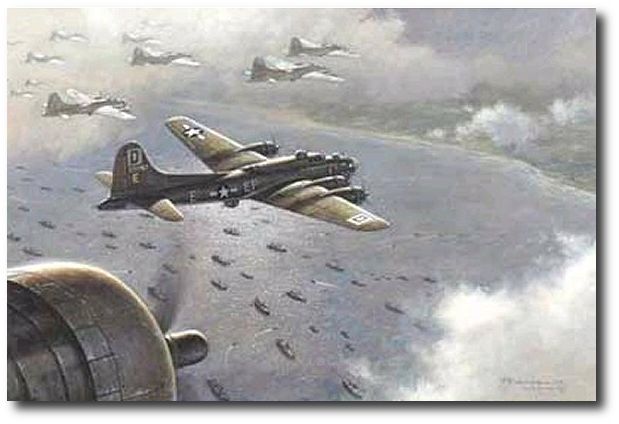
At dawn on June 6th, 659 B-17 Flying Fortresses and 418 B-24 Liberator bombers launched from England in the first wave alone — sent to strike German fortifications along the Normandy beaches. Think about that number. Over a thousand heavy bombers in a single morning. The B-17s and B-24s flew four separate missions on D-Day.
Aircrews were briefed at 10 p.m. on June 5th and were wheels-up by 2:40 in the morning — assembling their massive formations in complete darkness, navigating without GPS, without the technology we take for granted today. Just skill, nerves, and faith in the man beside them.
Weather conditions forced many crews to drop through heavy cloud cover using radar guidance. They couldn’t always see their targets. But they pressed on anyway, because the boys on the beaches were counting on them. The B-17s and B-24s hammered rail lines, transportation centers, and bridges further inland — cutting off German reinforcements before they could reach the coast.
In all, the Eighth Air Force flew over 1,300 sorties on D-Day alone in support of the landings. Twelve airmen gave their lives that day. Twelve men who took off before sunrise and never came home — so that liberty could survive.
These weren’t just machines. The B-17 Flying Fortress and the B-24 Liberator were flown by 19 and 20-year-old kids from Tennessee, Texas, Iowa, and everywhere in between. Boys who had never been far from home suddenly found themselves over Nazi-occupied Europe, doing what free men do when freedom is threatened — they fight.
Some of them may have learned to fly right here in Smyrna.
(Shout out to Michelle Mastin Wesnofske for her assistance with the honorary Sewart Air Force Base Highway memorial dedication in 2016)
Just days after Pearl Harbor, the War Department established a bombardment training base on 3,325 acres off US Route 70 in Rutherford County. By 1942, young cadets at Smyrna Army Airfield were climbing into B-17 Flying Fortresses and B-24 Liberators — the very aircraft that led the air assault over Normandy. In 1943, the 76th Flying Training Wing was activated there. Top graduates were commissioned and sent directly into combat. The base was deactivated in 1947, then reopened in 1948 as Smyrna Air Force Base — the Sewart we know today. The pilots who flew through flak over the beaches of France may well have earned their wings right here in Rutherford County.
That connection is not a footnote. That is a legacy.
John Buford Hunter Rodger Thomas was one of those boys. He came from a small community most people have never heard of — Old Jefferson, Tennessee — the place where Rutherford County began. He didn’t die on some distant shore as a stranger to history. He died as a neighbor, a son, a piece of this county’s story that deserves to be remembered by name.
On June 6, 1944, more than 11,000 aircraft were part of the greatest air armada the world had ever seen. And at the tip of that spear — the Mighty Eighth.
Today, on the 82nd anniversary of D-Day, let’s pause and remember them all. The men on the beaches. The paratroopers who dropped in the dark. And the aircrews of the Eighth Air Force — the men of the B-17s and B-24s who roared through clouds and flak so that a generation might live free.
And remember John Buford Hunter Rodger Thomas — Rodger Thomas’s uncle, a Rutherford County boy from Old Jefferson who gave his last full measure on this day, 82 years ago.
“Greater love has no one than this: to lay down one’s life for one’s friends.” — John 15:13