New Scans at Turkish Site Reignite Debate Over Noah’s Ark
DURUPINAR, Turkey – A boat-shaped formation near Mount Ararat is drawing fresh attention after drilling and scanning results hinted at structures beneath the surface. The findings have again raised the question of whether the resting place of Noah’s Ark has been located, and skeptics remain firmly in the conversation.
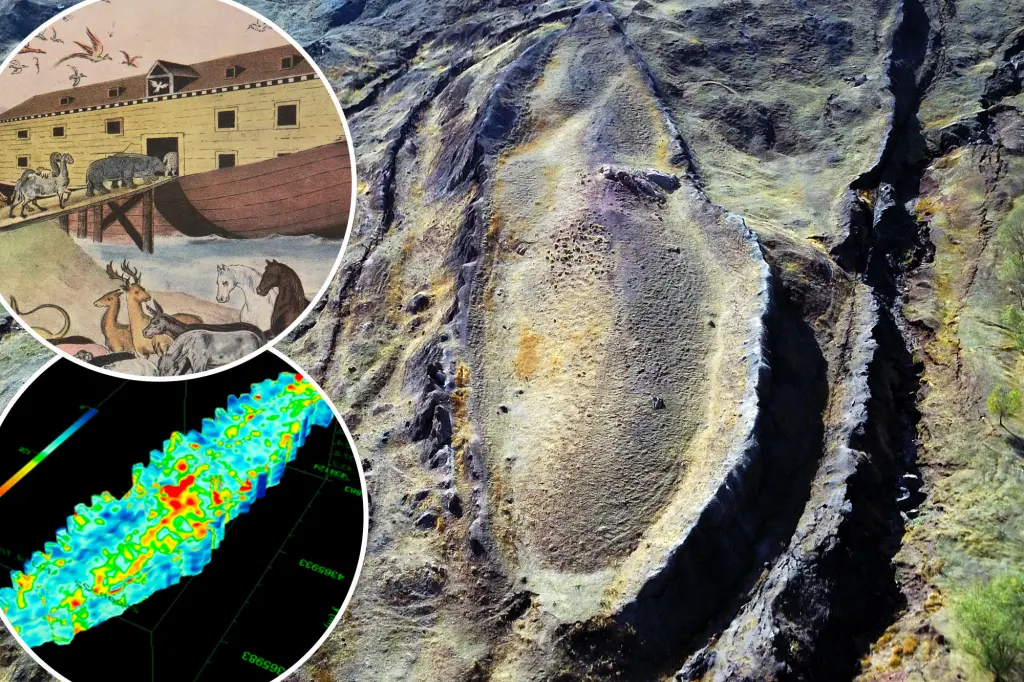
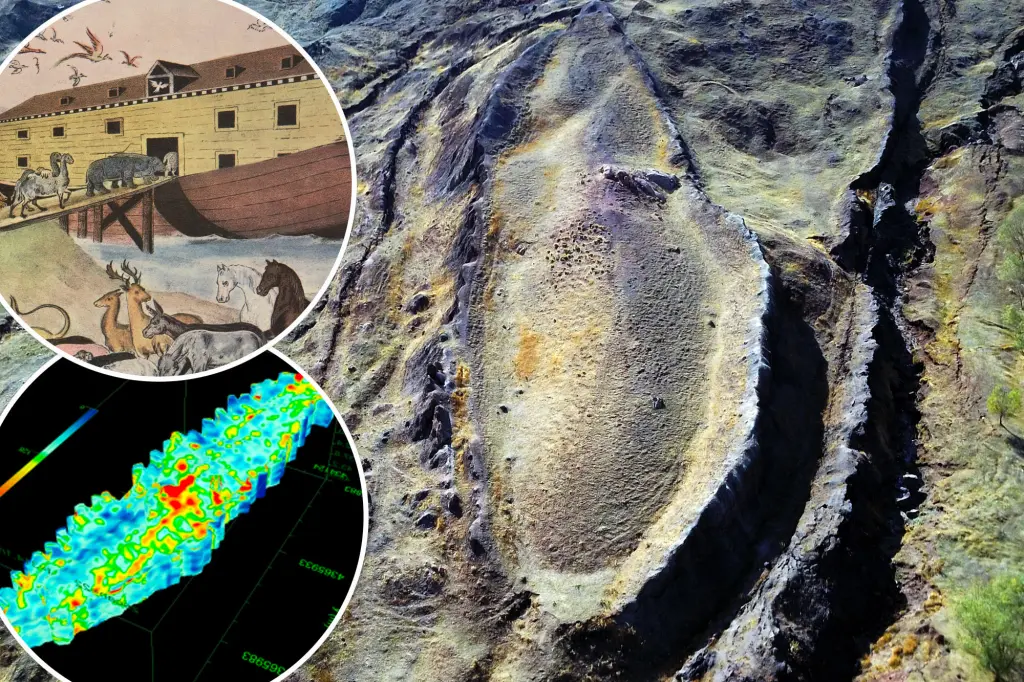
The formation stretches roughly 515 feet. Turkish Captain Ilhan Durupinar spotted it in aerial photographs in 1959, and it has since been tied to the vessel described in Genesis 6. Most researchers long treated it as a natural geological feature.
Preliminary results released Oct. 27 may complicate that view. According to Baptist Press, the team reported charred wood fragments that appear ancient, along with patterns, chambers and corridors that scientists involved say are not geological.
The group behind the effort, Noah’s Ark Scans, says surveys in 2014, 2019, 2021 and 2023 found linear structures, right angles and room-like spaces running the length of the formation. Soil tests in 2024 showed nearly three times more organic material inside the formation than outside. Ground-penetrating radar produced geometric patterns that could point either to a natural fold or to a decayed wooden ship.
Dr. Jim Parker, who teaches biblical interpretation and archaeology at New Orleans Baptist Theological Seminary, has followed the site since about 1988. He called the team’s methods, led by Dr. Cenker Atila, a strong way to gather evidence. He noted that the team has drilled 12 cores inside the formation and four outside, and that a 2027 excavation season is planned. Still, he urged patience, saying any claim needs rigorous, empirically supported proof, and that the team should publish its data for peer review by geologists and archaeologists before declaring what the site is.
Large drogue stones scattered across the area add to the intrigue. Researchers describe them as drag anchors with rope holes cut near the top, and some believe they were cut loose from the ark as floodwaters receded. Crosses carved into them are generally attributed to later Armenian Christians.
Not everyone is convinced. Ken Ham of Answers in Genesis said finding the ark would be among the greatest archaeological discoveries ever, but warned against sensationalism. AiG does not believe the ark has been found at Durupinar, he said, adding that faith in Scripture does not depend on locating the vessel.
The site has a long history of contested claims. Nurse anesthetist Ron Wyatt promoted it as the ark beginning in 1977. Geologist Lorence Collins later tested samples and found basalt and andesite, not petrified wood. Even creationist researchers such as John Morris of the Institute for Creation Research concluded the site was geologically explainable.
Whether the new data changes that verdict will depend on what the team releases and what independent experts make of it.