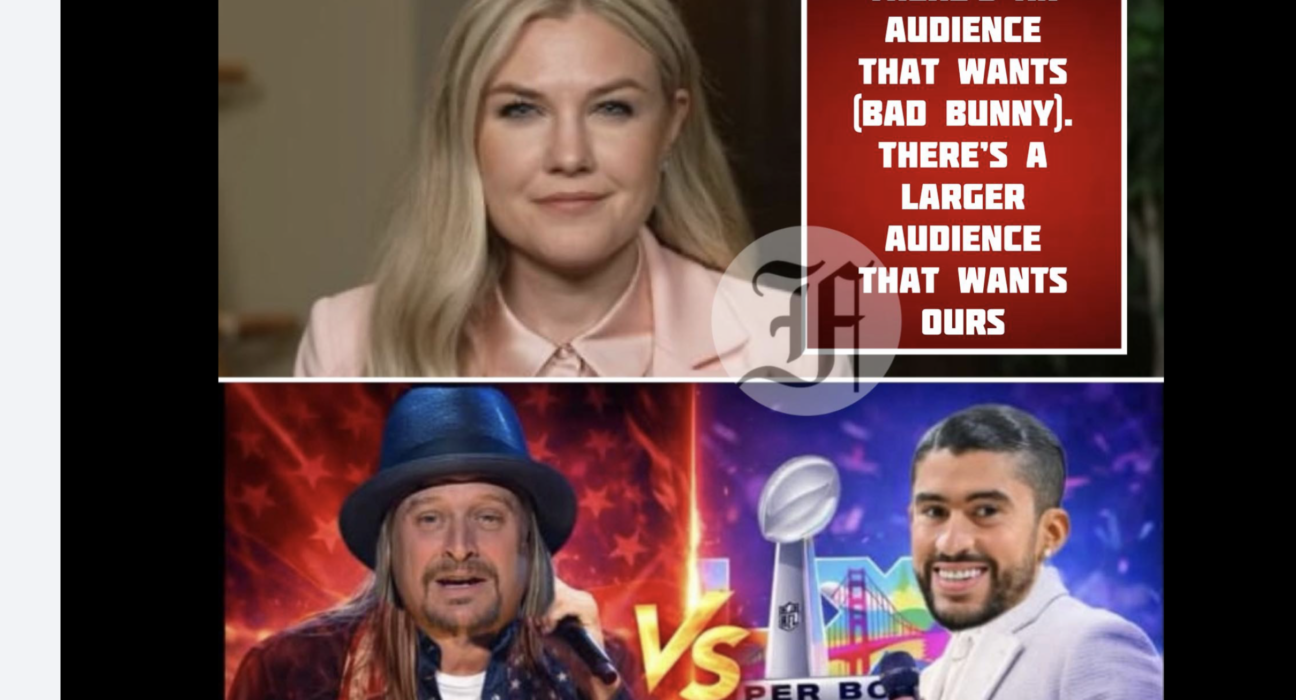
The Halftime That Wasn’t Supposed to Happen
They said it couldn’t be done.
Not without league approval. Not without a broadcast partner willing to risk everything. And certainly not with Steven Tyler—rock royalty who’d spent decades playing by industry rules—standing shoulder-to-shoulder with Kid Rock on a stage that technically didn’t exist yet.
But Erika Kirk had never been much for “supposed to.”
The first rumor hit Twitter at 11:47 p.m. on a Tuesday. By Wednesday morning, it was trending in seventeen countries. By Thursday, NBC’s PR team had issued three separate “no comments” in six hours—a record that spoke louder than any statement could.

The Super Bowl halftime show had competition.
Not the polite kind. Not the “counterprogramming” networks trot out knowing nobody’s watching. This was different. Kirk’s “All-American Halftime Show” would air live, in the exact same window, on a platform nobody had named yet but everyone knew existed.
And it was “for Charlie.”
Nobody knew who Charlie was. Kirk hadn’t said. Tyler hadn’t said. Kid Rock had posted a single photo—a folded American flag on a piano bench—with no caption. The internet did what the internet does: theorized, investigated, argued, and ultimately… waited.


In a Nashville studio, three days before kickoff, Kirk sat across from her production team. The budget was a fraction of what the league spent. The crew was twenty people, not two hundred.
But the energy in the room felt like something else entirely.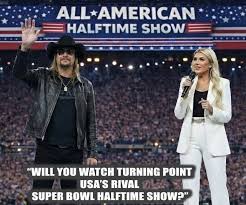
“Steven’s in,” her manager said quietly. “Confirmed this morning. He’ll open with Kid Rock. Acoustic. No pyrotechnics.”
Kirk nodded. She’d known Tyler would say yes the moment she’d called him. Not because they were close—they weren’t. But because she’d asked him a single question:
“Do you believe artists still get to choose what matters?”
He’d laughed. Then he’d said yes.