Montgomery Bell State Park: Where History, Legend, and Natural Beauty Converge
Nestled in the rolling hills of Middle Tennessee, just 35 miles west of Nashville, Montgomery Bell State Park stands as a testament to America’s industrial heritage, natural beauty, and the enduring power of folklore. Named after one of Tennessee’s most remarkable 19th-century entrepreneurs, this 3,782-acre park offers visitors a unique blend of history, outdoor recreation, and modern amenities that make it one of the state’s premier destinations.
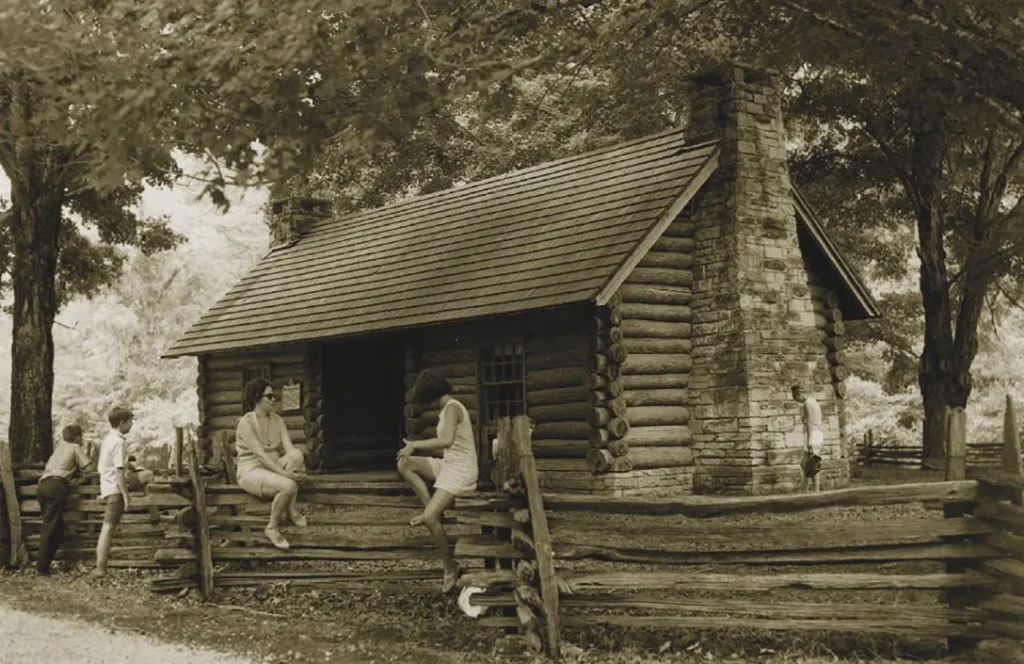
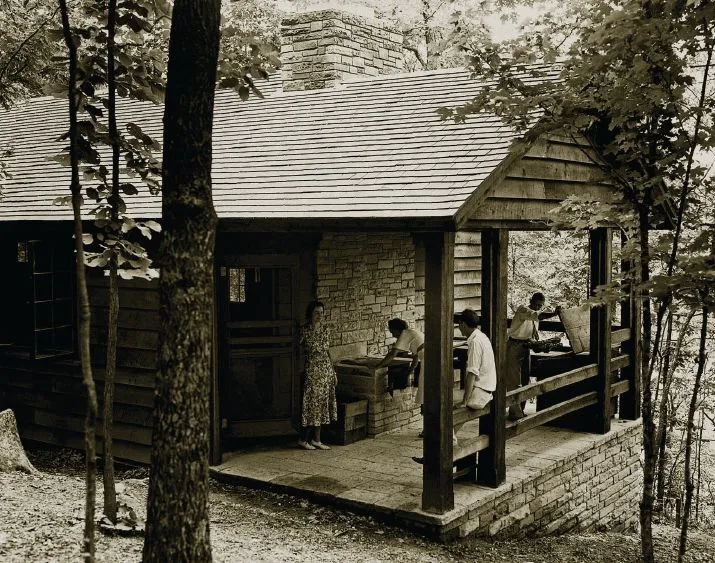
Courtesy of the Tennessee State Library & Archives: A 1938 view of a cabin at Montgomery Bell State Park.
The Man Behind the Name: Montgomery Bell’s Legacy
Montgomery Bell arrived in Tennessee in the early 1800s with ambition burning as hot as the furnaces he would eventually build. A visionary industrialist and ironmaster, Bell transformed the wilderness of Middle Tennessee into one of the nation’s most productive iron-making regions during the early decades of the 19th century.
At its peak, Bell’s iron empire included multiple furnaces, forges, and foundries scattered across the region. The iron produced here wasn’t merely for local use—it supplied the growing nation with everything from tools and implements to weapons and machinery. Bell’s operations employed hundreds of workers and contributed significantly to Tennessee’s economic development during the antebellum period.
What made Bell particularly notable wasn’t just his business acumen, but his innovative spirit. He constructed elaborate water-powered systems, including a remarkable tunnel that still exists today, channeling Harpeth River water to power his ironworks. This engineering feat, completed around 1818, demonstrated Bell’s willingness to tackle ambitious projects that others considered impossible.
Beyond his industrial achievements, Montgomery Bell left another lasting legacy: his philanthropy. He provided funds for the establishment of the Montgomery Bell Academy in Nashville, ensuring that education would be accessible to future generations. His life embodied the American entrepreneurial spirit—bold, innovative, and ultimately generous.
The Laurel Furnace: An Industrial Monument
At the heart of the park’s historical significance stands the Laurel Furnace, one of the best-preserved examples of early American iron-making technology. Built during the height of Bell’s operations, this stone structure rises from the forest floor like a monument to America’s industrial revolution.
The furnace operated using a process that seems almost alchemical to modern visitors. Workers would load the furnace with alternating layers of iron ore, charcoal, and limestone. As fires burned continuously for months at a time, reaching temperatures exceeding 3,000 degrees Fahrenheit, chemical reactions would separate the iron from its ore. The molten iron would then flow from the bottom of the furnace into sand molds, creating “pig iron” that could be further refined and shaped.
Walking the interpretive trail around Laurel Furnace today, visitors can almost hear the echoes of hammers on anvils and smell the acrid smoke that once filled these hollows. The furnace stands as a tangible connection to an era when Tennessee helped fuel America’s growth, one ton of iron at a time.
Folklore and Legends: The Ghosts of the Past
Like many places with deep historical roots, Montgomery Bell State Park has accumulated its share of folklore and ghostly tales over the decades. The most persistent legend involves the spirits of ironworkers who died in accidents at the furnaces and forges.
Old-timers tell stories of mysterious lights seen near Laurel Furnace on moonless nights—glowing orbs that dance among the trees before vanishing without explanation. Some attribute these to the restless spirits of workers who perished in the dangerous conditions of 19th-century industry. Others claim they’re merely foxfire or swamp gas, though the believers remain unconvinced.
Another popular tale involves the “Bell Witch” connection, though this conflates Montgomery Bell with the more famous Bell Witch legend associated with John Bell of Adams, Tennessee. While the two stories are unrelated, the confusion has persisted, adding an extra layer of mysterious allure to the park’s reputation.
Perhaps the most touching legend concerns a young couple separated by the Civil War. According to local lore, a furnace worker’s daughter fell in love with a young man who enlisted in the Confederate Army. He promised to return to marry her, but never came back from the war. It’s said that on certain spring evenings, visitors near Lake Acorn can hear the faint sound of a woman singing old love songs, waiting still for her beloved’s return.
Whether these stories hold any truth matters less than what they represent: a deep connection between the land, its history, and the people who have called it home.
The Modern Era: A New Lodge and Enhanced Amenities
While Montgomery Bell State Park honors its past, it has also embraced the future with significant improvements and modern amenities that enhance the visitor experience without compromising the natural beauty that makes the park special.
The Park Lodge
The park’s lodge facility offers comfortable accommodations with rustic charm. Guest rooms provide modern conveniences including climate control, cable television, and wireless internet, while large windows frame views of the surrounding forest. The lodge serves as an ideal base for exploring the park, offering easy access to trails, the golf course, and other attractions.
The lodge restaurant serves hearty Southern fare and Tennessee specialties, with a particular emphasis on locally sourced ingredients when possible. The dining room’s large windows overlook the park’s natural beauty, making every meal a scenic experience.
Camping Facilities
For those who prefer a more immersive outdoor experience, Montgomery Bell offers excellent camping options:
Developed Campsites: The park features modern campsites with electrical and water hookups, suitable for RVs and trailers. These sites include picnic tables, fire rings, and convenient access to bathhouses with hot showers and modern facilities.
Primitive Camping: For the more adventurous, backcountry camping areas allow visitors to experience the park’s wilderness in a more traditional manner. These sites offer solitude and a genuine connection with nature, requiring campers to pack in their supplies and pack out their waste.
Group Camps: Large group camping areas accommodate scout troops, church groups, and other organizations seeking outdoor experiences for multiple participants.
Cabins
The park’s cabin rentals have become increasingly popular, offering a middle ground between camping and lodge accommodations. These rustic but comfortable structures provide kitchen facilities, heating and air conditioning, and private porches where guests can enjoy morning coffee while watching deer graze in nearby meadows.
Natural Attractions and Recreation
Montgomery Bell State Park’s diverse landscape encompasses forests, lakes, streams, and meadows, creating habitats for abundant wildlife and offering visitors numerous ways to connect with nature.
Lake Acorn and Lake Woodhaven
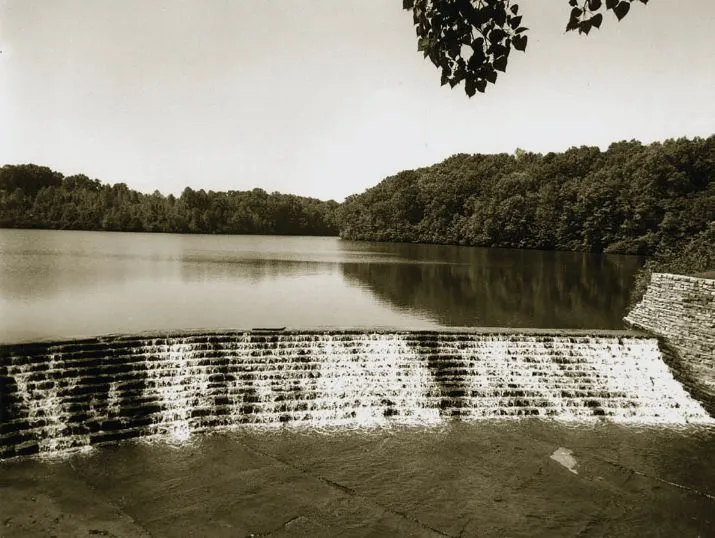
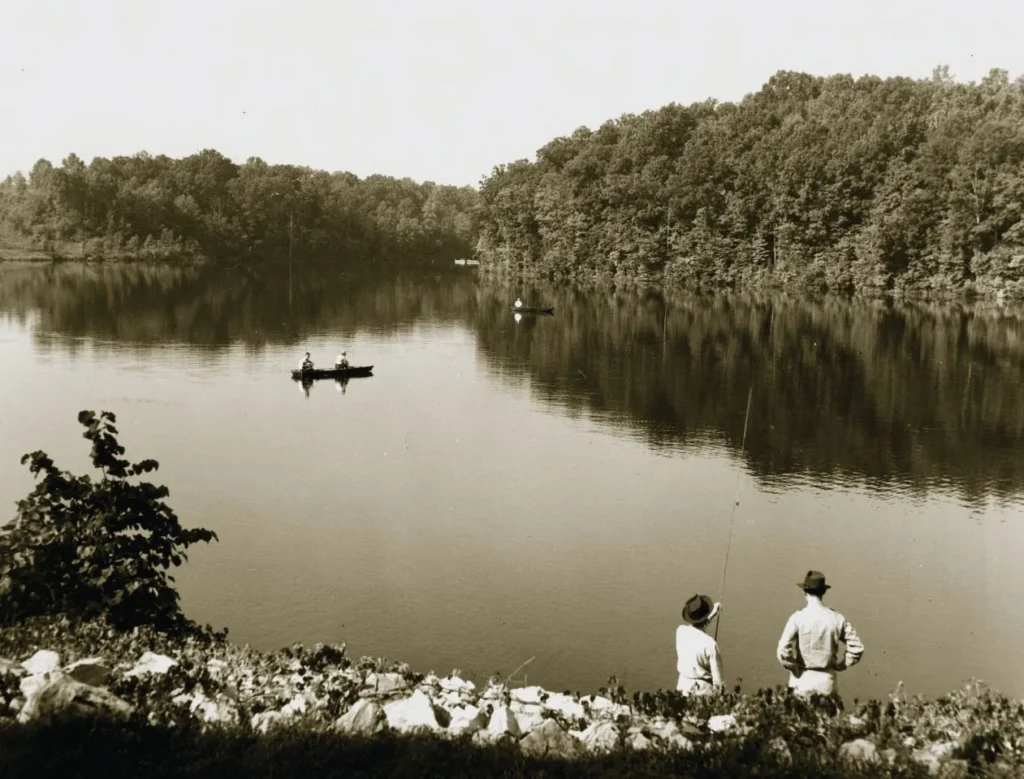
Two scenic lakes provide opportunities for fishing, paddle boating, and peaceful contemplation. Lake Acorn, the larger of the two, is stocked with bass, bluegill, and catfish, making it popular with anglers. Non-motorized boats are permitted, allowing visitors to explore quiet coves and inlets where herons hunt and turtles sun themselves on fallen logs.
Lake Woodhaven offers a more intimate experience, perfect for a peaceful afternoon of catch-and-release fishing or simply sitting on the bank with a good book.
Hiking Trails
The park’s extensive trail system totals over 20 miles, ranging from easy nature walks to challenging backcountry routes:
The Ore Pit Trail (approximately 10 miles): This challenging loop takes hikers past old iron ore mining sites, through mature hardwood forests, and along ridges offering panoramic views of the surrounding countryside.
The Creech Hollow Trail (3.2 miles): A moderate hike that winds through diverse ecosystems, from creek bottoms to ridgetops, showcasing the park’s biodiversity.
The Wildcat Trail (2 miles): An easier option perfect for families, this trail meanders through forests where wildflowers bloom in spring and leaves paint the landscape in autumn.
Throughout the trail system, interpretive signs provide information about the area’s ecology, geology, and history, transforming a simple hike into an educational journey.
Montgomery Bell Golf Course
The park’s 18-hole golf course, designed by Gary Roger Baird, offers a challenging round in a stunning natural setting. The course incorporates the landscape’s natural features, with elevation changes, water hazards, and tree-lined fairways that demand both strategic thinking and skilled shot-making.
The course has earned recognition as one of Tennessee’s finest public golf facilities, attracting players from across the region. Even non-golfers appreciate the course’s maintenance and its integration with the surrounding environment—deer, wild turkey, and other wildlife frequently make appearances during rounds.
Event Facilities and Programs
The park’s conference center and meeting facilities make it popular for weddings, corporate retreats, and family reunions. The combination of natural beauty, historical significance, and modern amenities creates a unique setting for special events.
Throughout the year, the park hosts ranger-led programs including guided hikes, historical presentations about the iron industry, wildlife observation activities, and children’s educational programs. These offerings help visitors develop a deeper appreciation for the park’s natural and cultural resources.
Seasonal Beauty
Montgomery Bell’s appeal spans all four seasons, each bringing its own character to the landscape:
Spring arrives with wildflowers carpeting the forest floor—trilliums, bloodroot, and wild geraniums create natural gardens along the trails. Dogwoods and redbuds add splashes of white and pink to the greening canopy, while migratory birds return to nest and raise their young.
Summer brings full canopies that shade the trails, making hiking pleasant even on hot days. The lakes become centers of activity as visitors seek relief from the heat through fishing, paddle boating, or simply dangling their feet in the cool water.
Autumn transforms the park into a showcase of color. Maples blaze scarlet and orange, hickories turn golden yellow, and oaks contribute deep reds and browns to the spectacular display. This is arguably the park’s most popular season, as visitors from across the region come to witness nature’s annual masterpiece.
Winter reveals the bones of the landscape. Bare trees expose rock formations and distant views hidden during other seasons. While quieter than summer months, winter offers its own rewards: the possibility of spotting wildlife more easily, the stark beauty of frost-covered branches, and the peaceful solitude of trails less traveled.
Conservation and Stewardship
Montgomery Bell State Park represents more than just a recreational destination—it’s a preserved piece of Tennessee’s natural and cultural heritage. The park’s management balances public access and enjoyment with conservation responsibilities, ensuring that future generations will inherit these resources intact.
Ongoing efforts include habitat restoration projects, invasive species control, trail maintenance, and historical preservation work at sites like Laurel Furnace. The park also serves an educational mission, helping visitors understand the importance of conservation and their role in protecting natural resources.
Planning Your Visit
Montgomery Bell State Park welcomes visitors year-round, with each season offering unique experiences. The park’s proximity to Nashville makes it an easy day trip, but the quality and diversity of accommodations encourage longer stays.
Before visiting, check the park’s current conditions, as trail closures or facility maintenance can occasionally affect access. Reservations are recommended for lodge rooms, cabins, and developed campsites, especially during peak seasons and weekends.
Whether you’re a history enthusiast eager to explore industrial heritage, a nature lover seeking forest trails and wildlife, a golfer looking for a challenging round in a beautiful setting, or a family wanting to introduce children to outdoor recreation, Montgomery Bell State Park offers something meaningful.
A Living Legacy
Montgomery Bell State Park stands as a living bridge between past and present. The iron furnaces remind us of America’s industrial coming-of-age, when Tennessee helped forge a nation. The forests demonstrate nature’s resilience, having reclaimed land once dedicated to industry. The modern facilities show how we can enjoy natural spaces while preserving them for future generations.
For those willing to explore beyond the picnic areas and parking lots, the park reveals deeper treasures: the quietude of a forest trail where only birdsong breaks the silence, the satisfaction of catching a bass as the sun sets over Lake Acorn, the wonder of stumbling upon a patch of wild orchids blooming in an unexpected place, or the contemplative mood inspired by standing before the silent stones of Laurel Furnace, imagining the heat, noise, and hard labor that once characterized this now-peaceful site.
Montgomery Bell built an industrial empire in these hills two centuries ago. Today, his namesake park offers a different kind of wealth—the riches of natural beauty, historical connection, and outdoor recreation. In a world that often moves too fast, Montgomery Bell State Park provides a place to slow down, breathe deeply, and remember what matters most.
Montgomery Bell State Park is located at 1020 Jackson Hill Road, Burns, Tennessee, approximately 35 miles west of Nashville off U.S. Highway 70. For current information on accommodations, programs, and park conditions, contact the park office or visit the Tennessee State Parks website. Source: Tennessee Department of Conservation (TDEC)