Skip to content
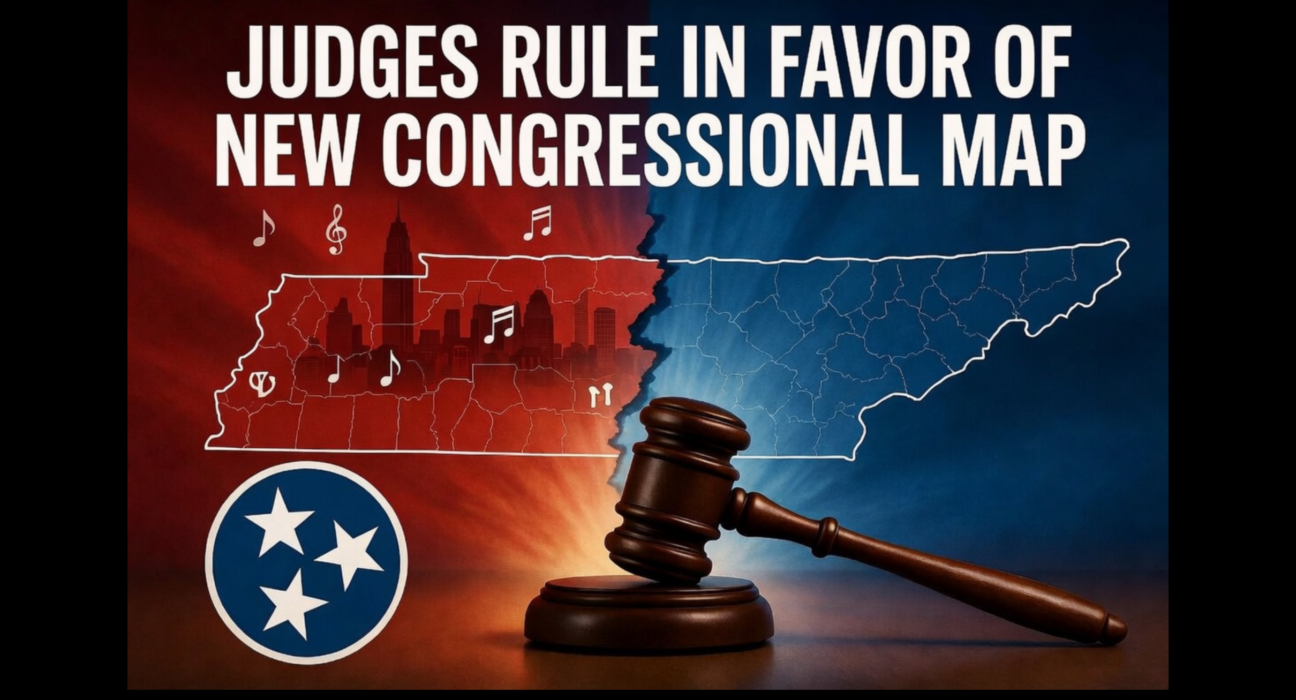
Memphis Divided: Judges Rule in Favor of Tennessee’s New Congressional Districts
-
By
admin86
- May 27, 2026
- Comments
- 2 minutes read
- 258 Views
- 5 months ago
Judges Uphold Tennessee’s New Congressional Maps in NAACP Challenge
By Tennessee Ledger Staff
A state court dealt a significant blow to opponents of Tennessee’s newly redrawn congressional maps on Tuesday, as a three-judge panel unanimously dismissed a legal challenge brought by the NAACP Tennessee State Conference.
The unanimous decision keeps intact, for now, a GOP-led redistricting process that carved majority-Black Memphis into three separate voting districts for the first time in 50 years, dismantling Tennessee’s sole Democratic-leaning congressional district. 
How We Got Here
The NAACP Tennessee State Conference, NAACP Tennessee President Gloria Sweet-Love, and others filed a lawsuit to halt the use of the state’s new congressional map on May 7 — less than three hours after Gov. Bill Lee signed the map into law.  The redistricting came after the General Assembly convened a special legislative session heeding a call from President Donald Trump to redraw congressional lines ahead of the midterm elections.
At the heart of the lawsuit was a constitutional question: did the legislature overstep its authority during that special session?
NAACP attorney Anthony Ashton argued that legislators ran afoul of Tennessee’s constitution by acting outside of Gov. Lee’s specifically stated purpose for the special session. In repealing a decades-old law that prohibited mid-decade redistricting, extending the qualification timeline, waiving residency requirements for candidates, and waiving the requirement to notify voters of district changes by mail, Ashton argued lawmakers went “far beyond what was necessary.” 
The Court’s Ruling
The three-judge panel, appointed by the state Supreme Court and drawing judges from West, Middle, and East Tennessee, wasn’t persuaded.
The ruling dismissed the NAACP’s argument, finding that bills to repeal the prohibition on redistricting and ease various election requirements were “fairly contained” in the language of the governor’s proclamation directing the legislature to make statutory changes necessary to effectuate changes to Tennessee’s congressional districts and facilitate the 2026 elections. 
The panel also ruled that sovereign immunity applied to Gov. Bill Lee and the General Assembly, but not to Tennessee Secretary of State Tre Hargett or Elections Coordinator Mark Goins. The panel further ruled that only one of the plaintiffs — Devante Hill, who had qualified as a candidate in Tennessee’s Ninth Congressional District prior to the redistricting — had legal standing to bring the suit.  The case was dismissed with prejudice.
The Fight Is Not Over
Tuesday’s ruling does not end the legal battle over Tennessee’s maps. Three other legal challenges filed in federal court remain ongoing, each seeking to halt the maps from taking effect ahead of the August 6 Tennessee primary. In one of those federal challenges, a judge on Tuesday also denied a request by the ACLU of Tennessee to temporarily block the map. The ACLU suit alleges intentional racial discrimination and First Amendment retaliation against Black voters in the redrawn district lines. 
With the August 6 primary drawing closer, the clock is ticking for opponents of the new maps to secure a court-ordered halt before voters head to the polls.
What It Means
The ruling is a victory for the Republican-led General Assembly and reflects the broader national trend of states — encouraged by the Trump administration — redrawing congressional lines ahead of the 2026 midterms to consolidate political advantages. For Tennessee, it means the new map dividing Memphis stands, at least for now, as federal judges weigh the remaining challenges.
This story will be updated as the federal litigation develops.