My wife Felicia and I have both lived in Tennessee our entire lives. Raised here, served here, raised a family here. And I still find myself amazed sometimes by what this state actually is — not just what it looks like on a map.
A video making the rounds on YouTube right now puts it better than most civics textbooks ever have. The title is blunt: “Why Tennessee is the Opposite of Every U.S. State.” And once you watch it, you’ll understand exactly what they mean.
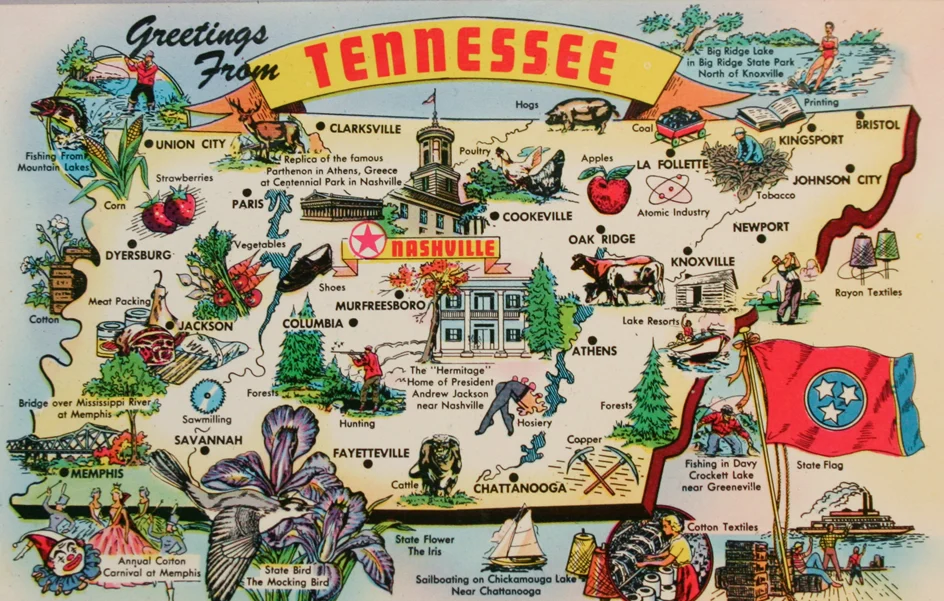

When I was first elected to the Tennessee General Assembly, I heard former State Senator Ron Ramsey remark that while driving from one end of Tennessee to the other covers roughly 500 miles, the distance from that same northeast point to the Canadian border near Lake Erie is only about 350 miles.

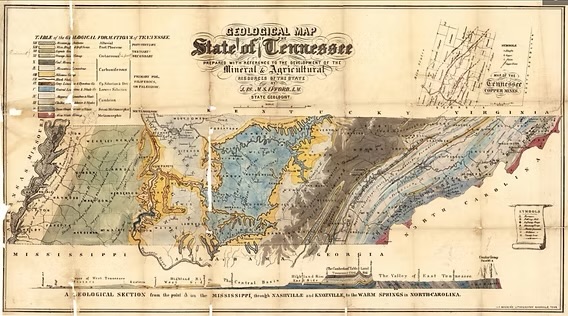
Here’s the simple truth behind that bold claim: drive is roughly 490 miles across Tennessee from east to west, and you will cross through entirely different Americas. You start in the ancient ridgelines of the Appalachian Mountains — peaks that have been standing longer than most of the rock formations in the Rockies. You drop down into the limestone Nashville Basin, a geological dome that was rising and falling hundreds of millions of years before Nashville had a honky-tonk. And then you flatten out completely onto the Mississippi Delta lowlands, where the river has been slowly rewriting the land since before any of us had a name for it.

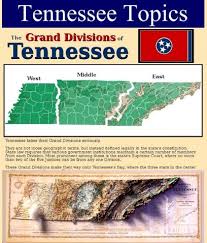
Most states have one identity. One geography. One dominant story about who they are and where they came from. Tennessee has three — and each one is so distinct that East Tennessee operates on a different time zone than the rest of the state. That’s not a metaphor. That’s the law.


Three States in One
Think about that for a moment. A Tennessean in Kingsport wakes up on Eastern Time. A Tennessean in Nashville is on Central. And they’re both just a few hours apart on the same interstate. The mountains of East Tennessee run so parallel to Virginia and North Carolina that geography itself pulled that region into a different gravitational orbit.
And it’s not just clocks. The people, the culture, the economy, and even the politics of East, Middle, and West Tennessee have always moved to different rhythms. During the Civil War, East Tennessee was so distinct from the rest of the state that it nearly tried to form its own separate entity — it voted heavily against secession while the rest of Tennessee went the other direction. The mountains had a way of making people think independently.
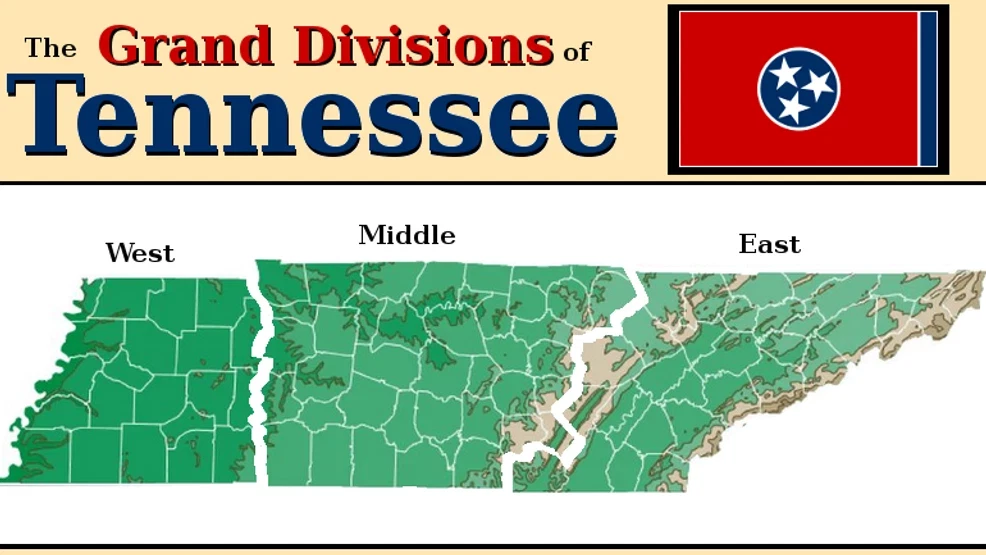
Middle Tennessee — the Nashville Basin, the Highland Rim, the rolling limestone country — is where the great fertile farmland took root. It’s where Nashville rose, and where Rutherford County sits at the literal geographic center of the state. Not figuratively. Geographically. The center of Tennessee is right here in our backyard.
Then there’s West Tennessee. Flat, rich, river-bound. Shaped by the Mississippi and its floodplains in a way that has more in common visually with the Mississippi Delta culture of Arkansas and Mississippi than it does with the mountain towns of the east.
Why This Matters More Than You Think
You might be wondering why a state legislator is writing about YouTube geography videos. Fair question. But here’s my answer: how we understand Tennessee shapes how we govern it, how we invest in it, and how we tell its story to the rest of the country.
Too often, people outside our borders think of Tennessee as one monolithic thing — country music, or mountains, or barbecue, or college football. And while I love all of those things deeply, they miss what makes this state genuinely remarkable.
Tennessee is the most biodiverse inland state in America. The Duck River — flowing right through our region — has more species of living things than any river on the continent. The Great Smoky Mountains National Park is the most visited national park in the United States. And that limestone basin that forms the heart of Middle Tennessee? It’s been a cradle of American agriculture, music, and civic life for two centuries.
This is not a small story. This is one of the great American stories, and it happens to be ours.
I believe that. I really do. When I read about 1.1-billion-year-old granite in the Blue Ridge, and limestone that formed in ancient ocean floors, and river delta soil rich enough to grow anything — I see the hand of a Creator who wasn’t casual about the details.
Tennessee wasn’t assembled randomly. Every ridge and every river basin was placed with a kind of intentionality that still shows up in the character of our people. East Tennesseans are mountain-tough and independent. Middle Tennesseans are community-builders, farmers, and neighbors. West Tennesseans are river people — resilient, tied to the land, shaped by the flood and the harvest.
All of them are us.