This article was originally published in The American Conservative
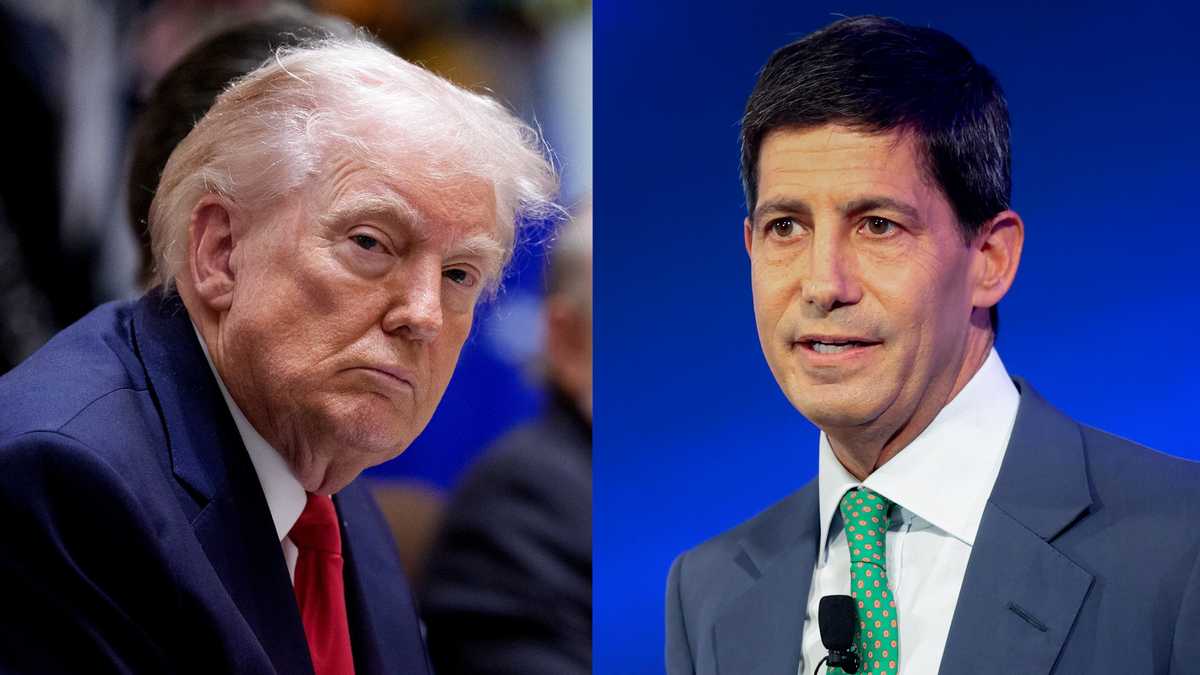
Kevin Warsh has a reputation as an inflation-hawk. He resigned from the Federal Reserve Board of Governors in 2011 after it embarked on a second round of quantitative easing (QE) and became a critic of“institutional drift” at the central bank. This would presumably put him at odds with President Donald Trump, a fan of lower interest rates in his New York real-estate developer style, who has dismissed the idea of affordability politics as a “hoax.”
Yet Warsh in recent weeks has set aside Warsh 1.0 in favor of Warsh 2.0, who echoes the president in calling for lower interest rates while still maintaining that he will maintain “central bank independence.” The president’s most recent board appointee prior to Warsh, Stephen Miran, has walked in lockstep with Trump in voting for rate cuts and insisting that inflation should not get in the way.
As the head of the most powerful central bank in the world, Warsh faces a dilemma. Both the Personal Consumption Expenditures (PCE) index, the Fed’s favored measure of inflation, and the Consumer Price Index (CPI) have lingered above the Federal Reserve’s stated inflation target of 2 percent since March 2021. The Producer Price Index (PPI) last month reached 6 percent year-over-year, or 4.4 percent if you exclude volatile commodities like energy and food. Despite some of the most aggressive rate hikes in the central bank’s history beginning in July 2022, inflation has remained elevated and the Federal Reserve has not reached its target.
This eats away at the average consumer, who may see his salary catch up to sticker price inflation but will not see it keep up with home prices. The president may offer 50-year mortgages as a proposed solution to higher home prices, fueled by artificially flooding markets with new money to lower interest rates, but this will not address the increasing unaffordability of homes to young people.
In fact, failure to tamp down inflation and the lowering of interest rates will simply lead to climbing inflation numbers. Not every Fed chair has the stones to be “Tall” Paul Volcker and raise interest rates to 20 percent, overseeing plummeting prices for assets that the first beneficiaries of inflation stocked up on.
Warsh has the challenge of addressing inflation before it becomes an even greater issue to the economy––lowering real wages, redistributing wealth to the first receivers of new money, and devaluing savings––all while the president who appointed him to the role wants lower interest rates to boost the economy and encourage investment.
But the Federal Reserve’s own policies may have undermined the other half of their dual mandate.
Many Americans worry about displacement from artificial intelligence agents, which have seen a boom in recent years. Companies like NVIDIA have soared from their close involvement with AI production, while companies like OpenAI, Anthropic, and Mistral have not reported actual profits. To an Austrian economist, this has a whiff of the bubble and the beginning of a business cycle about it.
The Fed under Jerome Powell seems uninterested in investigating if its monetary policy may have a role in the subsidizing of an AI bubble. Michael McKee of Bloomberg asked Powell directly after the October FOMC meeting whether the jobs market may be harmed by lower interest rates boosting up AI investment and keeping these unprofitable companies running. “Yeah, I don’t—I don’t think interest rates are an important part of the AI—the data center story,” Powell replied, dismissing the premise.
The Fed began to cut rates in late 2024 even as inflation lingered at 2.5 percent, not moving meaningfully lower. This provided the needed credit for large venture capitalists to invest in equity; this in turn has kept companies like OpenAI afloat, even as their costs for training and maintaining their models remain higher than their revenue. OpenAI expects to run losses until at least 2029, something that is unsustainable in a higher-interest-rate environment that is necessary to combat inflation.
These AI companies are simply inefficient, kept afloat in a sea of easy money. The longer the Fed holds down interest rates, the worse inflation will be and the larger they will become. AI may become “too big to fail” under these circumstances, which may lead to bailouts of Silicon Valley and Wall Street at the expense of the American taxpayer––the same taxpayer whose job market prospects have been shredded by the artificial support of these very same companies through inflationary monetary policy.
Warsh has a reputation he could live up to. The president’s desire is to play the game of political business cycles: To enjoy the cheap credit and apparent “boom” in his own term and leave his successor holding the bag of higher inflation and the eventual “bust” of the boom-bust cycle. Warsh’s term as Fed chair will expire after the Trump presidency, but how he appears to cooperate with the administration will make all the difference to whether he is renominated or not.
The Fed chair is not miraculously isolated from political influence; he is both accountable to Congress as well as subject to the political pressures of banking lobbies and presidents when he comes up for renomination. The myth of a neutral Fed is just that––a myth. Warsh is in a dangerous political game, and the stakes are the U.S. economy.